{"title":"确定影响杠铃深蹲前后重心位移的主要动力学因素:因子回归分析。","authors":"Diwei Chen, Dong Sun, Fengping Li, Dongxu Wang, Zhanyi Zhou, Zixiang Gao, Yaodong Gu","doi":"10.3390/s25020572","DOIUrl":null,"url":null,"abstract":"<p><strong>Background: </strong>Barbell squats are commonly used in strength training, but the anterior-posterior displacement of the Center of Mass (COM) may impair joint stability and increase injury risk. This study investigates the key factors influencing COM displacement during different squat modes.; Methods: This study recruited 15 male strength training enthusiasts, who performed 60% of their one-repetition maximum (1RM) in the Front Barbell Squat (FBS), High Bar Back Squat (HBBS), and Low Bar Back Squat (LBBS). Joint moments at both the hip, knee, and ankle were collected using a motion capture system and force plates, and a factor regression analysis was conducted using SPSS.; Results: In the FBS, primary factors influencing COM displacement included right knee adduction-abduction (38.59%), knee flexion-extension (31.08%), and hip internal-external rotation (29.83%). In the HBBS, they were right ankle internal-external rotation (19.13%), hip flexion-extension (-19.07%), and left knee flexion-extension (19.05%). In the LBBS, the key factors were left knee adduction-abduction (27.82%), right ankle internal-external rotation (27.59%), and left ankle internal-external rotation (26.12%).; Conclusion: The study identifies key factors affecting COM displacement across squat modes, with knee flexion-extension being dominant in the FBS and hip moments more significant in the HBBS and LBBS. These findings have implications for optimizing squat training and injury prevention strategies.</p>","PeriodicalId":21698,"journal":{"name":"Sensors","volume":"25 2","pages":""},"PeriodicalIF":4.0000,"publicationDate":"2025-01-20","publicationTypes":"Journal Article","fieldsOfStudy":null,"isOpenAccess":false,"openAccessPdf":"https://www.ncbi.nlm.nih.gov/pmc/articles/PMC11769179/pdf/","citationCount":"0","resultStr":"{\"title\":\"Identifying the Primary Kinetic Factors Influencing the Anterior-Posterior Center of Mass Displacement in Barbell Squats: A Factor Regression Analysis.\",\"authors\":\"Diwei Chen, Dong Sun, Fengping Li, Dongxu Wang, Zhanyi Zhou, Zixiang Gao, Yaodong Gu\",\"doi\":\"10.3390/s25020572\",\"DOIUrl\":null,\"url\":null,\"abstract\":\"<p><strong>Background: </strong>Barbell squats are commonly used in strength training, but the anterior-posterior displacement of the Center of Mass (COM) may impair joint stability and increase injury risk. This study investigates the key factors influencing COM displacement during different squat modes.; Methods: This study recruited 15 male strength training enthusiasts, who performed 60% of their one-repetition maximum (1RM) in the Front Barbell Squat (FBS), High Bar Back Squat (HBBS), and Low Bar Back Squat (LBBS). Joint moments at both the hip, knee, and ankle were collected using a motion capture system and force plates, and a factor regression analysis was conducted using SPSS.; Results: In the FBS, primary factors influencing COM displacement included right knee adduction-abduction (38.59%), knee flexion-extension (31.08%), and hip internal-external rotation (29.83%). In the HBBS, they were right ankle internal-external rotation (19.13%), hip flexion-extension (-19.07%), and left knee flexion-extension (19.05%). In the LBBS, the key factors were left knee adduction-abduction (27.82%), right ankle internal-external rotation (27.59%), and left ankle internal-external rotation (26.12%).; Conclusion: The study identifies key factors affecting COM displacement across squat modes, with knee flexion-extension being dominant in the FBS and hip moments more significant in the HBBS and LBBS. These findings have implications for optimizing squat training and injury prevention strategies.</p>\",\"PeriodicalId\":21698,\"journal\":{\"name\":\"Sensors\",\"volume\":\"25 2\",\"pages\":\"\"},\"PeriodicalIF\":4.0000,\"publicationDate\":\"2025-01-20\",\"publicationTypes\":\"Journal Article\",\"fieldsOfStudy\":null,\"isOpenAccess\":false,\"openAccessPdf\":\"https://www.ncbi.nlm.nih.gov/pmc/articles/PMC11769179/pdf/\",\"citationCount\":\"0\",\"resultStr\":null,\"platform\":\"Semanticscholar\",\"paperid\":null,\"PeriodicalName\":\"Sensors\",\"FirstCategoryId\":\"103\",\"ListUrlMain\":\"https://doi.org/10.3390/s25020572\",\"RegionNum\":3,\"RegionCategory\":\"综合性期刊\",\"ArticlePicture\":[],\"TitleCN\":null,\"AbstractTextCN\":null,\"PMCID\":null,\"EPubDate\":\"\",\"PubModel\":\"\",\"JCR\":\"Q2\",\"JCRName\":\"CHEMISTRY, ANALYTICAL\",\"Score\":null,\"Total\":0}","platform":"Semanticscholar","paperid":null,"PeriodicalName":"Sensors","FirstCategoryId":"103","ListUrlMain":"https://doi.org/10.3390/s25020572","RegionNum":3,"RegionCategory":"综合性期刊","ArticlePicture":[],"TitleCN":null,"AbstractTextCN":null,"PMCID":null,"EPubDate":"","PubModel":"","JCR":"Q2","JCRName":"CHEMISTRY, ANALYTICAL","Score":null,"Total":0}
Identifying the Primary Kinetic Factors Influencing the Anterior-Posterior Center of Mass Displacement in Barbell Squats: A Factor Regression Analysis.
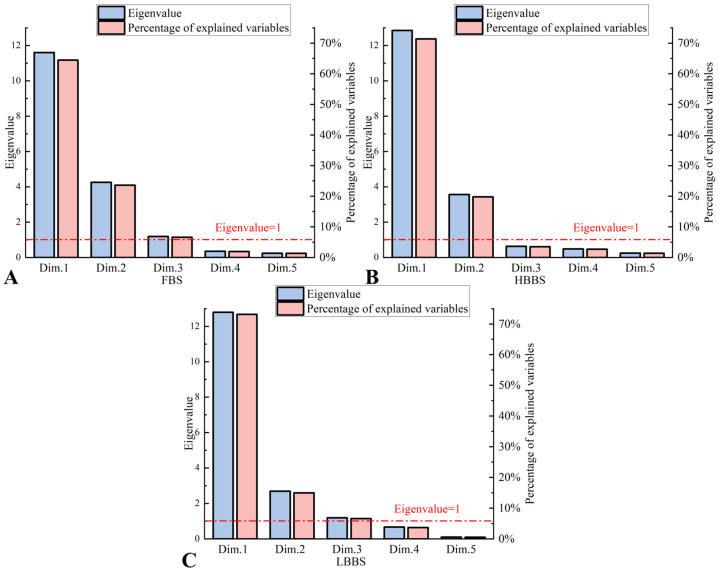
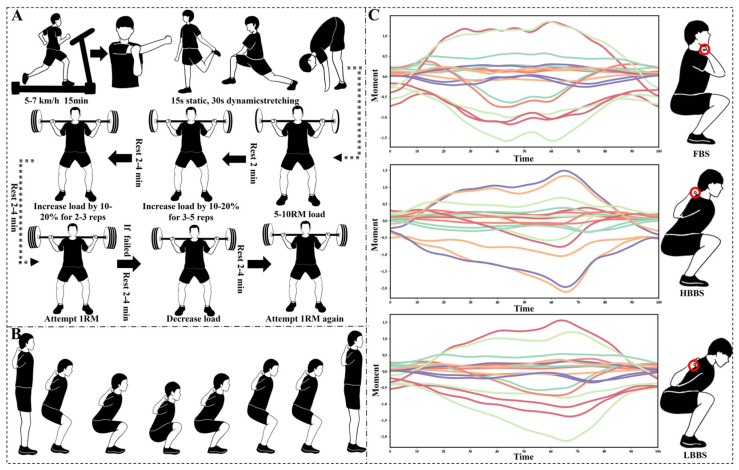
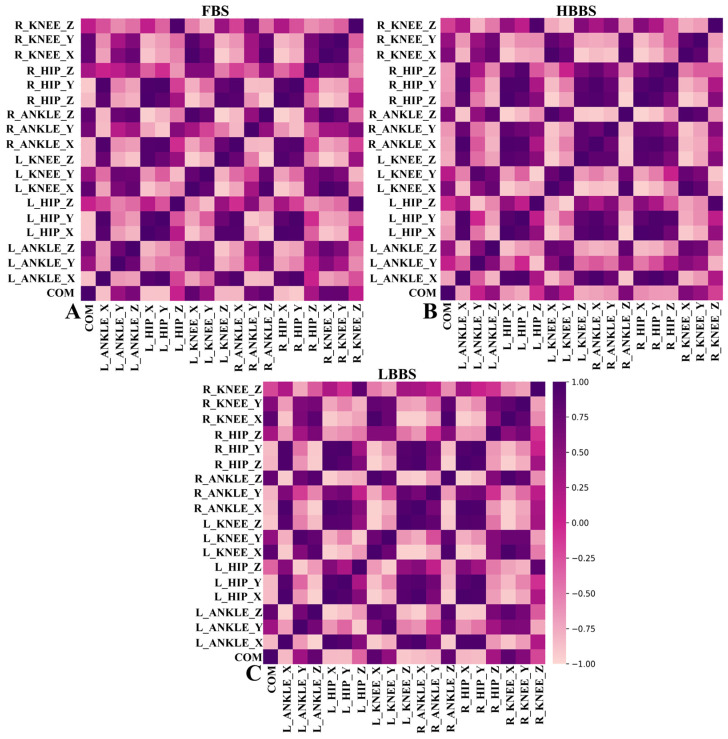
Background: Barbell squats are commonly used in strength training, but the anterior-posterior displacement of the Center of Mass (COM) may impair joint stability and increase injury risk. This study investigates the key factors influencing COM displacement during different squat modes.; Methods: This study recruited 15 male strength training enthusiasts, who performed 60% of their one-repetition maximum (1RM) in the Front Barbell Squat (FBS), High Bar Back Squat (HBBS), and Low Bar Back Squat (LBBS). Joint moments at both the hip, knee, and ankle were collected using a motion capture system and force plates, and a factor regression analysis was conducted using SPSS.; Results: In the FBS, primary factors influencing COM displacement included right knee adduction-abduction (38.59%), knee flexion-extension (31.08%), and hip internal-external rotation (29.83%). In the HBBS, they were right ankle internal-external rotation (19.13%), hip flexion-extension (-19.07%), and left knee flexion-extension (19.05%). In the LBBS, the key factors were left knee adduction-abduction (27.82%), right ankle internal-external rotation (27.59%), and left ankle internal-external rotation (26.12%).; Conclusion: The study identifies key factors affecting COM displacement across squat modes, with knee flexion-extension being dominant in the FBS and hip moments more significant in the HBBS and LBBS. These findings have implications for optimizing squat training and injury prevention strategies.
期刊介绍:
Sensors (ISSN 1424-8220) provides an advanced forum for the science and technology of sensors and biosensors. It publishes reviews (including comprehensive reviews on the complete sensors products), regular research papers and short notes. Our aim is to encourage scientists to publish their experimental and theoretical results in as much detail as possible. There is no restriction on the length of the papers. The full experimental details must be provided so that the results can be reproduced.




 京公网安备 11010802042870号
京ICP备2023020795号-1
京公网安备 11010802042870号
京ICP备2023020795号-1

 分享
分享
 求助内容:
求助内容: 应助结果提醒方式:
 扫码关注我们
