Nam Gyu Jang, Tran Quang Linh, Mai Toan, Kiok Kwon, Seunghan Shin
{"title":"环氧丙烷改性乙二胺(PPO-EDA)增强聚氨酯胶粘剂的力学性能和粘接性能。","authors":"Nam Gyu Jang, Tran Quang Linh, Mai Toan, Kiok Kwon, Seunghan Shin","doi":"10.3390/polym17020231","DOIUrl":null,"url":null,"abstract":"<p><p>This study explores the use of propylene oxide-modified ethylenediamine (PPO-EDA) as a novel crosslinker and chain extender in polyurethane (PU) adhesives. PPO-EDA was synthesized and compared with <i>N</i>,<i>N'</i>-dimethylethylenediamine (DMEDA) to assess its impact on mechanical properties and adhesion performance. Key parameters such as NCO conversion, tensile strength, and lap shear strength were thoroughly evaluated. The results demonstrated that incorporating PPO-EDA significantly improved NCO conversion and crosslink density, leading to notable enhancements in tensile strength and elastic modulus compared to DMEDA. Lap shear tests further revealed superior adhesion performance in PPO-EDA-modified PU adhesives, particularly on amine silane-treated steel substrates, where lap shear strength consistently outperformed other samples. This improved performance was attributed to PPO-EDA's dual role as a chain extender and crosslinker, which strengthened the adhesive's structural integrity. This study underscores the effectiveness of PPO-EDA as a modifier for enhancing both mechanical and adhesive properties in PU-based adhesives, offering a promising solution for optimizing high-performance adhesives in automotive and industrial applications.</p>","PeriodicalId":20416,"journal":{"name":"Polymers","volume":"17 2","pages":""},"PeriodicalIF":5.8000,"publicationDate":"2025-01-17","publicationTypes":"Journal Article","fieldsOfStudy":null,"isOpenAccess":false,"openAccessPdf":"https://www.ncbi.nlm.nih.gov/pmc/articles/PMC11768345/pdf/","citationCount":"0","resultStr":"{\"title\":\"Enhancing the Mechanical and Adhesive Properties of Polyurethane Adhesives with Propylene Oxide-Modified Ethylenediamine (PPO-EDA).\",\"authors\":\"Nam Gyu Jang, Tran Quang Linh, Mai Toan, Kiok Kwon, Seunghan Shin\",\"doi\":\"10.3390/polym17020231\",\"DOIUrl\":null,\"url\":null,\"abstract\":\"<p><p>This study explores the use of propylene oxide-modified ethylenediamine (PPO-EDA) as a novel crosslinker and chain extender in polyurethane (PU) adhesives. PPO-EDA was synthesized and compared with <i>N</i>,<i>N'</i>-dimethylethylenediamine (DMEDA) to assess its impact on mechanical properties and adhesion performance. Key parameters such as NCO conversion, tensile strength, and lap shear strength were thoroughly evaluated. The results demonstrated that incorporating PPO-EDA significantly improved NCO conversion and crosslink density, leading to notable enhancements in tensile strength and elastic modulus compared to DMEDA. Lap shear tests further revealed superior adhesion performance in PPO-EDA-modified PU adhesives, particularly on amine silane-treated steel substrates, where lap shear strength consistently outperformed other samples. This improved performance was attributed to PPO-EDA's dual role as a chain extender and crosslinker, which strengthened the adhesive's structural integrity. This study underscores the effectiveness of PPO-EDA as a modifier for enhancing both mechanical and adhesive properties in PU-based adhesives, offering a promising solution for optimizing high-performance adhesives in automotive and industrial applications.</p>\",\"PeriodicalId\":20416,\"journal\":{\"name\":\"Polymers\",\"volume\":\"17 2\",\"pages\":\"\"},\"PeriodicalIF\":5.8000,\"publicationDate\":\"2025-01-17\",\"publicationTypes\":\"Journal Article\",\"fieldsOfStudy\":null,\"isOpenAccess\":false,\"openAccessPdf\":\"https://www.ncbi.nlm.nih.gov/pmc/articles/PMC11768345/pdf/\",\"citationCount\":\"0\",\"resultStr\":null,\"platform\":\"Semanticscholar\",\"paperid\":null,\"PeriodicalName\":\"Polymers\",\"FirstCategoryId\":\"5\",\"ListUrlMain\":\"https://doi.org/10.3390/polym17020231\",\"RegionNum\":3,\"RegionCategory\":\"工程技术\",\"ArticlePicture\":[],\"TitleCN\":null,\"AbstractTextCN\":null,\"PMCID\":null,\"EPubDate\":\"\",\"PubModel\":\"\",\"JCR\":\"Q1\",\"JCRName\":\"POLYMER SCIENCE\",\"Score\":null,\"Total\":0}","platform":"Semanticscholar","paperid":null,"PeriodicalName":"Polymers","FirstCategoryId":"5","ListUrlMain":"https://doi.org/10.3390/polym17020231","RegionNum":3,"RegionCategory":"工程技术","ArticlePicture":[],"TitleCN":null,"AbstractTextCN":null,"PMCID":null,"EPubDate":"","PubModel":"","JCR":"Q1","JCRName":"POLYMER SCIENCE","Score":null,"Total":0}
Enhancing the Mechanical and Adhesive Properties of Polyurethane Adhesives with Propylene Oxide-Modified Ethylenediamine (PPO-EDA).
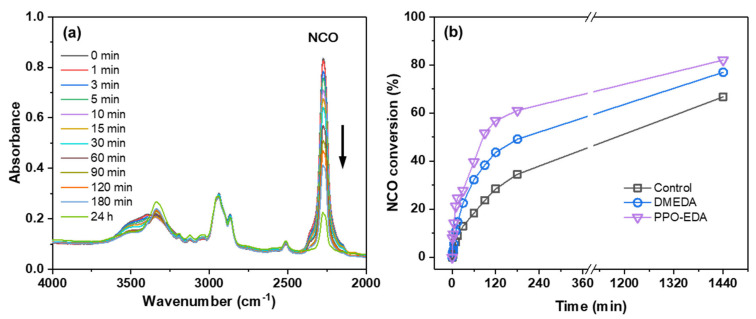
This study explores the use of propylene oxide-modified ethylenediamine (PPO-EDA) as a novel crosslinker and chain extender in polyurethane (PU) adhesives. PPO-EDA was synthesized and compared with N,N'-dimethylethylenediamine (DMEDA) to assess its impact on mechanical properties and adhesion performance. Key parameters such as NCO conversion, tensile strength, and lap shear strength were thoroughly evaluated. The results demonstrated that incorporating PPO-EDA significantly improved NCO conversion and crosslink density, leading to notable enhancements in tensile strength and elastic modulus compared to DMEDA. Lap shear tests further revealed superior adhesion performance in PPO-EDA-modified PU adhesives, particularly on amine silane-treated steel substrates, where lap shear strength consistently outperformed other samples. This improved performance was attributed to PPO-EDA's dual role as a chain extender and crosslinker, which strengthened the adhesive's structural integrity. This study underscores the effectiveness of PPO-EDA as a modifier for enhancing both mechanical and adhesive properties in PU-based adhesives, offering a promising solution for optimizing high-performance adhesives in automotive and industrial applications.
期刊介绍:
Polymers (ISSN 2073-4360) is an international, open access journal of polymer science. It publishes research papers, short communications and review papers. Our aim is to encourage scientists to publish their experimental and theoretical results in as much detail as possible. Therefore, there is no restriction on the length of the papers. The full experimental details must be provided so that the results can be reproduced. Polymers provides an interdisciplinary forum for publishing papers which advance the fields of (i) polymerization methods, (ii) theory, simulation, and modeling, (iii) understanding of new physical phenomena, (iv) advances in characterization techniques, and (v) harnessing of self-assembly and biological strategies for producing complex multifunctional structures.






 京公网安备 11010802042870号
京ICP备2023020795号-1
京公网安备 11010802042870号
京ICP备2023020795号-1

 分享
分享
 求助内容:
求助内容: 应助结果提醒方式:
 扫码关注我们
