{"title":"唾液细胞因子在早产儿视网膜病变中的作用分析。","authors":"Hwa-Shiu Wu, Hsin-Chun Huang, I-Lun Chen","doi":"10.3390/children12010080","DOIUrl":null,"url":null,"abstract":"<p><strong>Background/objectives: </strong>This cohort study aimed to establish a correlation between salivary cytokines and retinopathy of prematurity (ROP) in premature neonates. Additionally, we sought to identify a minimally invasive method for cytokine detection in this population.</p><p><strong>Methods: </strong>We recruited premature neonates born at less than 34 weeks gestational age (GA), with no history of maternal or neonatal infections. Salivary samples were collected on their first (D1) and seventh (D7) days of life, and cytokine levels were measured using the MILLPLEXMAP Human multiplex assay.</p><p><strong>Results: </strong>A total of 125 neonates were included in the study, categorized into two groups based on the severity of ROP: None to Mild and Moderate to Severe. The salivary levels of interleukin (IL)-6, IL-8, vascular endothelial growth factor (VEGF), and tumor necrosis factor (TNF)-α on D1 and D7 were significantly higher in the Moderate to Severe ROP group compared to the None to Mild ROP group (<i>p</i> = 0.005, 0.004, 0.026, 0.018, 0.001, 0.007, 0.025, and 0.002, respectively). After adjusting for GA, the levels of IL-6 and VEGF on D7 were significantly elevated in the Moderate to Severe ROP group compared to the None to Mild ROP group (<i>p</i> = 0.024 and 0.016, respectively).</p><p><strong>Conclusions: </strong>This study establishes a novel, non-invasive method for the early prediction of ROP in premature neonates by correlating salivary cytokine levels in early life with the subsequent development of ROP.</p>","PeriodicalId":48588,"journal":{"name":"Children-Basel","volume":"12 1","pages":""},"PeriodicalIF":2.1000,"publicationDate":"2025-01-10","publicationTypes":"Journal Article","fieldsOfStudy":null,"isOpenAccess":false,"openAccessPdf":"https://www.ncbi.nlm.nih.gov/pmc/articles/PMC11764213/pdf/","citationCount":"0","resultStr":"{\"title\":\"Analysis of Salivary Cytokines in Retinopathy of Prematurity.\",\"authors\":\"Hwa-Shiu Wu, Hsin-Chun Huang, I-Lun Chen\",\"doi\":\"10.3390/children12010080\",\"DOIUrl\":null,\"url\":null,\"abstract\":\"<p><strong>Background/objectives: </strong>This cohort study aimed to establish a correlation between salivary cytokines and retinopathy of prematurity (ROP) in premature neonates. Additionally, we sought to identify a minimally invasive method for cytokine detection in this population.</p><p><strong>Methods: </strong>We recruited premature neonates born at less than 34 weeks gestational age (GA), with no history of maternal or neonatal infections. Salivary samples were collected on their first (D1) and seventh (D7) days of life, and cytokine levels were measured using the MILLPLEXMAP Human multiplex assay.</p><p><strong>Results: </strong>A total of 125 neonates were included in the study, categorized into two groups based on the severity of ROP: None to Mild and Moderate to Severe. The salivary levels of interleukin (IL)-6, IL-8, vascular endothelial growth factor (VEGF), and tumor necrosis factor (TNF)-α on D1 and D7 were significantly higher in the Moderate to Severe ROP group compared to the None to Mild ROP group (<i>p</i> = 0.005, 0.004, 0.026, 0.018, 0.001, 0.007, 0.025, and 0.002, respectively). After adjusting for GA, the levels of IL-6 and VEGF on D7 were significantly elevated in the Moderate to Severe ROP group compared to the None to Mild ROP group (<i>p</i> = 0.024 and 0.016, respectively).</p><p><strong>Conclusions: </strong>This study establishes a novel, non-invasive method for the early prediction of ROP in premature neonates by correlating salivary cytokine levels in early life with the subsequent development of ROP.</p>\",\"PeriodicalId\":48588,\"journal\":{\"name\":\"Children-Basel\",\"volume\":\"12 1\",\"pages\":\"\"},\"PeriodicalIF\":2.1000,\"publicationDate\":\"2025-01-10\",\"publicationTypes\":\"Journal Article\",\"fieldsOfStudy\":null,\"isOpenAccess\":false,\"openAccessPdf\":\"https://www.ncbi.nlm.nih.gov/pmc/articles/PMC11764213/pdf/\",\"citationCount\":\"0\",\"resultStr\":null,\"platform\":\"Semanticscholar\",\"paperid\":null,\"PeriodicalName\":\"Children-Basel\",\"FirstCategoryId\":\"3\",\"ListUrlMain\":\"https://doi.org/10.3390/children12010080\",\"RegionNum\":4,\"RegionCategory\":\"医学\",\"ArticlePicture\":[],\"TitleCN\":null,\"AbstractTextCN\":null,\"PMCID\":null,\"EPubDate\":\"\",\"PubModel\":\"\",\"JCR\":\"Q2\",\"JCRName\":\"PEDIATRICS\",\"Score\":null,\"Total\":0}","platform":"Semanticscholar","paperid":null,"PeriodicalName":"Children-Basel","FirstCategoryId":"3","ListUrlMain":"https://doi.org/10.3390/children12010080","RegionNum":4,"RegionCategory":"医学","ArticlePicture":[],"TitleCN":null,"AbstractTextCN":null,"PMCID":null,"EPubDate":"","PubModel":"","JCR":"Q2","JCRName":"PEDIATRICS","Score":null,"Total":0}
引用次数: 0
摘要
背景/目的:本队列研究旨在建立唾液细胞因子与早产儿视网膜病变(ROP)之间的相关性。此外,我们试图在这一人群中确定一种微创细胞因子检测方法。方法:我们招募了出生在小于34周胎龄(GA)的早产儿,没有母体或新生儿感染史。在出生后的第1天(D1)和第7天(D7)采集唾液样本,并使用MILLPLEXMAP Human multiplex assay检测细胞因子水平。结果:共纳入125例新生儿,根据ROP的严重程度分为两组:无至轻度和中度至重度。中度至重度ROP组D1和D7的唾液白细胞介素(IL)-6、IL-8、血管内皮生长因子(VEGF)和肿瘤坏死因子(TNF)-α水平显著高于无至轻度ROP组(p分别为0.005、0.004、0.026、0.018、0.001、0.007、0.025和0.002)。经GA校正后,与无ROP至轻度ROP组相比,中度至重度ROP组D7上IL-6和VEGF水平显著升高(p = 0.024和0.016)。结论:本研究建立了一种新的、无创的方法,通过将早期生活中唾液细胞因子水平与ROP的后续发展相关联,来早期预测早产儿ROP。
Analysis of Salivary Cytokines in Retinopathy of Prematurity.
Background/objectives: This cohort study aimed to establish a correlation between salivary cytokines and retinopathy of prematurity (ROP) in premature neonates. Additionally, we sought to identify a minimally invasive method for cytokine detection in this population.
Methods: We recruited premature neonates born at less than 34 weeks gestational age (GA), with no history of maternal or neonatal infections. Salivary samples were collected on their first (D1) and seventh (D7) days of life, and cytokine levels were measured using the MILLPLEXMAP Human multiplex assay.
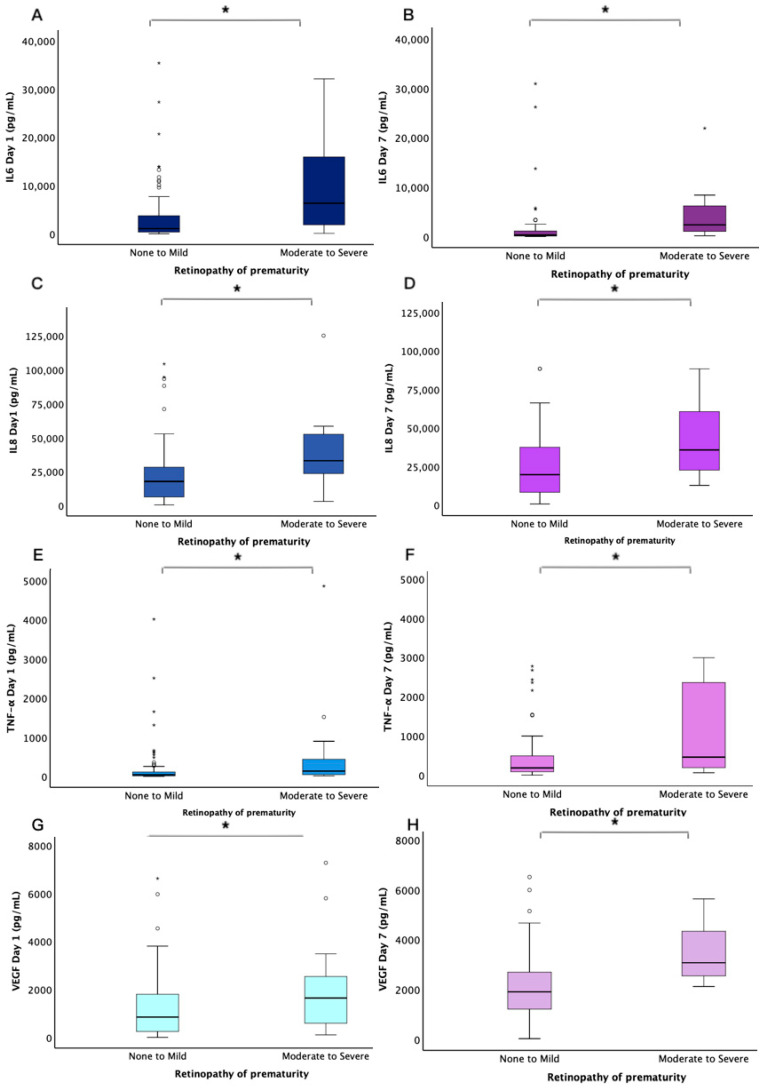
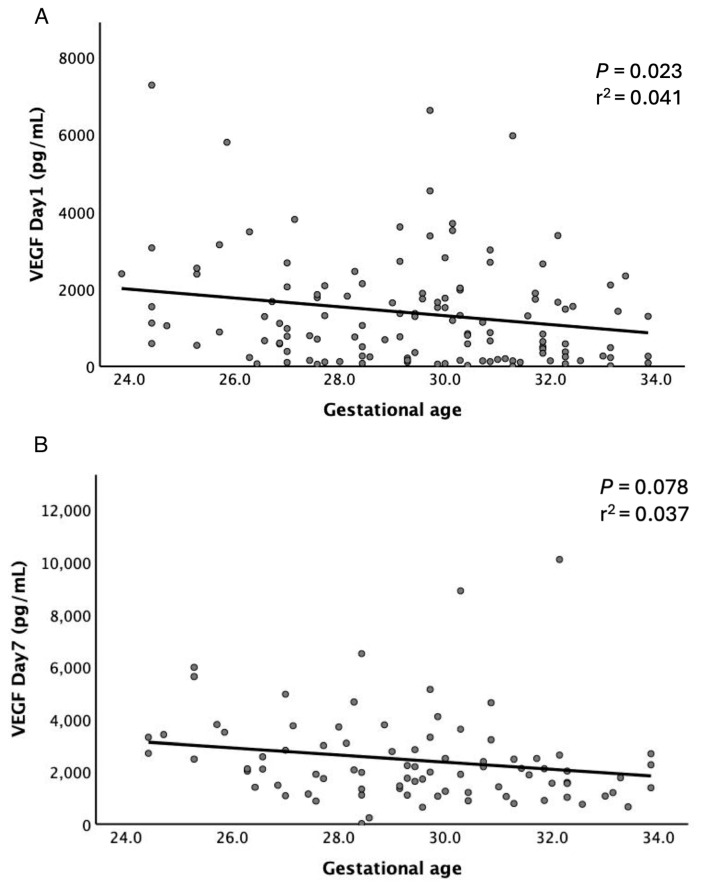
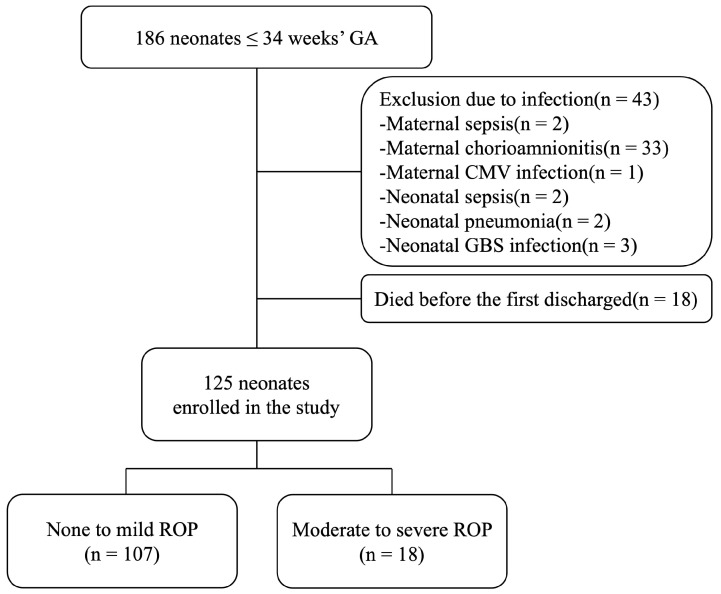
Results: A total of 125 neonates were included in the study, categorized into two groups based on the severity of ROP: None to Mild and Moderate to Severe. The salivary levels of interleukin (IL)-6, IL-8, vascular endothelial growth factor (VEGF), and tumor necrosis factor (TNF)-α on D1 and D7 were significantly higher in the Moderate to Severe ROP group compared to the None to Mild ROP group (p = 0.005, 0.004, 0.026, 0.018, 0.001, 0.007, 0.025, and 0.002, respectively). After adjusting for GA, the levels of IL-6 and VEGF on D7 were significantly elevated in the Moderate to Severe ROP group compared to the None to Mild ROP group (p = 0.024 and 0.016, respectively).
Conclusions: This study establishes a novel, non-invasive method for the early prediction of ROP in premature neonates by correlating salivary cytokine levels in early life with the subsequent development of ROP.
期刊介绍:
Children is an international, open access journal dedicated to a streamlined, yet scientifically rigorous, dissemination of peer-reviewed science related to childhood health and disease in developed and developing countries.
The publication focuses on sharing clinical, epidemiological and translational science relevant to children’s health. Moreover, the primary goals of the publication are to highlight under‑represented pediatric disciplines, to emphasize interdisciplinary research and to disseminate advances in knowledge in global child health. In addition to original research, the journal publishes expert editorials and commentaries, clinical case reports, and insightful communications reflecting the latest developments in pediatric medicine. By publishing meritorious articles as soon as the editorial review process is completed, rather than at predefined intervals, Children also permits rapid open access sharing of new information, allowing us to reach the broadest audience in the most expedient fashion.




 京公网安备 11010802042870号
京ICP备2023020795号-1
京公网安备 11010802042870号
京ICP备2023020795号-1

 分享
分享
 求助内容:
求助内容: 应助结果提醒方式:
 扫码关注我们
