Zheng Kong , Zhiyao Wang , Zhetai Hu , Yunqian Song , Dongdong Xu , Guanbin Li , Jason Dwyer , Shihu Hu
{"title":"使用传统活性污泥启动酸性硝化的见解:过程动力学、硝化器演替和中试示范","authors":"Zheng Kong , Zhiyao Wang , Zhetai Hu , Yunqian Song , Dongdong Xu , Guanbin Li , Jason Dwyer , Shihu Hu","doi":"10.1016/j.watres.2025.123208","DOIUrl":null,"url":null,"abstract":"<div><div>Acidic nitritation driven by acid-tolerant ammonia-oxidizing bacteria (AOB) has gained wide attention due to its potential in sustainable wastewater and sludge treatment. However, limited knowledge of initiating acidic nitration using conventional activated sludge hindered the wider studies and application of this technology at lab- and field-scale. This study evaluates three strategies for initiating acidic nitritation: a constant low hydraulic retention time (HRT); an extended initial HRT followed by manual HRT reduction; and pH-controlled HRT. All strategies successfully started acidic nitritation using seed sludge from a local wastewater treatment plant (WWTP) containing undetectable acid-tolerant AOB. Among the three strategies, pH-controlled HRT was the most efficient, with a smoother (minimal fluctuations) and faster (around 30 days) start-up process than the other two strategies. This was attributed to an initial redundancy in ammonia oxidation capacity (i.e. making the proton generation rate caused by ammonium oxidation exceed the alkalinity supply rate by influent), allowing AOB to overcome the activity valley during the transition from neutral to acid pH Level. Using pH as a real-time proxy of AOB activity also leveraged the unique low buffer capacity at acidic pH. Based on these findings, a pilot-scale acidic nitritation reactor treating diluted sidestream wastewater was initiated for the first time using the pH-controlled strategy. The pilot reactor immediately achieved nitrite accumulation and reached the target hydraulic loading rate quicker than the lab reactor, indicating higher influent nitrogen concentration may facilitate NOB suppression and a higher growth rate of acid-tolerant AOB. Based on those results, the versatile start-up strategies using both mainstream or sidestream wastewater were further discussed. Overall, this work greatly expands potential applications of acidic nitritation and paves the way for future field-scale applications.</div></div>","PeriodicalId":443,"journal":{"name":"Water Research","volume":"275 ","pages":"Article 123208"},"PeriodicalIF":12.8000,"publicationDate":"2025-05-01","publicationTypes":"Journal Article","fieldsOfStudy":null,"isOpenAccess":false,"openAccessPdf":"","citationCount":"0","resultStr":"{\"title\":\"Insights into the start-up of acidic nitritation using conventional activated sludge: Process dynamics, nitrifiers succession, and pilot-scale demonstration\",\"authors\":\"Zheng Kong , Zhiyao Wang , Zhetai Hu , Yunqian Song , Dongdong Xu , Guanbin Li , Jason Dwyer , Shihu Hu\",\"doi\":\"10.1016/j.watres.2025.123208\",\"DOIUrl\":null,\"url\":null,\"abstract\":\"<div><div>Acidic nitritation driven by acid-tolerant ammonia-oxidizing bacteria (AOB) has gained wide attention due to its potential in sustainable wastewater and sludge treatment. However, limited knowledge of initiating acidic nitration using conventional activated sludge hindered the wider studies and application of this technology at lab- and field-scale. This study evaluates three strategies for initiating acidic nitritation: a constant low hydraulic retention time (HRT); an extended initial HRT followed by manual HRT reduction; and pH-controlled HRT. All strategies successfully started acidic nitritation using seed sludge from a local wastewater treatment plant (WWTP) containing undetectable acid-tolerant AOB. Among the three strategies, pH-controlled HRT was the most efficient, with a smoother (minimal fluctuations) and faster (around 30 days) start-up process than the other two strategies. This was attributed to an initial redundancy in ammonia oxidation capacity (i.e. making the proton generation rate caused by ammonium oxidation exceed the alkalinity supply rate by influent), allowing AOB to overcome the activity valley during the transition from neutral to acid pH Level. Using pH as a real-time proxy of AOB activity also leveraged the unique low buffer capacity at acidic pH. Based on these findings, a pilot-scale acidic nitritation reactor treating diluted sidestream wastewater was initiated for the first time using the pH-controlled strategy. The pilot reactor immediately achieved nitrite accumulation and reached the target hydraulic loading rate quicker than the lab reactor, indicating higher influent nitrogen concentration may facilitate NOB suppression and a higher growth rate of acid-tolerant AOB. Based on those results, the versatile start-up strategies using both mainstream or sidestream wastewater were further discussed. Overall, this work greatly expands potential applications of acidic nitritation and paves the way for future field-scale applications.</div></div>\",\"PeriodicalId\":443,\"journal\":{\"name\":\"Water Research\",\"volume\":\"275 \",\"pages\":\"Article 123208\"},\"PeriodicalIF\":12.8000,\"publicationDate\":\"2025-05-01\",\"publicationTypes\":\"Journal Article\",\"fieldsOfStudy\":null,\"isOpenAccess\":false,\"openAccessPdf\":\"\",\"citationCount\":\"0\",\"resultStr\":null,\"platform\":\"Semanticscholar\",\"paperid\":null,\"PeriodicalName\":\"Water Research\",\"FirstCategoryId\":\"93\",\"ListUrlMain\":\"https://www.sciencedirect.com/science/article/pii/S0043135425001228\",\"RegionNum\":1,\"RegionCategory\":\"环境科学与生态学\",\"ArticlePicture\":[],\"TitleCN\":null,\"AbstractTextCN\":null,\"PMCID\":null,\"EPubDate\":\"2025/1/26 0:00:00\",\"PubModel\":\"Epub\",\"JCR\":\"Q1\",\"JCRName\":\"ENGINEERING, ENVIRONMENTAL\",\"Score\":null,\"Total\":0}","platform":"Semanticscholar","paperid":null,"PeriodicalName":"Water Research","FirstCategoryId":"93","ListUrlMain":"https://www.sciencedirect.com/science/article/pii/S0043135425001228","RegionNum":1,"RegionCategory":"环境科学与生态学","ArticlePicture":[],"TitleCN":null,"AbstractTextCN":null,"PMCID":null,"EPubDate":"2025/1/26 0:00:00","PubModel":"Epub","JCR":"Q1","JCRName":"ENGINEERING, ENVIRONMENTAL","Score":null,"Total":0}
Insights into the start-up of acidic nitritation using conventional activated sludge: Process dynamics, nitrifiers succession, and pilot-scale demonstration
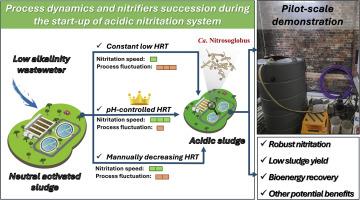
Acidic nitritation driven by acid-tolerant ammonia-oxidizing bacteria (AOB) has gained wide attention due to its potential in sustainable wastewater and sludge treatment. However, limited knowledge of initiating acidic nitration using conventional activated sludge hindered the wider studies and application of this technology at lab- and field-scale. This study evaluates three strategies for initiating acidic nitritation: a constant low hydraulic retention time (HRT); an extended initial HRT followed by manual HRT reduction; and pH-controlled HRT. All strategies successfully started acidic nitritation using seed sludge from a local wastewater treatment plant (WWTP) containing undetectable acid-tolerant AOB. Among the three strategies, pH-controlled HRT was the most efficient, with a smoother (minimal fluctuations) and faster (around 30 days) start-up process than the other two strategies. This was attributed to an initial redundancy in ammonia oxidation capacity (i.e. making the proton generation rate caused by ammonium oxidation exceed the alkalinity supply rate by influent), allowing AOB to overcome the activity valley during the transition from neutral to acid pH Level. Using pH as a real-time proxy of AOB activity also leveraged the unique low buffer capacity at acidic pH. Based on these findings, a pilot-scale acidic nitritation reactor treating diluted sidestream wastewater was initiated for the first time using the pH-controlled strategy. The pilot reactor immediately achieved nitrite accumulation and reached the target hydraulic loading rate quicker than the lab reactor, indicating higher influent nitrogen concentration may facilitate NOB suppression and a higher growth rate of acid-tolerant AOB. Based on those results, the versatile start-up strategies using both mainstream or sidestream wastewater were further discussed. Overall, this work greatly expands potential applications of acidic nitritation and paves the way for future field-scale applications.
期刊介绍:
Water Research, along with its open access companion journal Water Research X, serves as a platform for publishing original research papers covering various aspects of the science and technology related to the anthropogenic water cycle, water quality, and its management worldwide. The audience targeted by the journal comprises biologists, chemical engineers, chemists, civil engineers, environmental engineers, limnologists, and microbiologists. The scope of the journal include:
•Treatment processes for water and wastewaters (municipal, agricultural, industrial, and on-site treatment), including resource recovery and residuals management;
•Urban hydrology including sewer systems, stormwater management, and green infrastructure;
•Drinking water treatment and distribution;
•Potable and non-potable water reuse;
•Sanitation, public health, and risk assessment;
•Anaerobic digestion, solid and hazardous waste management, including source characterization and the effects and control of leachates and gaseous emissions;
•Contaminants (chemical, microbial, anthropogenic particles such as nanoparticles or microplastics) and related water quality sensing, monitoring, fate, and assessment;
•Anthropogenic impacts on inland, tidal, coastal and urban waters, focusing on surface and ground waters, and point and non-point sources of pollution;
•Environmental restoration, linked to surface water, groundwater and groundwater remediation;
•Analysis of the interfaces between sediments and water, and between water and atmosphere, focusing specifically on anthropogenic impacts;
•Mathematical modelling, systems analysis, machine learning, and beneficial use of big data related to the anthropogenic water cycle;
•Socio-economic, policy, and regulations studies.





 京公网安备 11010802042870号
京ICP备2023020795号-1
京公网安备 11010802042870号
京ICP备2023020795号-1

 分享
分享
 求助内容:
求助内容: 应助结果提醒方式:
 扫码关注我们
