Qingfei Chen , Heng Yang , Rongyang Cui , Wanli Hu , Chi Wang , Anqiang Chen , Dan Zhang
{"title":"浅层地下水位波动:加速农田土壤中磷迁移转化的驱动力","authors":"Qingfei Chen , Heng Yang , Rongyang Cui , Wanli Hu , Chi Wang , Anqiang Chen , Dan Zhang","doi":"10.1016/j.watres.2025.123209","DOIUrl":null,"url":null,"abstract":"<div><div>The accumulation of phosphorus (P) in soil profiles of intensive cropland and the losses caused by runoff and leaching have been widely concerned. However, the loss of soil P due to shallow groundwater table (SGT) fluctuations driven by seasonal changes is often neglected, and the migration and transformation mechanisms of soil P are still unclear. On the basis of the long-term monitoring of cropland soil P accumulation and SGT fluctuations around Erhai Lake, the characteristics of soil P loss driven by SGT fluctuations and the corresponding mechanisms were investigated through a 260-day microcosm experiment. The results revealed that the fluctuations in SGT significantly changed the content and form of P in the soil profile. The soil P loss mainly occurred in dissolved form, mainly involving inorganic P, accounting for 75 %. Compared with those under continuous saturated conditions, soil total P (TP) release during SGT fluctuations significantly increased by 9.5 %, and soil TP storage was reduced by 2 %. SGT fluctuations increased the complexity of microbial networks in the soil profile, stimulated the expression of functional genes for soil P cycling, and promoted soil organic P mineralization. The SGT fluctuations caused an increase in the soil TP loss from cropland to 88.5 kg/ha, which was 70 and 25 times greater than that via leaching and runoff, respectively. These results indicated that SGT fluctuations accelerated the P loss from soil profile of cropland. Therefore, some measures should be comprehensively applied to prevent its loss, such as reducing external P input, improving surface soil P storage capacity and soil P utilization efficiency, reducing surface P leaching into deep soil, and reducing P accumulation in deep soil profiles.</div></div>","PeriodicalId":443,"journal":{"name":"Water Research","volume":"275 ","pages":"Article 123209"},"PeriodicalIF":12.4000,"publicationDate":"2025-05-01","publicationTypes":"Journal Article","fieldsOfStudy":null,"isOpenAccess":false,"openAccessPdf":"","citationCount":"0","resultStr":"{\"title\":\"Shallow groundwater table fluctuations: A driving force for accelerating the migration and transformation of phosphorus in cropland soil\",\"authors\":\"Qingfei Chen , Heng Yang , Rongyang Cui , Wanli Hu , Chi Wang , Anqiang Chen , Dan Zhang\",\"doi\":\"10.1016/j.watres.2025.123209\",\"DOIUrl\":null,\"url\":null,\"abstract\":\"<div><div>The accumulation of phosphorus (P) in soil profiles of intensive cropland and the losses caused by runoff and leaching have been widely concerned. However, the loss of soil P due to shallow groundwater table (SGT) fluctuations driven by seasonal changes is often neglected, and the migration and transformation mechanisms of soil P are still unclear. On the basis of the long-term monitoring of cropland soil P accumulation and SGT fluctuations around Erhai Lake, the characteristics of soil P loss driven by SGT fluctuations and the corresponding mechanisms were investigated through a 260-day microcosm experiment. The results revealed that the fluctuations in SGT significantly changed the content and form of P in the soil profile. The soil P loss mainly occurred in dissolved form, mainly involving inorganic P, accounting for 75 %. Compared with those under continuous saturated conditions, soil total P (TP) release during SGT fluctuations significantly increased by 9.5 %, and soil TP storage was reduced by 2 %. SGT fluctuations increased the complexity of microbial networks in the soil profile, stimulated the expression of functional genes for soil P cycling, and promoted soil organic P mineralization. The SGT fluctuations caused an increase in the soil TP loss from cropland to 88.5 kg/ha, which was 70 and 25 times greater than that via leaching and runoff, respectively. These results indicated that SGT fluctuations accelerated the P loss from soil profile of cropland. Therefore, some measures should be comprehensively applied to prevent its loss, such as reducing external P input, improving surface soil P storage capacity and soil P utilization efficiency, reducing surface P leaching into deep soil, and reducing P accumulation in deep soil profiles.</div></div>\",\"PeriodicalId\":443,\"journal\":{\"name\":\"Water Research\",\"volume\":\"275 \",\"pages\":\"Article 123209\"},\"PeriodicalIF\":12.4000,\"publicationDate\":\"2025-05-01\",\"publicationTypes\":\"Journal Article\",\"fieldsOfStudy\":null,\"isOpenAccess\":false,\"openAccessPdf\":\"\",\"citationCount\":\"0\",\"resultStr\":null,\"platform\":\"Semanticscholar\",\"paperid\":null,\"PeriodicalName\":\"Water Research\",\"FirstCategoryId\":\"93\",\"ListUrlMain\":\"https://www.sciencedirect.com/science/article/pii/S004313542500123X\",\"RegionNum\":1,\"RegionCategory\":\"环境科学与生态学\",\"ArticlePicture\":[],\"TitleCN\":null,\"AbstractTextCN\":null,\"PMCID\":null,\"EPubDate\":\"2025/1/27 0:00:00\",\"PubModel\":\"Epub\",\"JCR\":\"Q1\",\"JCRName\":\"ENGINEERING, ENVIRONMENTAL\",\"Score\":null,\"Total\":0}","platform":"Semanticscholar","paperid":null,"PeriodicalName":"Water Research","FirstCategoryId":"93","ListUrlMain":"https://www.sciencedirect.com/science/article/pii/S004313542500123X","RegionNum":1,"RegionCategory":"环境科学与生态学","ArticlePicture":[],"TitleCN":null,"AbstractTextCN":null,"PMCID":null,"EPubDate":"2025/1/27 0:00:00","PubModel":"Epub","JCR":"Q1","JCRName":"ENGINEERING, ENVIRONMENTAL","Score":null,"Total":0}
Shallow groundwater table fluctuations: A driving force for accelerating the migration and transformation of phosphorus in cropland soil
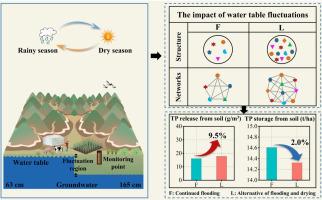
The accumulation of phosphorus (P) in soil profiles of intensive cropland and the losses caused by runoff and leaching have been widely concerned. However, the loss of soil P due to shallow groundwater table (SGT) fluctuations driven by seasonal changes is often neglected, and the migration and transformation mechanisms of soil P are still unclear. On the basis of the long-term monitoring of cropland soil P accumulation and SGT fluctuations around Erhai Lake, the characteristics of soil P loss driven by SGT fluctuations and the corresponding mechanisms were investigated through a 260-day microcosm experiment. The results revealed that the fluctuations in SGT significantly changed the content and form of P in the soil profile. The soil P loss mainly occurred in dissolved form, mainly involving inorganic P, accounting for 75 %. Compared with those under continuous saturated conditions, soil total P (TP) release during SGT fluctuations significantly increased by 9.5 %, and soil TP storage was reduced by 2 %. SGT fluctuations increased the complexity of microbial networks in the soil profile, stimulated the expression of functional genes for soil P cycling, and promoted soil organic P mineralization. The SGT fluctuations caused an increase in the soil TP loss from cropland to 88.5 kg/ha, which was 70 and 25 times greater than that via leaching and runoff, respectively. These results indicated that SGT fluctuations accelerated the P loss from soil profile of cropland. Therefore, some measures should be comprehensively applied to prevent its loss, such as reducing external P input, improving surface soil P storage capacity and soil P utilization efficiency, reducing surface P leaching into deep soil, and reducing P accumulation in deep soil profiles.
期刊介绍:
Water Research, along with its open access companion journal Water Research X, serves as a platform for publishing original research papers covering various aspects of the science and technology related to the anthropogenic water cycle, water quality, and its management worldwide. The audience targeted by the journal comprises biologists, chemical engineers, chemists, civil engineers, environmental engineers, limnologists, and microbiologists. The scope of the journal include:
•Treatment processes for water and wastewaters (municipal, agricultural, industrial, and on-site treatment), including resource recovery and residuals management;
•Urban hydrology including sewer systems, stormwater management, and green infrastructure;
•Drinking water treatment and distribution;
•Potable and non-potable water reuse;
•Sanitation, public health, and risk assessment;
•Anaerobic digestion, solid and hazardous waste management, including source characterization and the effects and control of leachates and gaseous emissions;
•Contaminants (chemical, microbial, anthropogenic particles such as nanoparticles or microplastics) and related water quality sensing, monitoring, fate, and assessment;
•Anthropogenic impacts on inland, tidal, coastal and urban waters, focusing on surface and ground waters, and point and non-point sources of pollution;
•Environmental restoration, linked to surface water, groundwater and groundwater remediation;
•Analysis of the interfaces between sediments and water, and between water and atmosphere, focusing specifically on anthropogenic impacts;
•Mathematical modelling, systems analysis, machine learning, and beneficial use of big data related to the anthropogenic water cycle;
•Socio-economic, policy, and regulations studies.





 京公网安备 11010802042870号
京ICP备2023020795号-1
京公网安备 11010802042870号
京ICP备2023020795号-1

 分享
分享
 求助内容:
求助内容: 应助结果提醒方式:
 扫码关注我们
