{"title":"揭示胆红素在神经系统疾病中的双重作用:对其神经保护和神经毒性作用的全面探索。","authors":"Arshdeep Kaur , Rohit , Khadga Raj Aran","doi":"10.1016/j.brainres.2025.149472","DOIUrl":null,"url":null,"abstract":"<div><div>Neurodegenerative disorders are characterized by a progressive loss of neurons, causing substantial deficits in motor and cognitive functioning. Bilirubin is a yellow by-product of heme, existing in two primary isoforms namely unconjugated and conjugated, while initially produced unconjugated isomer is lipophilic and cytotoxic in nature. At physiological levels, bilirubin has an important role in brain function by acting as a powerful antioxidant, preventing brain tissues from oxidative damage by eliminating reactive oxygen species (ROS). Additionally, it contributes to immune regulation through microglial activation, cytokine release, complement system interception, fragment crystallization (Fc) receptor modulation, and major histocompatibility complex (MHC II) expression modification, which lower the risk of inflammatory and autoimmune reactions in the central nervous system (CNS). As per the literature, serum bilirubin concentrations are associated with CNS diseases such as Alzheimer’s disease (AD), Parkinson’s disease (PD), ischemic stroke, hemorrhagic stroke, traumatic brain injury (TBI), multiple sclerosis (MS), epilepsy, schizophrenia and kernicterus spectrum disorder (KSD), which causes neuronal damage, especially in regions like the basal ganglia and cerebellum, which causes movement abnormalities and cognitive deficits. The aim of this article is to explore the dual role of bilirubin as neuroprotective and neurotoxic, essential for establishing effective therapeutic outcomes for neurodegenerative diseases by looking at its cellular mechanisms and discussing how bilirubin’s antioxidant properties can shield neurons and, in some situations, may induce oxidative stress and apoptosis.</div></div>","PeriodicalId":9083,"journal":{"name":"Brain Research","volume":"1851 ","pages":"Article 149472"},"PeriodicalIF":2.6000,"publicationDate":"2025-03-15","publicationTypes":"Journal Article","fieldsOfStudy":null,"isOpenAccess":false,"openAccessPdf":"","citationCount":"0","resultStr":"{\"title\":\"Unraveling the dual role of bilirubin in neurological Diseases: A Comprehensive exploration of its neuroprotective and neurotoxic effects\",\"authors\":\"Arshdeep Kaur , Rohit , Khadga Raj Aran\",\"doi\":\"10.1016/j.brainres.2025.149472\",\"DOIUrl\":null,\"url\":null,\"abstract\":\"<div><div>Neurodegenerative disorders are characterized by a progressive loss of neurons, causing substantial deficits in motor and cognitive functioning. Bilirubin is a yellow by-product of heme, existing in two primary isoforms namely unconjugated and conjugated, while initially produced unconjugated isomer is lipophilic and cytotoxic in nature. At physiological levels, bilirubin has an important role in brain function by acting as a powerful antioxidant, preventing brain tissues from oxidative damage by eliminating reactive oxygen species (ROS). Additionally, it contributes to immune regulation through microglial activation, cytokine release, complement system interception, fragment crystallization (Fc) receptor modulation, and major histocompatibility complex (MHC II) expression modification, which lower the risk of inflammatory and autoimmune reactions in the central nervous system (CNS). As per the literature, serum bilirubin concentrations are associated with CNS diseases such as Alzheimer’s disease (AD), Parkinson’s disease (PD), ischemic stroke, hemorrhagic stroke, traumatic brain injury (TBI), multiple sclerosis (MS), epilepsy, schizophrenia and kernicterus spectrum disorder (KSD), which causes neuronal damage, especially in regions like the basal ganglia and cerebellum, which causes movement abnormalities and cognitive deficits. The aim of this article is to explore the dual role of bilirubin as neuroprotective and neurotoxic, essential for establishing effective therapeutic outcomes for neurodegenerative diseases by looking at its cellular mechanisms and discussing how bilirubin’s antioxidant properties can shield neurons and, in some situations, may induce oxidative stress and apoptosis.</div></div>\",\"PeriodicalId\":9083,\"journal\":{\"name\":\"Brain Research\",\"volume\":\"1851 \",\"pages\":\"Article 149472\"},\"PeriodicalIF\":2.6000,\"publicationDate\":\"2025-03-15\",\"publicationTypes\":\"Journal Article\",\"fieldsOfStudy\":null,\"isOpenAccess\":false,\"openAccessPdf\":\"\",\"citationCount\":\"0\",\"resultStr\":null,\"platform\":\"Semanticscholar\",\"paperid\":null,\"PeriodicalName\":\"Brain Research\",\"FirstCategoryId\":\"3\",\"ListUrlMain\":\"https://www.sciencedirect.com/science/article/pii/S0006899325000307\",\"RegionNum\":4,\"RegionCategory\":\"医学\",\"ArticlePicture\":[],\"TitleCN\":null,\"AbstractTextCN\":null,\"PMCID\":null,\"EPubDate\":\"2025/1/27 0:00:00\",\"PubModel\":\"Epub\",\"JCR\":\"Q3\",\"JCRName\":\"NEUROSCIENCES\",\"Score\":null,\"Total\":0}","platform":"Semanticscholar","paperid":null,"PeriodicalName":"Brain Research","FirstCategoryId":"3","ListUrlMain":"https://www.sciencedirect.com/science/article/pii/S0006899325000307","RegionNum":4,"RegionCategory":"医学","ArticlePicture":[],"TitleCN":null,"AbstractTextCN":null,"PMCID":null,"EPubDate":"2025/1/27 0:00:00","PubModel":"Epub","JCR":"Q3","JCRName":"NEUROSCIENCES","Score":null,"Total":0}
Unraveling the dual role of bilirubin in neurological Diseases: A Comprehensive exploration of its neuroprotective and neurotoxic effects
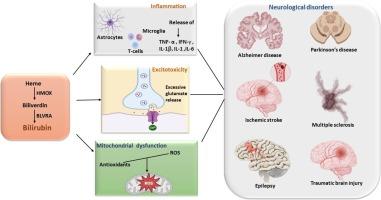
Neurodegenerative disorders are characterized by a progressive loss of neurons, causing substantial deficits in motor and cognitive functioning. Bilirubin is a yellow by-product of heme, existing in two primary isoforms namely unconjugated and conjugated, while initially produced unconjugated isomer is lipophilic and cytotoxic in nature. At physiological levels, bilirubin has an important role in brain function by acting as a powerful antioxidant, preventing brain tissues from oxidative damage by eliminating reactive oxygen species (ROS). Additionally, it contributes to immune regulation through microglial activation, cytokine release, complement system interception, fragment crystallization (Fc) receptor modulation, and major histocompatibility complex (MHC II) expression modification, which lower the risk of inflammatory and autoimmune reactions in the central nervous system (CNS). As per the literature, serum bilirubin concentrations are associated with CNS diseases such as Alzheimer’s disease (AD), Parkinson’s disease (PD), ischemic stroke, hemorrhagic stroke, traumatic brain injury (TBI), multiple sclerosis (MS), epilepsy, schizophrenia and kernicterus spectrum disorder (KSD), which causes neuronal damage, especially in regions like the basal ganglia and cerebellum, which causes movement abnormalities and cognitive deficits. The aim of this article is to explore the dual role of bilirubin as neuroprotective and neurotoxic, essential for establishing effective therapeutic outcomes for neurodegenerative diseases by looking at its cellular mechanisms and discussing how bilirubin’s antioxidant properties can shield neurons and, in some situations, may induce oxidative stress and apoptosis.
期刊介绍:
An international multidisciplinary journal devoted to fundamental research in the brain sciences.
Brain Research publishes papers reporting interdisciplinary investigations of nervous system structure and function that are of general interest to the international community of neuroscientists. As is evident from the journals name, its scope is broad, ranging from cellular and molecular studies through systems neuroscience, cognition and disease. Invited reviews are also published; suggestions for and inquiries about potential reviews are welcomed.
With the appearance of the final issue of the 2011 subscription, Vol. 67/1-2 (24 June 2011), Brain Research Reviews has ceased publication as a distinct journal separate from Brain Research. Review articles accepted for Brain Research are now published in that journal.




 京公网安备 11010802042870号
京ICP备2023020795号-1
京公网安备 11010802042870号
京ICP备2023020795号-1

 分享
分享
 求助内容:
求助内容: 应助结果提醒方式:
 扫码关注我们
