Manzeremu Rejiepu, Jun Shen, Junqing Liang, Alaili Maitikabili, Jian Yang, Ling Zhang, Na Mi
{"title":"苦参多糖通过激活自噬通路减轻lps诱导的巨噬细胞炎症反应。","authors":"Manzeremu Rejiepu, Jun Shen, Junqing Liang, Alaili Maitikabili, Jian Yang, Ling Zhang, Na Mi","doi":"10.1002/fsn3.4501","DOIUrl":null,"url":null,"abstract":"<p><i>Peganum harmala,</i> a member of the <i>Zygophyllaceae</i> family, is known for its diverse biological activities, including anti-inflammatory properties. The mechanisms through which <i>P. harmala</i> polysaccharide (LTP) induces autophagy, however, remain largely unexplored. This study aims to elucidate the role of LTP in autophagy induction and its efficacy in mitigating inflammation within macrophages. Autophagosome formation was evaluated using GFP-LC3 vectors, and LC3-II levels induced by LTP were analyzed through laser scanning confocal microscopy. Western blotting assessed the expression of autophagy-related proteins and the phosphorylation state of p70S6K in NRK cells, treated both with and without LTP, alongside autophagy inducers and inhibitors. Additionally, RAW264.7 cells were treated with 1 μg/mL lipopolysaccharides (LPS), followed by Western blotting and ELISA assays to quantify inflammatory markers. The study's outcomes demonstrate that LTP facilitates an increase in autophagic activity, as evidenced by the enhanced expression of LC3-II and reduced levels of p62 in both NRK and RAW264.7 macrophages. This effect is mediated through the activation of the AMPK-mTOR signaling pathway, without inhibiting the autophagosome–lysosome fusion process. In vitro experiments with RAW264.7 cells treated with 1 μg/mL LPS showed that LTP markedly decreased the levels of TNF-α and IL-6. Our findings indicate that LTP effectively reduces inflammation in LPS-stimulated macrophages by promoting autophagy via an mTOR-dependent mechanism.</p>","PeriodicalId":12418,"journal":{"name":"Food Science & Nutrition","volume":"13 1","pages":""},"PeriodicalIF":5.0000,"publicationDate":"2025-01-24","publicationTypes":"Journal Article","fieldsOfStudy":null,"isOpenAccess":false,"openAccessPdf":"https://www.ncbi.nlm.nih.gov/pmc/articles/PMC11761410/pdf/","citationCount":"0","resultStr":"{\"title\":\"Peganum harmala Polysaccharide Mitigates LPS-Induced Inflammatory Response in Macrophages by Activating Autophagy Pathway\",\"authors\":\"Manzeremu Rejiepu, Jun Shen, Junqing Liang, Alaili Maitikabili, Jian Yang, Ling Zhang, Na Mi\",\"doi\":\"10.1002/fsn3.4501\",\"DOIUrl\":null,\"url\":null,\"abstract\":\"<p><i>Peganum harmala,</i> a member of the <i>Zygophyllaceae</i> family, is known for its diverse biological activities, including anti-inflammatory properties. The mechanisms through which <i>P. harmala</i> polysaccharide (LTP) induces autophagy, however, remain largely unexplored. This study aims to elucidate the role of LTP in autophagy induction and its efficacy in mitigating inflammation within macrophages. Autophagosome formation was evaluated using GFP-LC3 vectors, and LC3-II levels induced by LTP were analyzed through laser scanning confocal microscopy. Western blotting assessed the expression of autophagy-related proteins and the phosphorylation state of p70S6K in NRK cells, treated both with and without LTP, alongside autophagy inducers and inhibitors. Additionally, RAW264.7 cells were treated with 1 μg/mL lipopolysaccharides (LPS), followed by Western blotting and ELISA assays to quantify inflammatory markers. The study's outcomes demonstrate that LTP facilitates an increase in autophagic activity, as evidenced by the enhanced expression of LC3-II and reduced levels of p62 in both NRK and RAW264.7 macrophages. This effect is mediated through the activation of the AMPK-mTOR signaling pathway, without inhibiting the autophagosome–lysosome fusion process. In vitro experiments with RAW264.7 cells treated with 1 μg/mL LPS showed that LTP markedly decreased the levels of TNF-α and IL-6. Our findings indicate that LTP effectively reduces inflammation in LPS-stimulated macrophages by promoting autophagy via an mTOR-dependent mechanism.</p>\",\"PeriodicalId\":12418,\"journal\":{\"name\":\"Food Science & Nutrition\",\"volume\":\"13 1\",\"pages\":\"\"},\"PeriodicalIF\":5.0000,\"publicationDate\":\"2025-01-24\",\"publicationTypes\":\"Journal Article\",\"fieldsOfStudy\":null,\"isOpenAccess\":false,\"openAccessPdf\":\"https://www.ncbi.nlm.nih.gov/pmc/articles/PMC11761410/pdf/\",\"citationCount\":\"0\",\"resultStr\":null,\"platform\":\"Semanticscholar\",\"paperid\":null,\"PeriodicalName\":\"Food Science & Nutrition\",\"FirstCategoryId\":\"97\",\"ListUrlMain\":\"https://onlinelibrary.wiley.com/doi/10.1002/fsn3.4501\",\"RegionNum\":2,\"RegionCategory\":\"农林科学\",\"ArticlePicture\":[],\"TitleCN\":null,\"AbstractTextCN\":null,\"PMCID\":null,\"EPubDate\":\"\",\"PubModel\":\"\",\"JCR\":\"Q2\",\"JCRName\":\"FOOD SCIENCE & TECHNOLOGY\",\"Score\":null,\"Total\":0}","platform":"Semanticscholar","paperid":null,"PeriodicalName":"Food Science & Nutrition","FirstCategoryId":"97","ListUrlMain":"https://onlinelibrary.wiley.com/doi/10.1002/fsn3.4501","RegionNum":2,"RegionCategory":"农林科学","ArticlePicture":[],"TitleCN":null,"AbstractTextCN":null,"PMCID":null,"EPubDate":"","PubModel":"","JCR":"Q2","JCRName":"FOOD SCIENCE & TECHNOLOGY","Score":null,"Total":0}
Peganum harmala Polysaccharide Mitigates LPS-Induced Inflammatory Response in Macrophages by Activating Autophagy Pathway
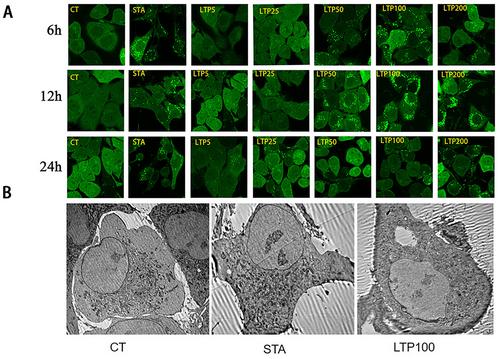
Peganum harmala, a member of the Zygophyllaceae family, is known for its diverse biological activities, including anti-inflammatory properties. The mechanisms through which P. harmala polysaccharide (LTP) induces autophagy, however, remain largely unexplored. This study aims to elucidate the role of LTP in autophagy induction and its efficacy in mitigating inflammation within macrophages. Autophagosome formation was evaluated using GFP-LC3 vectors, and LC3-II levels induced by LTP were analyzed through laser scanning confocal microscopy. Western blotting assessed the expression of autophagy-related proteins and the phosphorylation state of p70S6K in NRK cells, treated both with and without LTP, alongside autophagy inducers and inhibitors. Additionally, RAW264.7 cells were treated with 1 μg/mL lipopolysaccharides (LPS), followed by Western blotting and ELISA assays to quantify inflammatory markers. The study's outcomes demonstrate that LTP facilitates an increase in autophagic activity, as evidenced by the enhanced expression of LC3-II and reduced levels of p62 in both NRK and RAW264.7 macrophages. This effect is mediated through the activation of the AMPK-mTOR signaling pathway, without inhibiting the autophagosome–lysosome fusion process. In vitro experiments with RAW264.7 cells treated with 1 μg/mL LPS showed that LTP markedly decreased the levels of TNF-α and IL-6. Our findings indicate that LTP effectively reduces inflammation in LPS-stimulated macrophages by promoting autophagy via an mTOR-dependent mechanism.
期刊介绍:
Food Science & Nutrition is the peer-reviewed journal for rapid dissemination of research in all areas of food science and nutrition. The Journal will consider submissions of quality papers describing the results of fundamental and applied research related to all aspects of human food and nutrition, as well as interdisciplinary research that spans these two fields.




 京公网安备 11010802042870号
京ICP备2023020795号-1
京公网安备 11010802042870号
京ICP备2023020795号-1

 分享
分享
 求助内容:
求助内容: 应助结果提醒方式:
 扫码关注我们
