Geng Meng , Yong Wang , Zhaopeng Ouyang , Lei Deng , Yinglei Bai , Wenqing Li , Xiaojing Ma , Shunshan Shen , Fengzhi Piao , Tao Zhang , Kaile Sun
{"title":"转录组和代谢组关联分析揭示了番茄褪黑激素介导的铜胁迫解毒的关键因素","authors":"Geng Meng , Yong Wang , Zhaopeng Ouyang , Lei Deng , Yinglei Bai , Wenqing Li , Xiaojing Ma , Shunshan Shen , Fengzhi Piao , Tao Zhang , Kaile Sun","doi":"10.1016/j.jclepro.2025.144888","DOIUrl":null,"url":null,"abstract":"<div><div>Crops worldwide are increasingly affected by excessive copper (Cu) stress due to pesticide use and industrial pollution, leading to impaired growth and metabolic disturbances. While exogenous melatonin (MT) has been shown to alleviate heavy metal stress, its specific molecular mechanisms in tomatoes remain unclear. This study utilizes transcriptomics and metabolomics to investigate how MT influences gene expression and metabolite accumulation under Cu stress in tomato plants. We found that MT enhances the expression of genes related to lignin synthesis, aiding in Cu sequestration within the cell wall. Additionally, MT boosts glutathione and amino acid levels, increases the expression of <em>GST</em> to chelate metals in cytosol. MT also induces the expression of heat response proteins (HSPs), and promotes the accumulation of flavones and proanthocyanidins to protect the cellular membranes. MT also activates heavy metal transporters for vacuolar metal storage and regulates the transcription factor <em>SlMYB15</em>, which is crucial for Cu stress response. Our findings provide insights into the mechanisms by which MT mitigates Cu toxicity, offering promising implications for breeding Cu-resistant plants.</div></div>","PeriodicalId":349,"journal":{"name":"Journal of Cleaner Production","volume":"491 ","pages":"Article 144888"},"PeriodicalIF":10.0000,"publicationDate":"2025-02-01","publicationTypes":"Journal Article","fieldsOfStudy":null,"isOpenAccess":false,"openAccessPdf":"","citationCount":"0","resultStr":"{\"title\":\"Transcriptome and metabolome association analysis revealed key factors involved in melatonin-mediated copper-stress detoxication in tomato\",\"authors\":\"Geng Meng , Yong Wang , Zhaopeng Ouyang , Lei Deng , Yinglei Bai , Wenqing Li , Xiaojing Ma , Shunshan Shen , Fengzhi Piao , Tao Zhang , Kaile Sun\",\"doi\":\"10.1016/j.jclepro.2025.144888\",\"DOIUrl\":null,\"url\":null,\"abstract\":\"<div><div>Crops worldwide are increasingly affected by excessive copper (Cu) stress due to pesticide use and industrial pollution, leading to impaired growth and metabolic disturbances. While exogenous melatonin (MT) has been shown to alleviate heavy metal stress, its specific molecular mechanisms in tomatoes remain unclear. This study utilizes transcriptomics and metabolomics to investigate how MT influences gene expression and metabolite accumulation under Cu stress in tomato plants. We found that MT enhances the expression of genes related to lignin synthesis, aiding in Cu sequestration within the cell wall. Additionally, MT boosts glutathione and amino acid levels, increases the expression of <em>GST</em> to chelate metals in cytosol. MT also induces the expression of heat response proteins (HSPs), and promotes the accumulation of flavones and proanthocyanidins to protect the cellular membranes. MT also activates heavy metal transporters for vacuolar metal storage and regulates the transcription factor <em>SlMYB15</em>, which is crucial for Cu stress response. Our findings provide insights into the mechanisms by which MT mitigates Cu toxicity, offering promising implications for breeding Cu-resistant plants.</div></div>\",\"PeriodicalId\":349,\"journal\":{\"name\":\"Journal of Cleaner Production\",\"volume\":\"491 \",\"pages\":\"Article 144888\"},\"PeriodicalIF\":10.0000,\"publicationDate\":\"2025-02-01\",\"publicationTypes\":\"Journal Article\",\"fieldsOfStudy\":null,\"isOpenAccess\":false,\"openAccessPdf\":\"\",\"citationCount\":\"0\",\"resultStr\":null,\"platform\":\"Semanticscholar\",\"paperid\":null,\"PeriodicalName\":\"Journal of Cleaner Production\",\"FirstCategoryId\":\"93\",\"ListUrlMain\":\"https://www.sciencedirect.com/science/article/pii/S0959652625002380\",\"RegionNum\":1,\"RegionCategory\":\"环境科学与生态学\",\"ArticlePicture\":[],\"TitleCN\":null,\"AbstractTextCN\":null,\"PMCID\":null,\"EPubDate\":\"2025/1/27 0:00:00\",\"PubModel\":\"Epub\",\"JCR\":\"Q1\",\"JCRName\":\"ENGINEERING, ENVIRONMENTAL\",\"Score\":null,\"Total\":0}","platform":"Semanticscholar","paperid":null,"PeriodicalName":"Journal of Cleaner Production","FirstCategoryId":"93","ListUrlMain":"https://www.sciencedirect.com/science/article/pii/S0959652625002380","RegionNum":1,"RegionCategory":"环境科学与生态学","ArticlePicture":[],"TitleCN":null,"AbstractTextCN":null,"PMCID":null,"EPubDate":"2025/1/27 0:00:00","PubModel":"Epub","JCR":"Q1","JCRName":"ENGINEERING, ENVIRONMENTAL","Score":null,"Total":0}
Transcriptome and metabolome association analysis revealed key factors involved in melatonin-mediated copper-stress detoxication in tomato
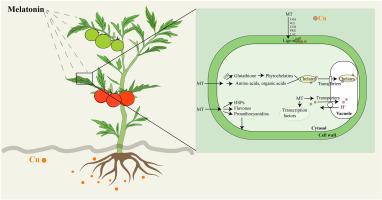
Crops worldwide are increasingly affected by excessive copper (Cu) stress due to pesticide use and industrial pollution, leading to impaired growth and metabolic disturbances. While exogenous melatonin (MT) has been shown to alleviate heavy metal stress, its specific molecular mechanisms in tomatoes remain unclear. This study utilizes transcriptomics and metabolomics to investigate how MT influences gene expression and metabolite accumulation under Cu stress in tomato plants. We found that MT enhances the expression of genes related to lignin synthesis, aiding in Cu sequestration within the cell wall. Additionally, MT boosts glutathione and amino acid levels, increases the expression of GST to chelate metals in cytosol. MT also induces the expression of heat response proteins (HSPs), and promotes the accumulation of flavones and proanthocyanidins to protect the cellular membranes. MT also activates heavy metal transporters for vacuolar metal storage and regulates the transcription factor SlMYB15, which is crucial for Cu stress response. Our findings provide insights into the mechanisms by which MT mitigates Cu toxicity, offering promising implications for breeding Cu-resistant plants.
期刊介绍:
The Journal of Cleaner Production is an international, transdisciplinary journal that addresses and discusses theoretical and practical Cleaner Production, Environmental, and Sustainability issues. It aims to help societies become more sustainable by focusing on the concept of 'Cleaner Production', which aims at preventing waste production and increasing efficiencies in energy, water, resources, and human capital use. The journal serves as a platform for corporations, governments, education institutions, regions, and societies to engage in discussions and research related to Cleaner Production, environmental, and sustainability practices.





 京公网安备 11010802042870号
京ICP备2023020795号-1
京公网安备 11010802042870号
京ICP备2023020795号-1

 分享
分享
 求助内容:
求助内容: 应助结果提醒方式:
 扫码关注我们
