Teferi Mekonnen, Vegard Skirbekk, Ekaterina Zotcheva, Bo Engdahl, Bernt Bratsberg, Astanand Jugessur, Catherine Bowen, Geir Selbæk, Hans-Peter Kohler, Jennifer R Harris, Sarah E Tom, Steinar Krokstad, Trine Holt Edwin, Yehani Wedatilake, Katrin Wolfova, Dana Kristjansson, Yaakov Stern, Asta Kristine Håberg, Bjørn Heine Strand
{"title":"儿童数量与痴呆风险:使用与挪威国家登记处相关的HUNT研究数据进行的因果中介分析。","authors":"Teferi Mekonnen, Vegard Skirbekk, Ekaterina Zotcheva, Bo Engdahl, Bernt Bratsberg, Astanand Jugessur, Catherine Bowen, Geir Selbæk, Hans-Peter Kohler, Jennifer R Harris, Sarah E Tom, Steinar Krokstad, Trine Holt Edwin, Yehani Wedatilake, Katrin Wolfova, Dana Kristjansson, Yaakov Stern, Asta Kristine Håberg, Bjørn Heine Strand","doi":"10.1186/s12883-025-04044-4","DOIUrl":null,"url":null,"abstract":"<p><strong>Background: </strong>Childlessness, as well as having a high number of children, has been reported to be associated with an elevated risk of dementia compared to having 2-3 children. The mechanisms underlying these relationships are not well understood and may be mediated by different midlife risk factors. We examined the mediating role of various factors on the relationship between the number of children and dementia risk. These factors include socioeconomic factors (e.g., occupational complexity), psychosocial (e.g.., social activities, loneliness, life satisfaction), lifestyle (e.g., smoking, physical inactivity, alcohol intake), and chronic diseases (e.g., obesity, diabetes, depression, hearing impairment and hypertension).</p><p><strong>Methods: </strong>Using a historic cohort design, we included 9,745 participants born between 1931-48, with a mean age of 78.2 (SD = 6.4) years at the time of cognitive testing in the HUNT4 70 + sub-study (2017-2019). Further measures were obtained through data linkage between information from Statistics Norway and the HUNT1(1984-86), and HUNT2 (1995-97) Surveys. Causal mediation analyses using an inverse odd weighting approach were conducted to decompose the total effect of the number of children (0, 1, or 4 + children vs. 2-3) on the risk of dementia at age 70 + years into direct and indirect effects with mediators assessed at a mean age of 50.7 (SD = 6.4) years. The analyses were adjusted for age, sex, marital status at age 25 years, educational status, and religion assessed during HUNT3 (2006-2008).</p><p><strong>Results: </strong>Overall, 15.7% were diagnosed with dementia. The proportions with dementia by the number of children were 22.3% among those with no children, 21.4% for those with one child, 13% for those with 2-3 children (specifically, 12.6% for those with 2 children and 13.4% for those with 3 children), and 19.9% for those with 4 + children. Compared to the reference group of individuals with 2-3 children, the dementia risk was higher among the groups with no children (relative risk (RR): 1.30, 95% confidence interval (CI) (1.12, 1.51)), those with one child (RR: 1.30, 95% CI (1.14, 1.47)) and those with 4 + children (RR: 1.12, 95% CI (1.01, 1.24)). The elevated risks of dementia were not mediated by the socioeconomic, psychosocial, lifestyle, or chronic diseases related factors that we tested. Sex-stratified analysis showed higher dementia risk for men without children and women with one or 4 + children compared to those with 2-3 children, with similar patterns across sexes. None of the mediators contributed to mediation in either group. None of the mediators appeared to contribute through mediation in either group.</p><p><strong>Conclusions: </strong>Our findings suggest that the number of children-specifically being childless, having one child, or having four or more children-may influence the risk of dementia. These relationships were not mediated by psychosocial, lifestyle, and socioeconomic factors, or markers of chronic diseases in adulthood considered in this study.</p>","PeriodicalId":9170,"journal":{"name":"BMC Neurology","volume":"25 1","pages":"39"},"PeriodicalIF":2.6000,"publicationDate":"2025-01-27","publicationTypes":"Journal Article","fieldsOfStudy":null,"isOpenAccess":false,"openAccessPdf":"https://www.ncbi.nlm.nih.gov/pmc/articles/PMC11770967/pdf/","citationCount":"0","resultStr":"{\"title\":\"Number of children and dementia risk: a causal mediation analysis using data from the HUNT study linked with national registries in Norway.\",\"authors\":\"Teferi Mekonnen, Vegard Skirbekk, Ekaterina Zotcheva, Bo Engdahl, Bernt Bratsberg, Astanand Jugessur, Catherine Bowen, Geir Selbæk, Hans-Peter Kohler, Jennifer R Harris, Sarah E Tom, Steinar Krokstad, Trine Holt Edwin, Yehani Wedatilake, Katrin Wolfova, Dana Kristjansson, Yaakov Stern, Asta Kristine Håberg, Bjørn Heine Strand\",\"doi\":\"10.1186/s12883-025-04044-4\",\"DOIUrl\":null,\"url\":null,\"abstract\":\"<p><strong>Background: </strong>Childlessness, as well as having a high number of children, has been reported to be associated with an elevated risk of dementia compared to having 2-3 children. The mechanisms underlying these relationships are not well understood and may be mediated by different midlife risk factors. We examined the mediating role of various factors on the relationship between the number of children and dementia risk. These factors include socioeconomic factors (e.g., occupational complexity), psychosocial (e.g.., social activities, loneliness, life satisfaction), lifestyle (e.g., smoking, physical inactivity, alcohol intake), and chronic diseases (e.g., obesity, diabetes, depression, hearing impairment and hypertension).</p><p><strong>Methods: </strong>Using a historic cohort design, we included 9,745 participants born between 1931-48, with a mean age of 78.2 (SD = 6.4) years at the time of cognitive testing in the HUNT4 70 + sub-study (2017-2019). Further measures were obtained through data linkage between information from Statistics Norway and the HUNT1(1984-86), and HUNT2 (1995-97) Surveys. Causal mediation analyses using an inverse odd weighting approach were conducted to decompose the total effect of the number of children (0, 1, or 4 + children vs. 2-3) on the risk of dementia at age 70 + years into direct and indirect effects with mediators assessed at a mean age of 50.7 (SD = 6.4) years. The analyses were adjusted for age, sex, marital status at age 25 years, educational status, and religion assessed during HUNT3 (2006-2008).</p><p><strong>Results: </strong>Overall, 15.7% were diagnosed with dementia. The proportions with dementia by the number of children were 22.3% among those with no children, 21.4% for those with one child, 13% for those with 2-3 children (specifically, 12.6% for those with 2 children and 13.4% for those with 3 children), and 19.9% for those with 4 + children. Compared to the reference group of individuals with 2-3 children, the dementia risk was higher among the groups with no children (relative risk (RR): 1.30, 95% confidence interval (CI) (1.12, 1.51)), those with one child (RR: 1.30, 95% CI (1.14, 1.47)) and those with 4 + children (RR: 1.12, 95% CI (1.01, 1.24)). The elevated risks of dementia were not mediated by the socioeconomic, psychosocial, lifestyle, or chronic diseases related factors that we tested. Sex-stratified analysis showed higher dementia risk for men without children and women with one or 4 + children compared to those with 2-3 children, with similar patterns across sexes. None of the mediators contributed to mediation in either group. None of the mediators appeared to contribute through mediation in either group.</p><p><strong>Conclusions: </strong>Our findings suggest that the number of children-specifically being childless, having one child, or having four or more children-may influence the risk of dementia. These relationships were not mediated by psychosocial, lifestyle, and socioeconomic factors, or markers of chronic diseases in adulthood considered in this study.</p>\",\"PeriodicalId\":9170,\"journal\":{\"name\":\"BMC Neurology\",\"volume\":\"25 1\",\"pages\":\"39\"},\"PeriodicalIF\":2.6000,\"publicationDate\":\"2025-01-27\",\"publicationTypes\":\"Journal Article\",\"fieldsOfStudy\":null,\"isOpenAccess\":false,\"openAccessPdf\":\"https://www.ncbi.nlm.nih.gov/pmc/articles/PMC11770967/pdf/\",\"citationCount\":\"0\",\"resultStr\":null,\"platform\":\"Semanticscholar\",\"paperid\":null,\"PeriodicalName\":\"BMC Neurology\",\"FirstCategoryId\":\"3\",\"ListUrlMain\":\"https://doi.org/10.1186/s12883-025-04044-4\",\"RegionNum\":3,\"RegionCategory\":\"医学\",\"ArticlePicture\":[],\"TitleCN\":null,\"AbstractTextCN\":null,\"PMCID\":null,\"EPubDate\":\"\",\"PubModel\":\"\",\"JCR\":\"Q3\",\"JCRName\":\"CLINICAL NEUROLOGY\",\"Score\":null,\"Total\":0}","platform":"Semanticscholar","paperid":null,"PeriodicalName":"BMC Neurology","FirstCategoryId":"3","ListUrlMain":"https://doi.org/10.1186/s12883-025-04044-4","RegionNum":3,"RegionCategory":"医学","ArticlePicture":[],"TitleCN":null,"AbstractTextCN":null,"PMCID":null,"EPubDate":"","PubModel":"","JCR":"Q3","JCRName":"CLINICAL NEUROLOGY","Score":null,"Total":0}
Number of children and dementia risk: a causal mediation analysis using data from the HUNT study linked with national registries in Norway.
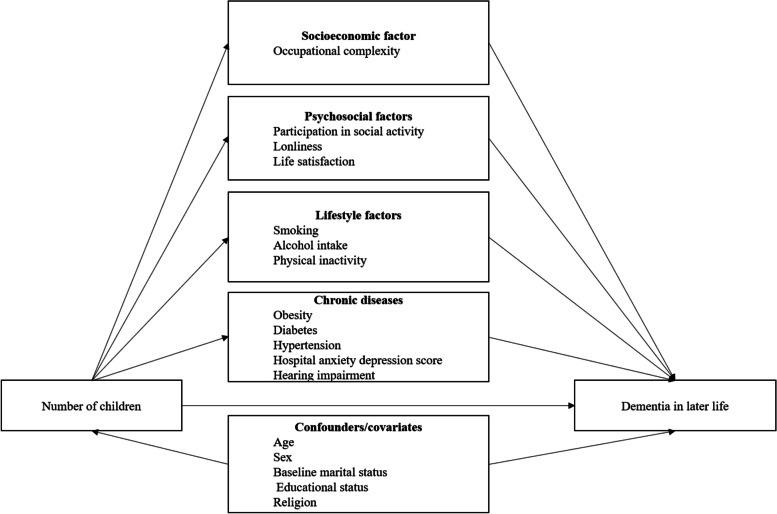
Background: Childlessness, as well as having a high number of children, has been reported to be associated with an elevated risk of dementia compared to having 2-3 children. The mechanisms underlying these relationships are not well understood and may be mediated by different midlife risk factors. We examined the mediating role of various factors on the relationship between the number of children and dementia risk. These factors include socioeconomic factors (e.g., occupational complexity), psychosocial (e.g.., social activities, loneliness, life satisfaction), lifestyle (e.g., smoking, physical inactivity, alcohol intake), and chronic diseases (e.g., obesity, diabetes, depression, hearing impairment and hypertension).
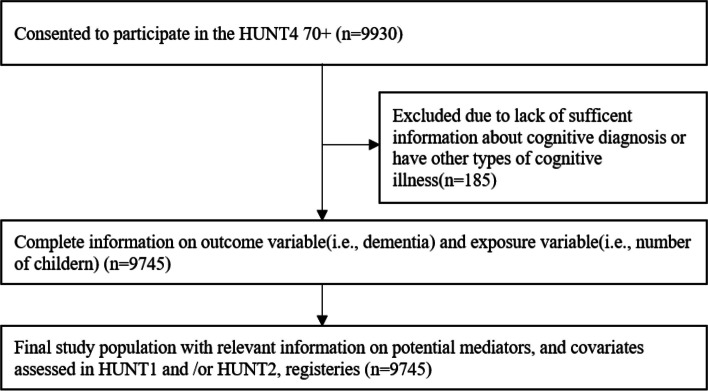
Methods: Using a historic cohort design, we included 9,745 participants born between 1931-48, with a mean age of 78.2 (SD = 6.4) years at the time of cognitive testing in the HUNT4 70 + sub-study (2017-2019). Further measures were obtained through data linkage between information from Statistics Norway and the HUNT1(1984-86), and HUNT2 (1995-97) Surveys. Causal mediation analyses using an inverse odd weighting approach were conducted to decompose the total effect of the number of children (0, 1, or 4 + children vs. 2-3) on the risk of dementia at age 70 + years into direct and indirect effects with mediators assessed at a mean age of 50.7 (SD = 6.4) years. The analyses were adjusted for age, sex, marital status at age 25 years, educational status, and religion assessed during HUNT3 (2006-2008).
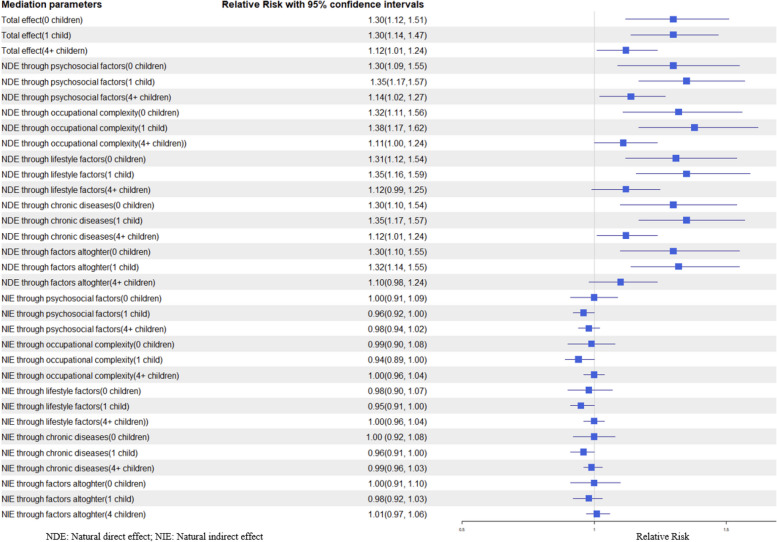
Results: Overall, 15.7% were diagnosed with dementia. The proportions with dementia by the number of children were 22.3% among those with no children, 21.4% for those with one child, 13% for those with 2-3 children (specifically, 12.6% for those with 2 children and 13.4% for those with 3 children), and 19.9% for those with 4 + children. Compared to the reference group of individuals with 2-3 children, the dementia risk was higher among the groups with no children (relative risk (RR): 1.30, 95% confidence interval (CI) (1.12, 1.51)), those with one child (RR: 1.30, 95% CI (1.14, 1.47)) and those with 4 + children (RR: 1.12, 95% CI (1.01, 1.24)). The elevated risks of dementia were not mediated by the socioeconomic, psychosocial, lifestyle, or chronic diseases related factors that we tested. Sex-stratified analysis showed higher dementia risk for men without children and women with one or 4 + children compared to those with 2-3 children, with similar patterns across sexes. None of the mediators contributed to mediation in either group. None of the mediators appeared to contribute through mediation in either group.
Conclusions: Our findings suggest that the number of children-specifically being childless, having one child, or having four or more children-may influence the risk of dementia. These relationships were not mediated by psychosocial, lifestyle, and socioeconomic factors, or markers of chronic diseases in adulthood considered in this study.
期刊介绍:
BMC Neurology is an open access, peer-reviewed journal that considers articles on all aspects of the prevention, diagnosis and management of neurological disorders, as well as related molecular genetics, pathophysiology, and epidemiology.




 京公网安备 11010802042870号
京ICP备2023020795号-1
京公网安备 11010802042870号
京ICP备2023020795号-1

 分享
分享
 求助内容:
求助内容: 应助结果提醒方式:
 扫码关注我们
