Yafang Li, Chuang Nie, Na Li, Jieying Liang, Ning Su, Chunhua Yang
{"title":"控制营养状况与结直肠癌患者术后肺部并发症的关系。","authors":"Yafang Li, Chuang Nie, Na Li, Jieying Liang, Ning Su, Chunhua Yang","doi":"10.3389/fnut.2024.1425956","DOIUrl":null,"url":null,"abstract":"<p><strong>Background: </strong>Postoperative pulmonary complications (PPCs) significantly impact surgical outcomes, and Controlling Nutritional Status (CONUT) score, a simple and easily available nutritional score, has been demonstrated to be significantly associated with postoperative patient outcomes and complications, including PPCs. However, there are few studies that specifically focus on patients undergoing radical surgery for colorectal cancer (CRC).</p><p><strong>Methods: </strong>We retrospectively analyzed the clinical data of 2,553 patients who underwent radical surgery for CRC at the Sixth Affiliated Hospital of Sun Yat-sen University. Patients were divided into three groups: normal nutrition group (CONUT≤1), mild malnutrition group (2 ≤ CONUT≤4), and moderate-to-severe malnutrition group (CONUT≥5). Risk factors for PPCs and all-cause mortality were evaluated by multivariate regression. In addition, we assessed surgical outcomes including ICU admission, hospital stay, 1-year mortality and tumor-related mortality.</p><p><strong>Results: </strong>The incidence of PPCs was 9.0% (<i>n</i> = 230). Multiple regression showed that the higher the CONUT score, the higher the risk of PPCs (mild malnutrition group vs. normal nutrition group, OR: 1.61, 95% CI: 1.18-2.20, <i>p</i> = 0.003; moderate-to-severe malnutrition group vs. normal nutrition group, OR: 2.41, 95% CI: 1.51-3.84, <i>p</i> < 0.001). All-cause mortality was significantly higher in moderate-to-severe malnutrition group than that in normal nutrition group, HR: 1.88, (95% CI: 1.34-2.62, <i>p</i> < 0.001). Older age, male sex, chronic heart disease, open surgery, blood transfusion during surgery, distant metastasis of tumor and colon tumor were all risk factors for PPCs. Furthermore, the malnutrition groups had poor surgical outcomes including postoperative pneumonia (mild vs. normal nutrition, OR: 1.64, 95% CI: 1.07-2.52, <i>p</i> = 0.024; moderate-to-severe vs. normal nutrition, OR: 2.51, 95% CI: 1.36-4.62, <i>p</i> = 0.00), ICU admission (mild vs. normal nutrition, OR: 2.16, 95% CI: 1.31-3.56, <i>p</i> = 0.002; moderate-to-severe vs. normal nutrition, OR: 3.86, 95% CI: 2.07-7.20, <i>p</i> < 0.001), hospital stay ≥14 days (mild vs. normal nutrition, OR: 1.30, 95% CI: 1.08-1.56, <i>p</i> = 0.006) and 1-year mortality (mild vs. normal nutrition, HR: 1.65, 95% CI: 1.11-2.46, <i>p</i> = 0.014; moderate-to-severe vs. normal nutrition, HR: 2.27, 95% CI: 1.28-4.02, <i>p</i> = 0.005).</p><p><strong>Conclusion: </strong>The preoperative CONUT score is a potential indicator for predicting PPCs and surgical outcomes in CRC patients.</p>","PeriodicalId":12473,"journal":{"name":"Frontiers in Nutrition","volume":"11 ","pages":"1425956"},"PeriodicalIF":5.5000,"publicationDate":"2025-01-13","publicationTypes":"Journal Article","fieldsOfStudy":null,"isOpenAccess":false,"openAccessPdf":"https://www.ncbi.nlm.nih.gov/pmc/articles/PMC11769804/pdf/","citationCount":"0","resultStr":"{\"title\":\"The association between controlling nutritional status and postoperative pulmonary complications in patients with colorectal cancer.\",\"authors\":\"Yafang Li, Chuang Nie, Na Li, Jieying Liang, Ning Su, Chunhua Yang\",\"doi\":\"10.3389/fnut.2024.1425956\",\"DOIUrl\":null,\"url\":null,\"abstract\":\"<p><strong>Background: </strong>Postoperative pulmonary complications (PPCs) significantly impact surgical outcomes, and Controlling Nutritional Status (CONUT) score, a simple and easily available nutritional score, has been demonstrated to be significantly associated with postoperative patient outcomes and complications, including PPCs. However, there are few studies that specifically focus on patients undergoing radical surgery for colorectal cancer (CRC).</p><p><strong>Methods: </strong>We retrospectively analyzed the clinical data of 2,553 patients who underwent radical surgery for CRC at the Sixth Affiliated Hospital of Sun Yat-sen University. Patients were divided into three groups: normal nutrition group (CONUT≤1), mild malnutrition group (2 ≤ CONUT≤4), and moderate-to-severe malnutrition group (CONUT≥5). Risk factors for PPCs and all-cause mortality were evaluated by multivariate regression. In addition, we assessed surgical outcomes including ICU admission, hospital stay, 1-year mortality and tumor-related mortality.</p><p><strong>Results: </strong>The incidence of PPCs was 9.0% (<i>n</i> = 230). Multiple regression showed that the higher the CONUT score, the higher the risk of PPCs (mild malnutrition group vs. normal nutrition group, OR: 1.61, 95% CI: 1.18-2.20, <i>p</i> = 0.003; moderate-to-severe malnutrition group vs. normal nutrition group, OR: 2.41, 95% CI: 1.51-3.84, <i>p</i> < 0.001). All-cause mortality was significantly higher in moderate-to-severe malnutrition group than that in normal nutrition group, HR: 1.88, (95% CI: 1.34-2.62, <i>p</i> < 0.001). Older age, male sex, chronic heart disease, open surgery, blood transfusion during surgery, distant metastasis of tumor and colon tumor were all risk factors for PPCs. Furthermore, the malnutrition groups had poor surgical outcomes including postoperative pneumonia (mild vs. normal nutrition, OR: 1.64, 95% CI: 1.07-2.52, <i>p</i> = 0.024; moderate-to-severe vs. normal nutrition, OR: 2.51, 95% CI: 1.36-4.62, <i>p</i> = 0.00), ICU admission (mild vs. normal nutrition, OR: 2.16, 95% CI: 1.31-3.56, <i>p</i> = 0.002; moderate-to-severe vs. normal nutrition, OR: 3.86, 95% CI: 2.07-7.20, <i>p</i> < 0.001), hospital stay ≥14 days (mild vs. normal nutrition, OR: 1.30, 95% CI: 1.08-1.56, <i>p</i> = 0.006) and 1-year mortality (mild vs. normal nutrition, HR: 1.65, 95% CI: 1.11-2.46, <i>p</i> = 0.014; moderate-to-severe vs. normal nutrition, HR: 2.27, 95% CI: 1.28-4.02, <i>p</i> = 0.005).</p><p><strong>Conclusion: </strong>The preoperative CONUT score is a potential indicator for predicting PPCs and surgical outcomes in CRC patients.</p>\",\"PeriodicalId\":12473,\"journal\":{\"name\":\"Frontiers in Nutrition\",\"volume\":\"11 \",\"pages\":\"1425956\"},\"PeriodicalIF\":5.5000,\"publicationDate\":\"2025-01-13\",\"publicationTypes\":\"Journal Article\",\"fieldsOfStudy\":null,\"isOpenAccess\":false,\"openAccessPdf\":\"https://www.ncbi.nlm.nih.gov/pmc/articles/PMC11769804/pdf/\",\"citationCount\":\"0\",\"resultStr\":null,\"platform\":\"Semanticscholar\",\"paperid\":null,\"PeriodicalName\":\"Frontiers in Nutrition\",\"FirstCategoryId\":\"97\",\"ListUrlMain\":\"https://doi.org/10.3389/fnut.2024.1425956\",\"RegionNum\":2,\"RegionCategory\":\"农林科学\",\"ArticlePicture\":[],\"TitleCN\":null,\"AbstractTextCN\":null,\"PMCID\":null,\"EPubDate\":\"2024/1/1 0:00:00\",\"PubModel\":\"eCollection\",\"JCR\":\"Q2\",\"JCRName\":\"NUTRITION & DIETETICS\",\"Score\":null,\"Total\":0}","platform":"Semanticscholar","paperid":null,"PeriodicalName":"Frontiers in Nutrition","FirstCategoryId":"97","ListUrlMain":"https://doi.org/10.3389/fnut.2024.1425956","RegionNum":2,"RegionCategory":"农林科学","ArticlePicture":[],"TitleCN":null,"AbstractTextCN":null,"PMCID":null,"EPubDate":"2024/1/1 0:00:00","PubModel":"eCollection","JCR":"Q2","JCRName":"NUTRITION & DIETETICS","Score":null,"Total":0}
引用次数: 0
摘要
背景:术后肺部并发症(PPCs)显著影响手术结果,而控制营养状态(CONUT)评分,一种简单且容易获得的营养评分,已被证明与术后患者结果和并发症(包括PPCs)显著相关。然而,很少有研究专门针对接受根治性手术治疗结直肠癌(CRC)的患者。方法:回顾性分析中山大学附属第六医院2553例根治性结直肠癌患者的临床资料。将患者分为正常营养组(CONUT≤1)、轻度营养不良组(2 ≤ CONUT≤4)、中重度营养不良组(CONUT≥5)。通过多因素回归评估PPCs和全因死亡率的危险因素。此外,我们评估了手术结果,包括ICU入院、住院时间、1年死亡率和肿瘤相关死亡率。结果:PPCs的发生率为9.0% (n = 230)。多元回归显示,CONUT评分越高,PPCs发生风险越高(轻度营养不良组vs正常营养组,OR: 1.61, 95% CI: 1.18-2.20, p = 0.003;中度至重度营养不良组与正常营养组比较,OR: 2.41, 95% CI: 1.51-3.84, p p p = 0.024;中度至重度vs正常营养,OR: 2.51, 95% CI: 1.36-4.62, p = 0.00),ICU入院(轻度vs正常营养,OR: 2.16, 95% CI: 1.31-3.56, p = 0.002;中度至重度与正常营养相比,OR: 3.86, 95% CI: 2.07-7.20, p p = 0.006)和1年死亡率(轻度与正常营养相比,HR: 1.65, 95% CI: 1.11-2.46, p = 0.014;中度至重度vs.正常营养,HR: 2.27, 95% CI: 1.28-4.02, p = 0.005)。结论:术前CONUT评分是预测结直肠癌患者PPCs和手术结局的潜在指标。
The association between controlling nutritional status and postoperative pulmonary complications in patients with colorectal cancer.
Background: Postoperative pulmonary complications (PPCs) significantly impact surgical outcomes, and Controlling Nutritional Status (CONUT) score, a simple and easily available nutritional score, has been demonstrated to be significantly associated with postoperative patient outcomes and complications, including PPCs. However, there are few studies that specifically focus on patients undergoing radical surgery for colorectal cancer (CRC).
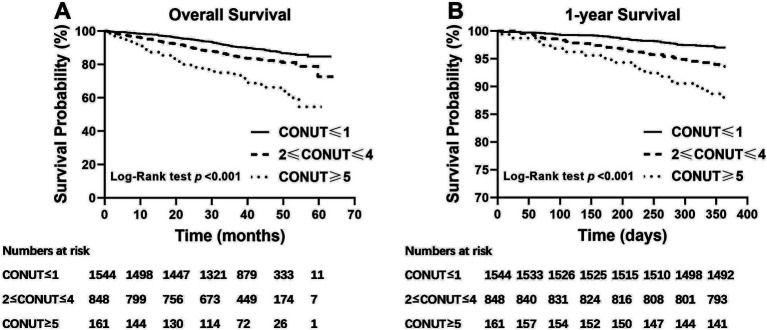
Methods: We retrospectively analyzed the clinical data of 2,553 patients who underwent radical surgery for CRC at the Sixth Affiliated Hospital of Sun Yat-sen University. Patients were divided into three groups: normal nutrition group (CONUT≤1), mild malnutrition group (2 ≤ CONUT≤4), and moderate-to-severe malnutrition group (CONUT≥5). Risk factors for PPCs and all-cause mortality were evaluated by multivariate regression. In addition, we assessed surgical outcomes including ICU admission, hospital stay, 1-year mortality and tumor-related mortality.
Results: The incidence of PPCs was 9.0% (n = 230). Multiple regression showed that the higher the CONUT score, the higher the risk of PPCs (mild malnutrition group vs. normal nutrition group, OR: 1.61, 95% CI: 1.18-2.20, p = 0.003; moderate-to-severe malnutrition group vs. normal nutrition group, OR: 2.41, 95% CI: 1.51-3.84, p < 0.001). All-cause mortality was significantly higher in moderate-to-severe malnutrition group than that in normal nutrition group, HR: 1.88, (95% CI: 1.34-2.62, p < 0.001). Older age, male sex, chronic heart disease, open surgery, blood transfusion during surgery, distant metastasis of tumor and colon tumor were all risk factors for PPCs. Furthermore, the malnutrition groups had poor surgical outcomes including postoperative pneumonia (mild vs. normal nutrition, OR: 1.64, 95% CI: 1.07-2.52, p = 0.024; moderate-to-severe vs. normal nutrition, OR: 2.51, 95% CI: 1.36-4.62, p = 0.00), ICU admission (mild vs. normal nutrition, OR: 2.16, 95% CI: 1.31-3.56, p = 0.002; moderate-to-severe vs. normal nutrition, OR: 3.86, 95% CI: 2.07-7.20, p < 0.001), hospital stay ≥14 days (mild vs. normal nutrition, OR: 1.30, 95% CI: 1.08-1.56, p = 0.006) and 1-year mortality (mild vs. normal nutrition, HR: 1.65, 95% CI: 1.11-2.46, p = 0.014; moderate-to-severe vs. normal nutrition, HR: 2.27, 95% CI: 1.28-4.02, p = 0.005).
Conclusion: The preoperative CONUT score is a potential indicator for predicting PPCs and surgical outcomes in CRC patients.
期刊介绍:
No subject pertains more to human life than nutrition. The aim of Frontiers in Nutrition is to integrate major scientific disciplines in this vast field in order to address the most relevant and pertinent questions and developments. Our ambition is to create an integrated podium based on original research, clinical trials, and contemporary reviews to build a reputable knowledge forum in the domains of human health, dietary behaviors, agronomy & 21st century food science. Through the recognized open-access Frontiers platform we welcome manuscripts to our dedicated sections relating to different areas in the field of nutrition with a focus on human health.
Specialty sections in Frontiers in Nutrition include, for example, Clinical Nutrition, Nutrition & Sustainable Diets, Nutrition and Food Science Technology, Nutrition Methodology, Sport & Exercise Nutrition, Food Chemistry, and Nutritional Immunology. Based on the publication of rigorous scientific research, we thrive to achieve a visible impact on the global nutrition agenda addressing the grand challenges of our time, including obesity, malnutrition, hunger, food waste, sustainability and consumer health.






 京公网安备 11010802042870号
京ICP备2023020795号-1
京公网安备 11010802042870号
京ICP备2023020795号-1

 分享
分享
 求助内容:
求助内容: 应助结果提醒方式:
 扫码关注我们
