{"title":"利用鸡绒毛膜-尿囊膜模型评价肿瘤定殖沙门氏菌。","authors":"Khin K Z Mon, Linda J Kenney","doi":"10.1128/mbio.03590-24","DOIUrl":null,"url":null,"abstract":"<p><p>The chick embryo chorioallantoic membrane (CAM) tumor model is a valuable preclinical model for studying the tumor-colonizing process of <i>Salmonella enterica</i> serovar Typhimurium. It offers advantages such as cost-effectiveness, rapid turnaround, reduced engraftment issues, and ease of observation. In this study, we explored and validated the applicability of the partially immune-deficient CAM tumor model. Herein, we demonstrate that <i>Salmonella</i> preferentially colonizes tumors and directly causes tumor cell death. Bacterial migration, tumor colonization, and intra-tumor distribution did not require flagellar-mediated motility. The vast majority of <i>Salmonella</i> that colonized the CAM tumor were extracellular. Thus, tumor invasion was independent of both <i>Salmonella</i> pathogenicity island-1-encoded and <i>Salmonella</i> pathogenicity island-2-encoded type III secretion systems. Surprisingly, the extracellular residence of <i>Salmonella</i> on CAM tumors did not require biofilm formation. We evaluated our wild-type parental strain compared to the attenuated clinical strain VNP20009 and discovered a reduced tumor colonization capability of VNP20009. The inability to effectively colonize CAM tumors potentially explains the reduced anti-tumor efficacy of VNP20009. Our work establishes the xenograft CAM model as an informative and predictive screening platform for studying tumor-colonizing <i>Salmonella</i>.IMPORTANCECancer has a major impact on society, as it poses a significant health burden to human populations worldwide. <i>Salmonella</i> Typhimurium has demonstrated promise in cancer treatment by exerting direct tumoricidal effects and enhancing host-mediated anti-tumor immunity in xenograft mouse studies. A general understanding of its pathogenesis and the relative ease of genetic manipulation support the development of attenuated strains for therapeutic use. Alternative <i>in ovo</i> models, such as the chorioallantoic membrane tumor model, present a suitable screening platform to accelerate the development of therapeutic strains. It allows for rapid evaluation of <i>Salmonella</i> strains to assess their efficacy and potential as oncolytic agents. The present study establishes that the <i>in ovo</i> tumor model can be utilized as a preclinical tool for evaluating oncolytic <i>Salmonella</i>, bridging the gap between <i>in vitro</i> and <i>in vivo</i> screening.</p>","PeriodicalId":18315,"journal":{"name":"mBio","volume":" ","pages":"e0359024"},"PeriodicalIF":5.4000,"publicationDate":"2025-03-12","publicationTypes":"Journal Article","fieldsOfStudy":null,"isOpenAccess":false,"openAccessPdf":"https://www.ncbi.nlm.nih.gov/pmc/articles/PMC11898558/pdf/","citationCount":"0","resultStr":"{\"title\":\"Evaluation of tumor-colonizing <i>Salmonella</i> strains using the chick chorioallantoic membrane model.\",\"authors\":\"Khin K Z Mon, Linda J Kenney\",\"doi\":\"10.1128/mbio.03590-24\",\"DOIUrl\":null,\"url\":null,\"abstract\":\"<p><p>The chick embryo chorioallantoic membrane (CAM) tumor model is a valuable preclinical model for studying the tumor-colonizing process of <i>Salmonella enterica</i> serovar Typhimurium. It offers advantages such as cost-effectiveness, rapid turnaround, reduced engraftment issues, and ease of observation. In this study, we explored and validated the applicability of the partially immune-deficient CAM tumor model. Herein, we demonstrate that <i>Salmonella</i> preferentially colonizes tumors and directly causes tumor cell death. Bacterial migration, tumor colonization, and intra-tumor distribution did not require flagellar-mediated motility. The vast majority of <i>Salmonella</i> that colonized the CAM tumor were extracellular. Thus, tumor invasion was independent of both <i>Salmonella</i> pathogenicity island-1-encoded and <i>Salmonella</i> pathogenicity island-2-encoded type III secretion systems. Surprisingly, the extracellular residence of <i>Salmonella</i> on CAM tumors did not require biofilm formation. We evaluated our wild-type parental strain compared to the attenuated clinical strain VNP20009 and discovered a reduced tumor colonization capability of VNP20009. The inability to effectively colonize CAM tumors potentially explains the reduced anti-tumor efficacy of VNP20009. Our work establishes the xenograft CAM model as an informative and predictive screening platform for studying tumor-colonizing <i>Salmonella</i>.IMPORTANCECancer has a major impact on society, as it poses a significant health burden to human populations worldwide. <i>Salmonella</i> Typhimurium has demonstrated promise in cancer treatment by exerting direct tumoricidal effects and enhancing host-mediated anti-tumor immunity in xenograft mouse studies. A general understanding of its pathogenesis and the relative ease of genetic manipulation support the development of attenuated strains for therapeutic use. Alternative <i>in ovo</i> models, such as the chorioallantoic membrane tumor model, present a suitable screening platform to accelerate the development of therapeutic strains. It allows for rapid evaluation of <i>Salmonella</i> strains to assess their efficacy and potential as oncolytic agents. The present study establishes that the <i>in ovo</i> tumor model can be utilized as a preclinical tool for evaluating oncolytic <i>Salmonella</i>, bridging the gap between <i>in vitro</i> and <i>in vivo</i> screening.</p>\",\"PeriodicalId\":18315,\"journal\":{\"name\":\"mBio\",\"volume\":\" \",\"pages\":\"e0359024\"},\"PeriodicalIF\":5.4000,\"publicationDate\":\"2025-03-12\",\"publicationTypes\":\"Journal Article\",\"fieldsOfStudy\":null,\"isOpenAccess\":false,\"openAccessPdf\":\"https://www.ncbi.nlm.nih.gov/pmc/articles/PMC11898558/pdf/\",\"citationCount\":\"0\",\"resultStr\":null,\"platform\":\"Semanticscholar\",\"paperid\":null,\"PeriodicalName\":\"mBio\",\"FirstCategoryId\":\"99\",\"ListUrlMain\":\"https://doi.org/10.1128/mbio.03590-24\",\"RegionNum\":1,\"RegionCategory\":\"生物学\",\"ArticlePicture\":[],\"TitleCN\":null,\"AbstractTextCN\":null,\"PMCID\":null,\"EPubDate\":\"2025/1/28 0:00:00\",\"PubModel\":\"Epub\",\"JCR\":\"Q1\",\"JCRName\":\"MICROBIOLOGY\",\"Score\":null,\"Total\":0}","platform":"Semanticscholar","paperid":null,"PeriodicalName":"mBio","FirstCategoryId":"99","ListUrlMain":"https://doi.org/10.1128/mbio.03590-24","RegionNum":1,"RegionCategory":"生物学","ArticlePicture":[],"TitleCN":null,"AbstractTextCN":null,"PMCID":null,"EPubDate":"2025/1/28 0:00:00","PubModel":"Epub","JCR":"Q1","JCRName":"MICROBIOLOGY","Score":null,"Total":0}
Evaluation of tumor-colonizing Salmonella strains using the chick chorioallantoic membrane model.
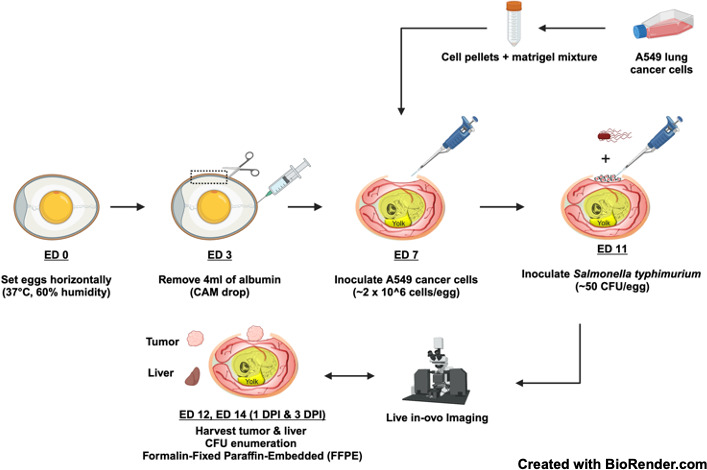
The chick embryo chorioallantoic membrane (CAM) tumor model is a valuable preclinical model for studying the tumor-colonizing process of Salmonella enterica serovar Typhimurium. It offers advantages such as cost-effectiveness, rapid turnaround, reduced engraftment issues, and ease of observation. In this study, we explored and validated the applicability of the partially immune-deficient CAM tumor model. Herein, we demonstrate that Salmonella preferentially colonizes tumors and directly causes tumor cell death. Bacterial migration, tumor colonization, and intra-tumor distribution did not require flagellar-mediated motility. The vast majority of Salmonella that colonized the CAM tumor were extracellular. Thus, tumor invasion was independent of both Salmonella pathogenicity island-1-encoded and Salmonella pathogenicity island-2-encoded type III secretion systems. Surprisingly, the extracellular residence of Salmonella on CAM tumors did not require biofilm formation. We evaluated our wild-type parental strain compared to the attenuated clinical strain VNP20009 and discovered a reduced tumor colonization capability of VNP20009. The inability to effectively colonize CAM tumors potentially explains the reduced anti-tumor efficacy of VNP20009. Our work establishes the xenograft CAM model as an informative and predictive screening platform for studying tumor-colonizing Salmonella.IMPORTANCECancer has a major impact on society, as it poses a significant health burden to human populations worldwide. Salmonella Typhimurium has demonstrated promise in cancer treatment by exerting direct tumoricidal effects and enhancing host-mediated anti-tumor immunity in xenograft mouse studies. A general understanding of its pathogenesis and the relative ease of genetic manipulation support the development of attenuated strains for therapeutic use. Alternative in ovo models, such as the chorioallantoic membrane tumor model, present a suitable screening platform to accelerate the development of therapeutic strains. It allows for rapid evaluation of Salmonella strains to assess their efficacy and potential as oncolytic agents. The present study establishes that the in ovo tumor model can be utilized as a preclinical tool for evaluating oncolytic Salmonella, bridging the gap between in vitro and in vivo screening.
期刊介绍:
mBio® is ASM''s first broad-scope, online-only, open access journal. mBio offers streamlined review and publication of the best research in microbiology and allied fields.






 京公网安备 11010802042870号
京ICP备2023020795号-1
京公网安备 11010802042870号
京ICP备2023020795号-1

 分享
分享
 求助内容:
求助内容: 应助结果提醒方式:
 扫码关注我们
