Joseph Jr. Aduba , Behrooz Asgari , Yassin Ennajih , Koji Shimada
{"title":"学习对能源消耗和能源效率的影响:来自制造业的经验证据","authors":"Joseph Jr. Aduba , Behrooz Asgari , Yassin Ennajih , Koji Shimada","doi":"10.1016/j.jclepro.2025.144843","DOIUrl":null,"url":null,"abstract":"<div><div>As the world grapples with climate change and other environmental issues caused by unsustainable production and consumption, the industrial sector has come under greater scrutiny in recent years. The consensus is that appropriate energy saving measures [energy management] in the industrial sector could significantly cut energy consumption and consequently contribute to emission abatement without harming economic growth. The implication is that energy management is both a mitigation and an internal cost control strategy to achieve industrial competitiveness. This paper examines the potential cost advantage from sustainable energy management practices in the manufacturing sectors. We theorized that changes in economic cost of energy consumption stemming from technological improvement and/or deliberate energy saving measures and policies can be captured by cumulative energy management experience (learning-by-consumption). Thus, we derived a multifactor learning model that allows previous energy management experience to improve current energy consumption, and we applied the model to two decades long energy data of manufacturing industry under robust econometric specifications. The results show strong evidence of decreasing unit costs of energy due to learning effects. As a robustness check, we analyze the relationship between learning rates and energy efficiency scores. The result confirms that our estimated economic cost advantage (learning rates) is positively correlated with energy efficiency scores suggesting that learning sectors are also energy efficient sectors. Sectoral results show energy-intensive sectors have higher learning potential than non-energy-intensive sectors. The Implications of the findings are discussed.</div></div>","PeriodicalId":349,"journal":{"name":"Journal of Cleaner Production","volume":"492 ","pages":"Article 144843"},"PeriodicalIF":10.0000,"publicationDate":"2025-02-10","publicationTypes":"Journal Article","fieldsOfStudy":null,"isOpenAccess":false,"openAccessPdf":"","citationCount":"0","resultStr":"{\"title\":\"Impact of learning on energy consumption and energy efficiency: Empirical evidence from manufacturing industry\",\"authors\":\"Joseph Jr. Aduba , Behrooz Asgari , Yassin Ennajih , Koji Shimada\",\"doi\":\"10.1016/j.jclepro.2025.144843\",\"DOIUrl\":null,\"url\":null,\"abstract\":\"<div><div>As the world grapples with climate change and other environmental issues caused by unsustainable production and consumption, the industrial sector has come under greater scrutiny in recent years. The consensus is that appropriate energy saving measures [energy management] in the industrial sector could significantly cut energy consumption and consequently contribute to emission abatement without harming economic growth. The implication is that energy management is both a mitigation and an internal cost control strategy to achieve industrial competitiveness. This paper examines the potential cost advantage from sustainable energy management practices in the manufacturing sectors. We theorized that changes in economic cost of energy consumption stemming from technological improvement and/or deliberate energy saving measures and policies can be captured by cumulative energy management experience (learning-by-consumption). Thus, we derived a multifactor learning model that allows previous energy management experience to improve current energy consumption, and we applied the model to two decades long energy data of manufacturing industry under robust econometric specifications. The results show strong evidence of decreasing unit costs of energy due to learning effects. As a robustness check, we analyze the relationship between learning rates and energy efficiency scores. The result confirms that our estimated economic cost advantage (learning rates) is positively correlated with energy efficiency scores suggesting that learning sectors are also energy efficient sectors. Sectoral results show energy-intensive sectors have higher learning potential than non-energy-intensive sectors. The Implications of the findings are discussed.</div></div>\",\"PeriodicalId\":349,\"journal\":{\"name\":\"Journal of Cleaner Production\",\"volume\":\"492 \",\"pages\":\"Article 144843\"},\"PeriodicalIF\":10.0000,\"publicationDate\":\"2025-02-10\",\"publicationTypes\":\"Journal Article\",\"fieldsOfStudy\":null,\"isOpenAccess\":false,\"openAccessPdf\":\"\",\"citationCount\":\"0\",\"resultStr\":null,\"platform\":\"Semanticscholar\",\"paperid\":null,\"PeriodicalName\":\"Journal of Cleaner Production\",\"FirstCategoryId\":\"93\",\"ListUrlMain\":\"https://www.sciencedirect.com/science/article/pii/S0959652625001933\",\"RegionNum\":1,\"RegionCategory\":\"环境科学与生态学\",\"ArticlePicture\":[],\"TitleCN\":null,\"AbstractTextCN\":null,\"PMCID\":null,\"EPubDate\":\"2025/1/28 0:00:00\",\"PubModel\":\"Epub\",\"JCR\":\"Q1\",\"JCRName\":\"ENGINEERING, ENVIRONMENTAL\",\"Score\":null,\"Total\":0}","platform":"Semanticscholar","paperid":null,"PeriodicalName":"Journal of Cleaner Production","FirstCategoryId":"93","ListUrlMain":"https://www.sciencedirect.com/science/article/pii/S0959652625001933","RegionNum":1,"RegionCategory":"环境科学与生态学","ArticlePicture":[],"TitleCN":null,"AbstractTextCN":null,"PMCID":null,"EPubDate":"2025/1/28 0:00:00","PubModel":"Epub","JCR":"Q1","JCRName":"ENGINEERING, ENVIRONMENTAL","Score":null,"Total":0}
Impact of learning on energy consumption and energy efficiency: Empirical evidence from manufacturing industry
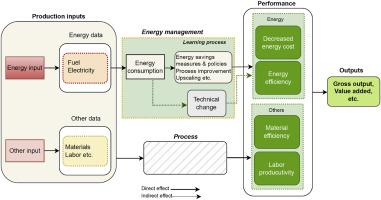
As the world grapples with climate change and other environmental issues caused by unsustainable production and consumption, the industrial sector has come under greater scrutiny in recent years. The consensus is that appropriate energy saving measures [energy management] in the industrial sector could significantly cut energy consumption and consequently contribute to emission abatement without harming economic growth. The implication is that energy management is both a mitigation and an internal cost control strategy to achieve industrial competitiveness. This paper examines the potential cost advantage from sustainable energy management practices in the manufacturing sectors. We theorized that changes in economic cost of energy consumption stemming from technological improvement and/or deliberate energy saving measures and policies can be captured by cumulative energy management experience (learning-by-consumption). Thus, we derived a multifactor learning model that allows previous energy management experience to improve current energy consumption, and we applied the model to two decades long energy data of manufacturing industry under robust econometric specifications. The results show strong evidence of decreasing unit costs of energy due to learning effects. As a robustness check, we analyze the relationship between learning rates and energy efficiency scores. The result confirms that our estimated economic cost advantage (learning rates) is positively correlated with energy efficiency scores suggesting that learning sectors are also energy efficient sectors. Sectoral results show energy-intensive sectors have higher learning potential than non-energy-intensive sectors. The Implications of the findings are discussed.
期刊介绍:
The Journal of Cleaner Production is an international, transdisciplinary journal that addresses and discusses theoretical and practical Cleaner Production, Environmental, and Sustainability issues. It aims to help societies become more sustainable by focusing on the concept of 'Cleaner Production', which aims at preventing waste production and increasing efficiencies in energy, water, resources, and human capital use. The journal serves as a platform for corporations, governments, education institutions, regions, and societies to engage in discussions and research related to Cleaner Production, environmental, and sustainability practices.





 京公网安备 11010802042870号
京ICP备2023020795号-1
京公网安备 11010802042870号
京ICP备2023020795号-1

 分享
分享
 求助内容:
求助内容: 应助结果提醒方式:
 扫码关注我们
