Sufeng Wang, Fengjing Lv, Wen Zhang, Jingshan Li, Mingyang Lin and Zhengyi Tao
{"title":"珊瑚砂负载纳米银复合材料的抑菌抑藻性能","authors":"Sufeng Wang, Fengjing Lv, Wen Zhang, Jingshan Li, Mingyang Lin and Zhengyi Tao","doi":"10.1039/D4EN01057D","DOIUrl":null,"url":null,"abstract":"<p >Developing efficient, non-toxic (or low toxicity), low-cost, and long-lasting antibacterial and algae-inhibiting materials is an important issue closely related to human health. Coral sand, due to its porous and biologically residual nature, is an environmentally friendly pure natural material, and its application in the field of environment has attracted attention. This study used coral sand as a carrier to immobilize nano silver and obtained the composite material coral sand-Ag (CS-Ag), which could release nano silver in a slow-release manner to achieve the purpose of continuous sterilization and algae inhibition. The research results showed that 44.2% of silver ions could be sustained within one week, demonstrating a silver sustained release effect. There were obvious antibacterial circles around the CS-Ag composite material, with a diameter of 22.5 ± 0.1 mm for <em>Staphylococcus aureus</em> and 24.1 ± 0.1 mm for <em>Escherichia coli</em>. The bactericidal activity of silver-loaded coral sand was affected by environmental temperature and pH value. SEM observations showed that silver-loaded coral sand caused scars or holes on the surface of bacterial cells, which also confirmed its ability to damage bacterial cells. This material also had an inhibitory effect on single-cell algae. In the treatment group with a concentration of 1.0 g L<small><sup>−1</sup></small>, the inhibition efficiency of CS-Ag on the growth of microalgae for 96 h can reach 89.7%. The addition of silver-loaded coral sand also affected the structural morphology of algal cells and the synthesis of chlorophyll <em>a</em>, thereby inhibiting photosynthesis and respiration, respectively. The high concentration of silver-loaded coral sand almost completely inhibited the photosynthesis and respiration of algal cells. Therefore, CS-Ag is expected to achieve the removal of bacteria and algae in intensive aquaculture water and achieve harmless disease control.</p>","PeriodicalId":73,"journal":{"name":"Environmental Science: Nano","volume":" 3","pages":" 1942-1955"},"PeriodicalIF":5.6000,"publicationDate":"2025-01-29","publicationTypes":"Journal Article","fieldsOfStudy":null,"isOpenAccess":false,"openAccessPdf":"","citationCount":"0","resultStr":"{\"title\":\"Enhanced antibacterial and algae inhibition performance by coral sand-supported nano-Ag composites†\",\"authors\":\"Sufeng Wang, Fengjing Lv, Wen Zhang, Jingshan Li, Mingyang Lin and Zhengyi Tao\",\"doi\":\"10.1039/D4EN01057D\",\"DOIUrl\":null,\"url\":null,\"abstract\":\"<p >Developing efficient, non-toxic (or low toxicity), low-cost, and long-lasting antibacterial and algae-inhibiting materials is an important issue closely related to human health. Coral sand, due to its porous and biologically residual nature, is an environmentally friendly pure natural material, and its application in the field of environment has attracted attention. This study used coral sand as a carrier to immobilize nano silver and obtained the composite material coral sand-Ag (CS-Ag), which could release nano silver in a slow-release manner to achieve the purpose of continuous sterilization and algae inhibition. The research results showed that 44.2% of silver ions could be sustained within one week, demonstrating a silver sustained release effect. There were obvious antibacterial circles around the CS-Ag composite material, with a diameter of 22.5 ± 0.1 mm for <em>Staphylococcus aureus</em> and 24.1 ± 0.1 mm for <em>Escherichia coli</em>. The bactericidal activity of silver-loaded coral sand was affected by environmental temperature and pH value. SEM observations showed that silver-loaded coral sand caused scars or holes on the surface of bacterial cells, which also confirmed its ability to damage bacterial cells. This material also had an inhibitory effect on single-cell algae. In the treatment group with a concentration of 1.0 g L<small><sup>−1</sup></small>, the inhibition efficiency of CS-Ag on the growth of microalgae for 96 h can reach 89.7%. The addition of silver-loaded coral sand also affected the structural morphology of algal cells and the synthesis of chlorophyll <em>a</em>, thereby inhibiting photosynthesis and respiration, respectively. The high concentration of silver-loaded coral sand almost completely inhibited the photosynthesis and respiration of algal cells. Therefore, CS-Ag is expected to achieve the removal of bacteria and algae in intensive aquaculture water and achieve harmless disease control.</p>\",\"PeriodicalId\":73,\"journal\":{\"name\":\"Environmental Science: Nano\",\"volume\":\" 3\",\"pages\":\" 1942-1955\"},\"PeriodicalIF\":5.6000,\"publicationDate\":\"2025-01-29\",\"publicationTypes\":\"Journal Article\",\"fieldsOfStudy\":null,\"isOpenAccess\":false,\"openAccessPdf\":\"\",\"citationCount\":\"0\",\"resultStr\":null,\"platform\":\"Semanticscholar\",\"paperid\":null,\"PeriodicalName\":\"Environmental Science: Nano\",\"FirstCategoryId\":\"6\",\"ListUrlMain\":\"https://pubs.rsc.org/en/content/articlelanding/2025/en/d4en01057d\",\"RegionNum\":2,\"RegionCategory\":\"环境科学与生态学\",\"ArticlePicture\":[],\"TitleCN\":null,\"AbstractTextCN\":null,\"PMCID\":null,\"EPubDate\":\"\",\"PubModel\":\"\",\"JCR\":\"Q1\",\"JCRName\":\"CHEMISTRY, MULTIDISCIPLINARY\",\"Score\":null,\"Total\":0}","platform":"Semanticscholar","paperid":null,"PeriodicalName":"Environmental Science: Nano","FirstCategoryId":"6","ListUrlMain":"https://pubs.rsc.org/en/content/articlelanding/2025/en/d4en01057d","RegionNum":2,"RegionCategory":"环境科学与生态学","ArticlePicture":[],"TitleCN":null,"AbstractTextCN":null,"PMCID":null,"EPubDate":"","PubModel":"","JCR":"Q1","JCRName":"CHEMISTRY, MULTIDISCIPLINARY","Score":null,"Total":0}
引用次数: 0
摘要
开发高效、无毒(或低毒)、低成本、长效的抗菌和抑藻材料是与人类健康密切相关的重要问题。珊瑚砂由于其多孔性和生物残留性,是一种环保的纯天然材料,其在环境领域的应用备受关注。本研究以珊瑚砂为载体固定化纳米银,得到复合材料珊瑚砂-银(CS-Ag),该复合材料可以缓释纳米银,达到连续杀菌和抑藻的目的。研究结果表明,一周内可维持44.2%的银离子,显示出银的缓释效果。CS-Ag复合材料周围存在明显的抗菌圈,对金黄色葡萄球菌和大肠杆菌的抗菌圈直径分别为22.5±0.1 mm和24.1±0.1 mm。载银珊瑚砂的杀菌活性受环境温度和pH值的影响。扫描电镜观察显示,载银珊瑚砂在细菌细胞表面造成疤痕或孔洞,这也证实了其对细菌细胞的破坏能力。该材料对单细胞藻类也有抑制作用。在浓度为1.0 g L−1的处理组中,CS-Ag对微藻生长96 h的抑制率可达89.7%。载银珊瑚砂的加入还影响了藻类细胞的结构形态和叶绿素a的合成,从而分别抑制了光合作用和呼吸作用。高浓度的含银珊瑚砂几乎完全抑制了藻类细胞的光合作用和呼吸作用。因此,CS-Ag有望实现集约化养殖水体中细菌和藻类的去除,实现无害化病害防治。
Enhanced antibacterial and algae inhibition performance by coral sand-supported nano-Ag composites†
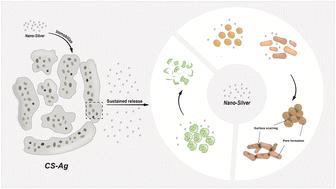
Developing efficient, non-toxic (or low toxicity), low-cost, and long-lasting antibacterial and algae-inhibiting materials is an important issue closely related to human health. Coral sand, due to its porous and biologically residual nature, is an environmentally friendly pure natural material, and its application in the field of environment has attracted attention. This study used coral sand as a carrier to immobilize nano silver and obtained the composite material coral sand-Ag (CS-Ag), which could release nano silver in a slow-release manner to achieve the purpose of continuous sterilization and algae inhibition. The research results showed that 44.2% of silver ions could be sustained within one week, demonstrating a silver sustained release effect. There were obvious antibacterial circles around the CS-Ag composite material, with a diameter of 22.5 ± 0.1 mm for Staphylococcus aureus and 24.1 ± 0.1 mm for Escherichia coli. The bactericidal activity of silver-loaded coral sand was affected by environmental temperature and pH value. SEM observations showed that silver-loaded coral sand caused scars or holes on the surface of bacterial cells, which also confirmed its ability to damage bacterial cells. This material also had an inhibitory effect on single-cell algae. In the treatment group with a concentration of 1.0 g L−1, the inhibition efficiency of CS-Ag on the growth of microalgae for 96 h can reach 89.7%. The addition of silver-loaded coral sand also affected the structural morphology of algal cells and the synthesis of chlorophyll a, thereby inhibiting photosynthesis and respiration, respectively. The high concentration of silver-loaded coral sand almost completely inhibited the photosynthesis and respiration of algal cells. Therefore, CS-Ag is expected to achieve the removal of bacteria and algae in intensive aquaculture water and achieve harmless disease control.
期刊介绍:
Environmental Science: Nano serves as a comprehensive and high-impact peer-reviewed source of information on the design and demonstration of engineered nanomaterials for environment-based applications. It also covers the interactions between engineered, natural, and incidental nanomaterials with biological and environmental systems. This scope includes, but is not limited to, the following topic areas:
Novel nanomaterial-based applications for water, air, soil, food, and energy sustainability
Nanomaterial interactions with biological systems and nanotoxicology
Environmental fate, reactivity, and transformations of nanoscale materials
Nanoscale processes in the environment
Sustainable nanotechnology including rational nanomaterial design, life cycle assessment, risk/benefit analysis





 京公网安备 11010802042870号
京ICP备2023020795号-1
京公网安备 11010802042870号
京ICP备2023020795号-1

 分享
分享
 求助内容:
求助内容: 应助结果提醒方式:
 扫码关注我们
