Aaron J. Goodman, Brianna F. Benner and Manuel D. Montaño
{"title":"走出实验室,进入环境:过去十年单粒子ICP-MS的演变","authors":"Aaron J. Goodman, Brianna F. Benner and Manuel D. Montaño","doi":"10.1039/D4EN00804A","DOIUrl":null,"url":null,"abstract":"<p >The development and application of engineered nanomaterials has required pushing the boundaries of analytical instrumentation in order to detect, quantify and characterize the properties and behaviors of materials at the nanoscale. One technique, single particle ICP-MS, has stood apart for its ability to characterize and quantify inorganic nanomaterials at low concentrations and in complex environmental and biological media. For the past 20 years, this technique has matured significantly, with an ever-expanding scope of application. Where initially it was capable of analyzing precious metal nanoparticles in relatively pristine solutions, now it can be used to characterize multiple different NP populations of varying elemental and isotopic compositions. The types of materials analyzed now extend beyond traditional metallic NPs, with varied materials such as nanominerals, carbon nanotubes, biological cells, and microplastics. In this perspective, we examine the key developments in the past decade of spICP-MS and aim to provide a vision for what this field may look like 10 years from now. The study of nanoparticles, both natural and engineered, will continue to play a vital role in our understanding of climate change, anthropogenic impact, and biogeochemical cycling of nutrients and contaminants in a rapidly changing environment.</p>","PeriodicalId":73,"journal":{"name":"Environmental Science: Nano","volume":" 3","pages":" 1789-1800"},"PeriodicalIF":5.1000,"publicationDate":"2025-01-29","publicationTypes":"Journal Article","fieldsOfStudy":null,"isOpenAccess":false,"openAccessPdf":"","citationCount":"0","resultStr":"{\"title\":\"Out of the lab and into the environment: the evolution of single particle ICP-MS over the past decade\",\"authors\":\"Aaron J. Goodman, Brianna F. Benner and Manuel D. Montaño\",\"doi\":\"10.1039/D4EN00804A\",\"DOIUrl\":null,\"url\":null,\"abstract\":\"<p >The development and application of engineered nanomaterials has required pushing the boundaries of analytical instrumentation in order to detect, quantify and characterize the properties and behaviors of materials at the nanoscale. One technique, single particle ICP-MS, has stood apart for its ability to characterize and quantify inorganic nanomaterials at low concentrations and in complex environmental and biological media. For the past 20 years, this technique has matured significantly, with an ever-expanding scope of application. Where initially it was capable of analyzing precious metal nanoparticles in relatively pristine solutions, now it can be used to characterize multiple different NP populations of varying elemental and isotopic compositions. The types of materials analyzed now extend beyond traditional metallic NPs, with varied materials such as nanominerals, carbon nanotubes, biological cells, and microplastics. In this perspective, we examine the key developments in the past decade of spICP-MS and aim to provide a vision for what this field may look like 10 years from now. The study of nanoparticles, both natural and engineered, will continue to play a vital role in our understanding of climate change, anthropogenic impact, and biogeochemical cycling of nutrients and contaminants in a rapidly changing environment.</p>\",\"PeriodicalId\":73,\"journal\":{\"name\":\"Environmental Science: Nano\",\"volume\":\" 3\",\"pages\":\" 1789-1800\"},\"PeriodicalIF\":5.1000,\"publicationDate\":\"2025-01-29\",\"publicationTypes\":\"Journal Article\",\"fieldsOfStudy\":null,\"isOpenAccess\":false,\"openAccessPdf\":\"\",\"citationCount\":\"0\",\"resultStr\":null,\"platform\":\"Semanticscholar\",\"paperid\":null,\"PeriodicalName\":\"Environmental Science: Nano\",\"FirstCategoryId\":\"6\",\"ListUrlMain\":\"https://pubs.rsc.org/en/content/articlelanding/2025/en/d4en00804a\",\"RegionNum\":2,\"RegionCategory\":\"环境科学与生态学\",\"ArticlePicture\":[],\"TitleCN\":null,\"AbstractTextCN\":null,\"PMCID\":null,\"EPubDate\":\"\",\"PubModel\":\"\",\"JCR\":\"Q1\",\"JCRName\":\"CHEMISTRY, MULTIDISCIPLINARY\",\"Score\":null,\"Total\":0}","platform":"Semanticscholar","paperid":null,"PeriodicalName":"Environmental Science: Nano","FirstCategoryId":"6","ListUrlMain":"https://pubs.rsc.org/en/content/articlelanding/2025/en/d4en00804a","RegionNum":2,"RegionCategory":"环境科学与生态学","ArticlePicture":[],"TitleCN":null,"AbstractTextCN":null,"PMCID":null,"EPubDate":"","PubModel":"","JCR":"Q1","JCRName":"CHEMISTRY, MULTIDISCIPLINARY","Score":null,"Total":0}
Out of the lab and into the environment: the evolution of single particle ICP-MS over the past decade
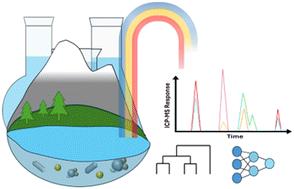
The development and application of engineered nanomaterials has required pushing the boundaries of analytical instrumentation in order to detect, quantify and characterize the properties and behaviors of materials at the nanoscale. One technique, single particle ICP-MS, has stood apart for its ability to characterize and quantify inorganic nanomaterials at low concentrations and in complex environmental and biological media. For the past 20 years, this technique has matured significantly, with an ever-expanding scope of application. Where initially it was capable of analyzing precious metal nanoparticles in relatively pristine solutions, now it can be used to characterize multiple different NP populations of varying elemental and isotopic compositions. The types of materials analyzed now extend beyond traditional metallic NPs, with varied materials such as nanominerals, carbon nanotubes, biological cells, and microplastics. In this perspective, we examine the key developments in the past decade of spICP-MS and aim to provide a vision for what this field may look like 10 years from now. The study of nanoparticles, both natural and engineered, will continue to play a vital role in our understanding of climate change, anthropogenic impact, and biogeochemical cycling of nutrients and contaminants in a rapidly changing environment.
期刊介绍:
Environmental Science: Nano serves as a comprehensive and high-impact peer-reviewed source of information on the design and demonstration of engineered nanomaterials for environment-based applications. It also covers the interactions between engineered, natural, and incidental nanomaterials with biological and environmental systems. This scope includes, but is not limited to, the following topic areas:
Novel nanomaterial-based applications for water, air, soil, food, and energy sustainability
Nanomaterial interactions with biological systems and nanotoxicology
Environmental fate, reactivity, and transformations of nanoscale materials
Nanoscale processes in the environment
Sustainable nanotechnology including rational nanomaterial design, life cycle assessment, risk/benefit analysis




 京公网安备 11010802042870号
京ICP备2023020795号-1
京公网安备 11010802042870号
京ICP备2023020795号-1

 分享
分享
 求助内容:
求助内容: 应助结果提醒方式:
 扫码关注我们
