Mohammad N Nofal, Ali J Yousef, Saad H Samarah, Baidaa M Al-Qudah
{"title":"狭窄性克罗恩病的手术时间:1例报告。","authors":"Mohammad N Nofal, Ali J Yousef, Saad H Samarah, Baidaa M Al-Qudah","doi":"10.1016/j.ijscr.2025.110903","DOIUrl":null,"url":null,"abstract":"<p><strong>Introduction and importance: </strong>Stricture formation is a well-known Crohn's disease consequence that usually results from recurrent cycles of inflammation and healing and primarily affects the small intestine.</p><p><strong>Case presentation: </strong>In this report, we describe the case of a 35-year-old male with an 18-year history of Crohn's disease complicated by long-kinked ileal stricture who presented with a 3-month history of subacute small intestinal obstruction diagnosed with MR enterography and underwent failed medical treatment.</p><p><strong>Clinical discussion: </strong>The patient, a male showing signs of wasting due to a prolonged subacute small intestinal obstruction, underwent an MR enterography which revealed a 6-cm kinked ileal stricture. Intraoperative observations included a significantly dilated small intestine proximal to the stricture and a collapsed distal small bowel. Following resection, the patient experienced a smooth recovery with marked improvement.</p><p><strong>Conclusion: </strong>When there are clear indications for the surgical resection of a stenosed bowel segment caused by Crohn's disease, it is advisable to proceed with the surgery promptly, with a preference for side-to-side stapled anastomosis.</p>","PeriodicalId":48113,"journal":{"name":"International Journal of Surgery Case Reports","volume":"127 ","pages":"110903"},"PeriodicalIF":0.6000,"publicationDate":"2025-02-01","publicationTypes":"Journal Article","fieldsOfStudy":null,"isOpenAccess":false,"openAccessPdf":"https://www.ncbi.nlm.nih.gov/pmc/articles/PMC11808665/pdf/","citationCount":"0","resultStr":"{\"title\":\"Surgery time for stenosed Crohn's disease: Case report.\",\"authors\":\"Mohammad N Nofal, Ali J Yousef, Saad H Samarah, Baidaa M Al-Qudah\",\"doi\":\"10.1016/j.ijscr.2025.110903\",\"DOIUrl\":null,\"url\":null,\"abstract\":\"<p><strong>Introduction and importance: </strong>Stricture formation is a well-known Crohn's disease consequence that usually results from recurrent cycles of inflammation and healing and primarily affects the small intestine.</p><p><strong>Case presentation: </strong>In this report, we describe the case of a 35-year-old male with an 18-year history of Crohn's disease complicated by long-kinked ileal stricture who presented with a 3-month history of subacute small intestinal obstruction diagnosed with MR enterography and underwent failed medical treatment.</p><p><strong>Clinical discussion: </strong>The patient, a male showing signs of wasting due to a prolonged subacute small intestinal obstruction, underwent an MR enterography which revealed a 6-cm kinked ileal stricture. Intraoperative observations included a significantly dilated small intestine proximal to the stricture and a collapsed distal small bowel. Following resection, the patient experienced a smooth recovery with marked improvement.</p><p><strong>Conclusion: </strong>When there are clear indications for the surgical resection of a stenosed bowel segment caused by Crohn's disease, it is advisable to proceed with the surgery promptly, with a preference for side-to-side stapled anastomosis.</p>\",\"PeriodicalId\":48113,\"journal\":{\"name\":\"International Journal of Surgery Case Reports\",\"volume\":\"127 \",\"pages\":\"110903\"},\"PeriodicalIF\":0.6000,\"publicationDate\":\"2025-02-01\",\"publicationTypes\":\"Journal Article\",\"fieldsOfStudy\":null,\"isOpenAccess\":false,\"openAccessPdf\":\"https://www.ncbi.nlm.nih.gov/pmc/articles/PMC11808665/pdf/\",\"citationCount\":\"0\",\"resultStr\":null,\"platform\":\"Semanticscholar\",\"paperid\":null,\"PeriodicalName\":\"International Journal of Surgery Case Reports\",\"FirstCategoryId\":\"1085\",\"ListUrlMain\":\"https://doi.org/10.1016/j.ijscr.2025.110903\",\"RegionNum\":0,\"RegionCategory\":null,\"ArticlePicture\":[],\"TitleCN\":null,\"AbstractTextCN\":null,\"PMCID\":null,\"EPubDate\":\"2025/1/20 0:00:00\",\"PubModel\":\"Epub\",\"JCR\":\"Q4\",\"JCRName\":\"SURGERY\",\"Score\":null,\"Total\":0}","platform":"Semanticscholar","paperid":null,"PeriodicalName":"International Journal of Surgery Case Reports","FirstCategoryId":"1085","ListUrlMain":"https://doi.org/10.1016/j.ijscr.2025.110903","RegionNum":0,"RegionCategory":null,"ArticlePicture":[],"TitleCN":null,"AbstractTextCN":null,"PMCID":null,"EPubDate":"2025/1/20 0:00:00","PubModel":"Epub","JCR":"Q4","JCRName":"SURGERY","Score":null,"Total":0}
Surgery time for stenosed Crohn's disease: Case report.
Introduction and importance: Stricture formation is a well-known Crohn's disease consequence that usually results from recurrent cycles of inflammation and healing and primarily affects the small intestine.
Case presentation: In this report, we describe the case of a 35-year-old male with an 18-year history of Crohn's disease complicated by long-kinked ileal stricture who presented with a 3-month history of subacute small intestinal obstruction diagnosed with MR enterography and underwent failed medical treatment.
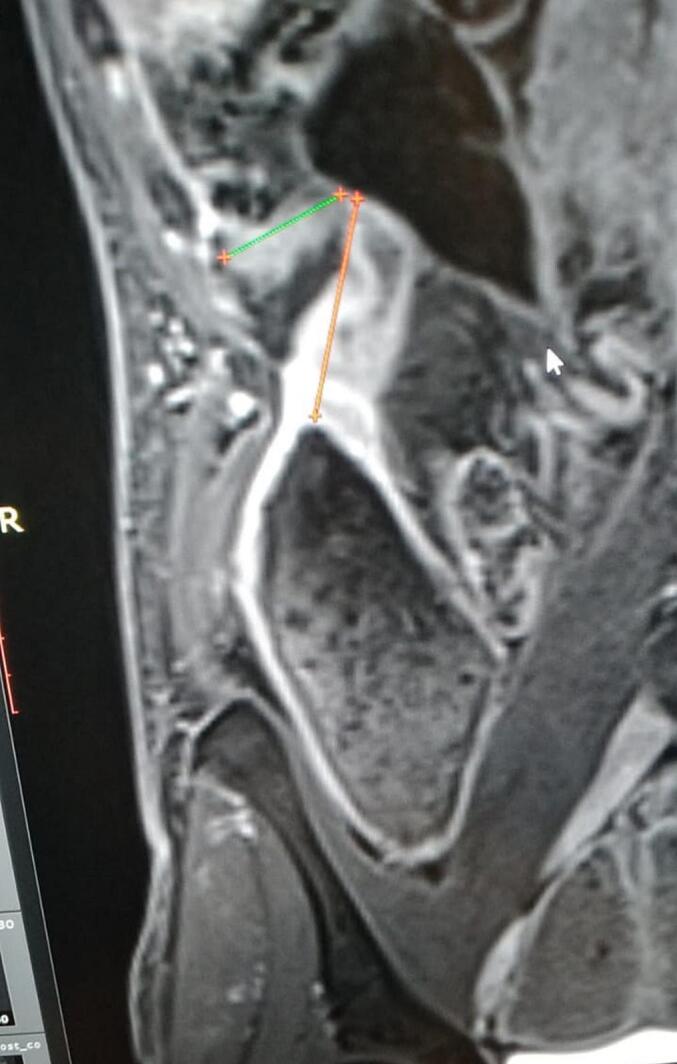
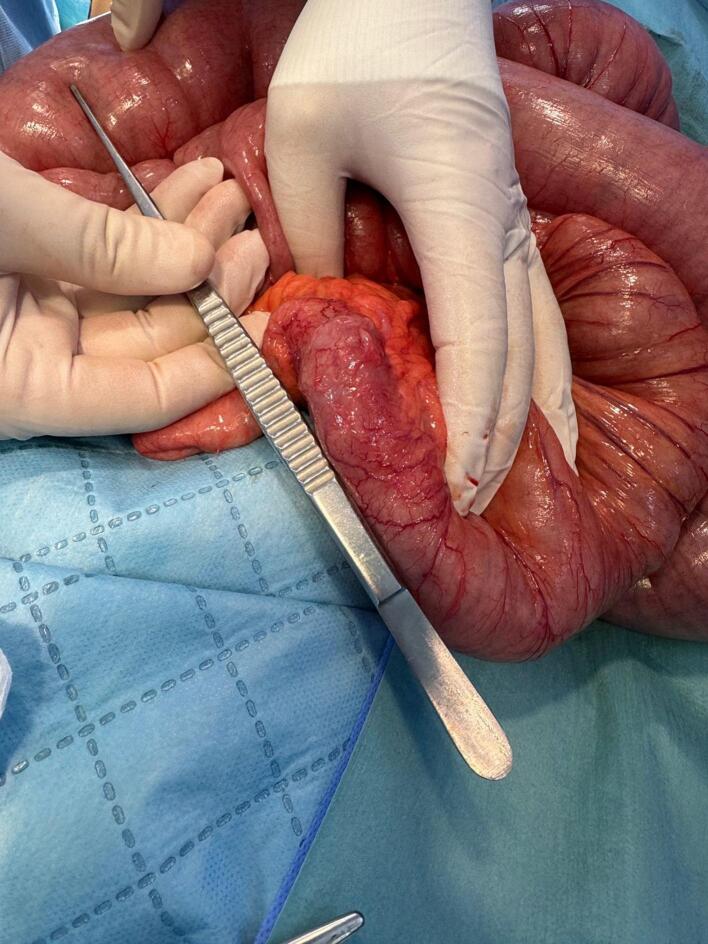
Clinical discussion: The patient, a male showing signs of wasting due to a prolonged subacute small intestinal obstruction, underwent an MR enterography which revealed a 6-cm kinked ileal stricture. Intraoperative observations included a significantly dilated small intestine proximal to the stricture and a collapsed distal small bowel. Following resection, the patient experienced a smooth recovery with marked improvement.
Conclusion: When there are clear indications for the surgical resection of a stenosed bowel segment caused by Crohn's disease, it is advisable to proceed with the surgery promptly, with a preference for side-to-side stapled anastomosis.





 京公网安备 11010802042870号
京ICP备2023020795号-1
京公网安备 11010802042870号
京ICP备2023020795号-1

 分享
分享
 求助内容:
求助内容: 应助结果提醒方式:
 扫码关注我们
