Miranda Paraskeva, Hannah Gulline, Simone West, Louisa Walsh, Ben Tarrant, Kostas Hatzikiriakidis, Heather Morris, Darshini Ayton
{"title":"“移植不能乱来”:年轻人肺移植后的临床护理经验。","authors":"Miranda Paraskeva, Hannah Gulline, Simone West, Louisa Walsh, Ben Tarrant, Kostas Hatzikiriakidis, Heather Morris, Darshini Ayton","doi":"10.1111/hex.70156","DOIUrl":null,"url":null,"abstract":"<div>\n \n \n <section>\n \n <h3> Background</h3>\n \n <p>Lung transplantation improves survival and quality of life in young people with end-stage lung disease. Few studies have investigated the clinical care experiences of young people after lung transplantation.</p>\n </section>\n \n <section>\n \n <h3> Design</h3>\n \n <p>This qualitative study aimed to explore the experiences of young people who underwent lung transplantation. Semi-structured interviews were conducted with 16 lung transplant recipients (< 25 years at transplant). Interviews were analysed to identify themes and categorize and describe the experience of young lung transplant recipients.</p>\n </section>\n \n <section>\n \n <h3> Results</h3>\n \n <p>The themes that emerged were (1) Hope and spectre: The transplant dilemma; (2) Information delivery and comprehension; (3) Independence and navigating care; and (4) Continuity and youth-appropriate care. Findings suggest that young people have distinct care needs that consider the many parallel life transitions that occur in addition to transplantation. They value consistent and familiar teams, which nurture autonomy and independence in the context of post-transplant survivorship and highlight the importance of feeling that they can relate to the healthcare process.</p>\n </section>\n \n <section>\n \n <h3> Conclusion</h3>\n \n <p>The results highlight key areas where adolescent lung transplant recipients can be supported by clinicians, enabling the development of youth-friendly services that cater to this group's healthcare and psychosocial needs.</p>\n </section>\n \n <section>\n \n <h3> Patient or Public Contribution</h3>\n \n <p>Sixteen lung transplant recipients participated in the study by completing a semi-structured interview. Two additional lung transplant recipients who received lung transplants as adolescents and one parent of an adolescent lung transplant recipient participated in a Project Advisory Group (PAG) with six clinicians representing paediatric, adolescent, and adult healthcare experience. They provided advice on research design including the development and revision of the interview guide and recruitment methods. They additionally provided feedback on the preliminary findings and outline of the manuscript. A summary of results was presented to the PAG who in conjunction with the writing group developed a list of recommendations based on the themes identified and the tenets of youth-appropriate care as set out by the World Health Organization. One lung transplant recipient was an author on the manuscript contributing to its writing and review before submission. The clinicians who participated in the PAG did not have direct healthcare relationships with the study participants.</p>\n </section>\n </div>","PeriodicalId":55070,"journal":{"name":"Health Expectations","volume":"28 1","pages":""},"PeriodicalIF":3.2000,"publicationDate":"2025-01-28","publicationTypes":"Journal Article","fieldsOfStudy":null,"isOpenAccess":false,"openAccessPdf":"https://www.ncbi.nlm.nih.gov/pmc/articles/PMC11775388/pdf/","citationCount":"0","resultStr":"{\"title\":\"‘You Can't Muck Around With Transplant’: Young People's Experiences of Clinical Care Following Lung Transplant\",\"authors\":\"Miranda Paraskeva, Hannah Gulline, Simone West, Louisa Walsh, Ben Tarrant, Kostas Hatzikiriakidis, Heather Morris, Darshini Ayton\",\"doi\":\"10.1111/hex.70156\",\"DOIUrl\":null,\"url\":null,\"abstract\":\"<div>\\n \\n \\n <section>\\n \\n <h3> Background</h3>\\n \\n <p>Lung transplantation improves survival and quality of life in young people with end-stage lung disease. Few studies have investigated the clinical care experiences of young people after lung transplantation.</p>\\n </section>\\n \\n <section>\\n \\n <h3> Design</h3>\\n \\n <p>This qualitative study aimed to explore the experiences of young people who underwent lung transplantation. Semi-structured interviews were conducted with 16 lung transplant recipients (< 25 years at transplant). Interviews were analysed to identify themes and categorize and describe the experience of young lung transplant recipients.</p>\\n </section>\\n \\n <section>\\n \\n <h3> Results</h3>\\n \\n <p>The themes that emerged were (1) Hope and spectre: The transplant dilemma; (2) Information delivery and comprehension; (3) Independence and navigating care; and (4) Continuity and youth-appropriate care. Findings suggest that young people have distinct care needs that consider the many parallel life transitions that occur in addition to transplantation. They value consistent and familiar teams, which nurture autonomy and independence in the context of post-transplant survivorship and highlight the importance of feeling that they can relate to the healthcare process.</p>\\n </section>\\n \\n <section>\\n \\n <h3> Conclusion</h3>\\n \\n <p>The results highlight key areas where adolescent lung transplant recipients can be supported by clinicians, enabling the development of youth-friendly services that cater to this group's healthcare and psychosocial needs.</p>\\n </section>\\n \\n <section>\\n \\n <h3> Patient or Public Contribution</h3>\\n \\n <p>Sixteen lung transplant recipients participated in the study by completing a semi-structured interview. Two additional lung transplant recipients who received lung transplants as adolescents and one parent of an adolescent lung transplant recipient participated in a Project Advisory Group (PAG) with six clinicians representing paediatric, adolescent, and adult healthcare experience. They provided advice on research design including the development and revision of the interview guide and recruitment methods. They additionally provided feedback on the preliminary findings and outline of the manuscript. A summary of results was presented to the PAG who in conjunction with the writing group developed a list of recommendations based on the themes identified and the tenets of youth-appropriate care as set out by the World Health Organization. One lung transplant recipient was an author on the manuscript contributing to its writing and review before submission. The clinicians who participated in the PAG did not have direct healthcare relationships with the study participants.</p>\\n </section>\\n </div>\",\"PeriodicalId\":55070,\"journal\":{\"name\":\"Health Expectations\",\"volume\":\"28 1\",\"pages\":\"\"},\"PeriodicalIF\":3.2000,\"publicationDate\":\"2025-01-28\",\"publicationTypes\":\"Journal Article\",\"fieldsOfStudy\":null,\"isOpenAccess\":false,\"openAccessPdf\":\"https://www.ncbi.nlm.nih.gov/pmc/articles/PMC11775388/pdf/\",\"citationCount\":\"0\",\"resultStr\":null,\"platform\":\"Semanticscholar\",\"paperid\":null,\"PeriodicalName\":\"Health Expectations\",\"FirstCategoryId\":\"3\",\"ListUrlMain\":\"https://onlinelibrary.wiley.com/doi/10.1111/hex.70156\",\"RegionNum\":3,\"RegionCategory\":\"医学\",\"ArticlePicture\":[],\"TitleCN\":null,\"AbstractTextCN\":null,\"PMCID\":null,\"EPubDate\":\"\",\"PubModel\":\"\",\"JCR\":\"Q2\",\"JCRName\":\"HEALTH CARE SCIENCES & SERVICES\",\"Score\":null,\"Total\":0}","platform":"Semanticscholar","paperid":null,"PeriodicalName":"Health Expectations","FirstCategoryId":"3","ListUrlMain":"https://onlinelibrary.wiley.com/doi/10.1111/hex.70156","RegionNum":3,"RegionCategory":"医学","ArticlePicture":[],"TitleCN":null,"AbstractTextCN":null,"PMCID":null,"EPubDate":"","PubModel":"","JCR":"Q2","JCRName":"HEALTH CARE SCIENCES & SERVICES","Score":null,"Total":0}
‘You Can't Muck Around With Transplant’: Young People's Experiences of Clinical Care Following Lung Transplant
Background
Lung transplantation improves survival and quality of life in young people with end-stage lung disease. Few studies have investigated the clinical care experiences of young people after lung transplantation.
Design
This qualitative study aimed to explore the experiences of young people who underwent lung transplantation. Semi-structured interviews were conducted with 16 lung transplant recipients (< 25 years at transplant). Interviews were analysed to identify themes and categorize and describe the experience of young lung transplant recipients.
Results
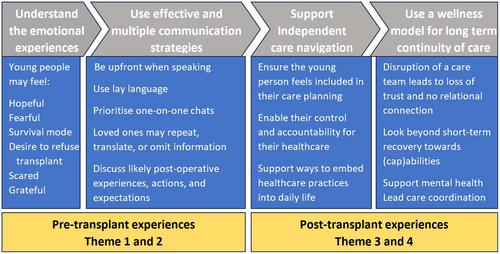
The themes that emerged were (1) Hope and spectre: The transplant dilemma; (2) Information delivery and comprehension; (3) Independence and navigating care; and (4) Continuity and youth-appropriate care. Findings suggest that young people have distinct care needs that consider the many parallel life transitions that occur in addition to transplantation. They value consistent and familiar teams, which nurture autonomy and independence in the context of post-transplant survivorship and highlight the importance of feeling that they can relate to the healthcare process.
Conclusion
The results highlight key areas where adolescent lung transplant recipients can be supported by clinicians, enabling the development of youth-friendly services that cater to this group's healthcare and psychosocial needs.
Patient or Public Contribution
Sixteen lung transplant recipients participated in the study by completing a semi-structured interview. Two additional lung transplant recipients who received lung transplants as adolescents and one parent of an adolescent lung transplant recipient participated in a Project Advisory Group (PAG) with six clinicians representing paediatric, adolescent, and adult healthcare experience. They provided advice on research design including the development and revision of the interview guide and recruitment methods. They additionally provided feedback on the preliminary findings and outline of the manuscript. A summary of results was presented to the PAG who in conjunction with the writing group developed a list of recommendations based on the themes identified and the tenets of youth-appropriate care as set out by the World Health Organization. One lung transplant recipient was an author on the manuscript contributing to its writing and review before submission. The clinicians who participated in the PAG did not have direct healthcare relationships with the study participants.
期刊介绍:
Health Expectations promotes critical thinking and informed debate about all aspects of patient and public involvement and engagement (PPIE) in health and social care, health policy and health services research including:
• Person-centred care and quality improvement
• Patients'' participation in decisions about disease prevention and management
• Public perceptions of health services
• Citizen involvement in health care policy making and priority-setting
• Methods for monitoring and evaluating participation
• Empowerment and consumerism
• Patients'' role in safety and quality
• Patient and public role in health services research
• Co-production (researchers working with patients and the public) of research, health care and policy
Health Expectations is a quarterly, peer-reviewed journal publishing original research, review articles and critical commentaries. It includes papers which clarify concepts, develop theories, and critically analyse and evaluate specific policies and practices. The Journal provides an inter-disciplinary and international forum in which researchers (including PPIE researchers) from a range of backgrounds and expertise can present their work to other researchers, policy-makers, health care professionals, managers, patients and consumer advocates.




 京公网安备 11010802042870号
京ICP备2023020795号-1
京公网安备 11010802042870号
京ICP备2023020795号-1

 分享
分享
 求助内容:
求助内容: 应助结果提醒方式:
 扫码关注我们
