{"title":"聚焦Cdr1:对多药转运体研究的个人反思。","authors":"Rajendra Prasad","doi":"10.1093/femsyr/foaf003","DOIUrl":null,"url":null,"abstract":"<p><p>Drug resistance mechanisms in human pathogenic Candida species are constantly evolving. Over time, these species have developed diverse strategies to counter the effects of various drug classes, making them a significant threat to human health. In addition to well-known mechanisms such as drug target modification, overexpression, and chromosome duplication, Candida species have also developed permeability barriers to antifungal drugs through reduced drug import or increased efflux. The genomes of Candida species contain a multitude of drug resistance genes, many of which encode membrane efflux transporters that actively expel drugs, preventing their toxic accumulation inside the cells and contributing to multidrug resistance. This brief personal retrospective piece for the \"Thematic Issue on Celebrating 30 Years of Cdr1 Research: new trends in antifungal therapy and drug resistance\" looks back as to how antifungal research has shifted focus since the identification of the first multidrug transporter gene, CDR1 (Candida Drug Resistance 1), leading to new insights into how reduced azole permeability across Candida cell membranes influences antifungal susceptibility.</p>","PeriodicalId":12290,"journal":{"name":"FEMS yeast research","volume":"25 ","pages":""},"PeriodicalIF":2.7000,"publicationDate":"2025-01-30","publicationTypes":"Journal Article","fieldsOfStudy":null,"isOpenAccess":false,"openAccessPdf":"https://www.ncbi.nlm.nih.gov/pmc/articles/PMC11781190/pdf/","citationCount":"0","resultStr":"{\"title\":\"Cdr1 in focus: a personal reflection on multidrug transporter research.\",\"authors\":\"Rajendra Prasad\",\"doi\":\"10.1093/femsyr/foaf003\",\"DOIUrl\":null,\"url\":null,\"abstract\":\"<p><p>Drug resistance mechanisms in human pathogenic Candida species are constantly evolving. Over time, these species have developed diverse strategies to counter the effects of various drug classes, making them a significant threat to human health. In addition to well-known mechanisms such as drug target modification, overexpression, and chromosome duplication, Candida species have also developed permeability barriers to antifungal drugs through reduced drug import or increased efflux. The genomes of Candida species contain a multitude of drug resistance genes, many of which encode membrane efflux transporters that actively expel drugs, preventing their toxic accumulation inside the cells and contributing to multidrug resistance. This brief personal retrospective piece for the \\\"Thematic Issue on Celebrating 30 Years of Cdr1 Research: new trends in antifungal therapy and drug resistance\\\" looks back as to how antifungal research has shifted focus since the identification of the first multidrug transporter gene, CDR1 (Candida Drug Resistance 1), leading to new insights into how reduced azole permeability across Candida cell membranes influences antifungal susceptibility.</p>\",\"PeriodicalId\":12290,\"journal\":{\"name\":\"FEMS yeast research\",\"volume\":\"25 \",\"pages\":\"\"},\"PeriodicalIF\":2.7000,\"publicationDate\":\"2025-01-30\",\"publicationTypes\":\"Journal Article\",\"fieldsOfStudy\":null,\"isOpenAccess\":false,\"openAccessPdf\":\"https://www.ncbi.nlm.nih.gov/pmc/articles/PMC11781190/pdf/\",\"citationCount\":\"0\",\"resultStr\":null,\"platform\":\"Semanticscholar\",\"paperid\":null,\"PeriodicalName\":\"FEMS yeast research\",\"FirstCategoryId\":\"99\",\"ListUrlMain\":\"https://doi.org/10.1093/femsyr/foaf003\",\"RegionNum\":4,\"RegionCategory\":\"生物学\",\"ArticlePicture\":[],\"TitleCN\":null,\"AbstractTextCN\":null,\"PMCID\":null,\"EPubDate\":\"\",\"PubModel\":\"\",\"JCR\":\"Q3\",\"JCRName\":\"BIOTECHNOLOGY & APPLIED MICROBIOLOGY\",\"Score\":null,\"Total\":0}","platform":"Semanticscholar","paperid":null,"PeriodicalName":"FEMS yeast research","FirstCategoryId":"99","ListUrlMain":"https://doi.org/10.1093/femsyr/foaf003","RegionNum":4,"RegionCategory":"生物学","ArticlePicture":[],"TitleCN":null,"AbstractTextCN":null,"PMCID":null,"EPubDate":"","PubModel":"","JCR":"Q3","JCRName":"BIOTECHNOLOGY & APPLIED MICROBIOLOGY","Score":null,"Total":0}
Cdr1 in focus: a personal reflection on multidrug transporter research.
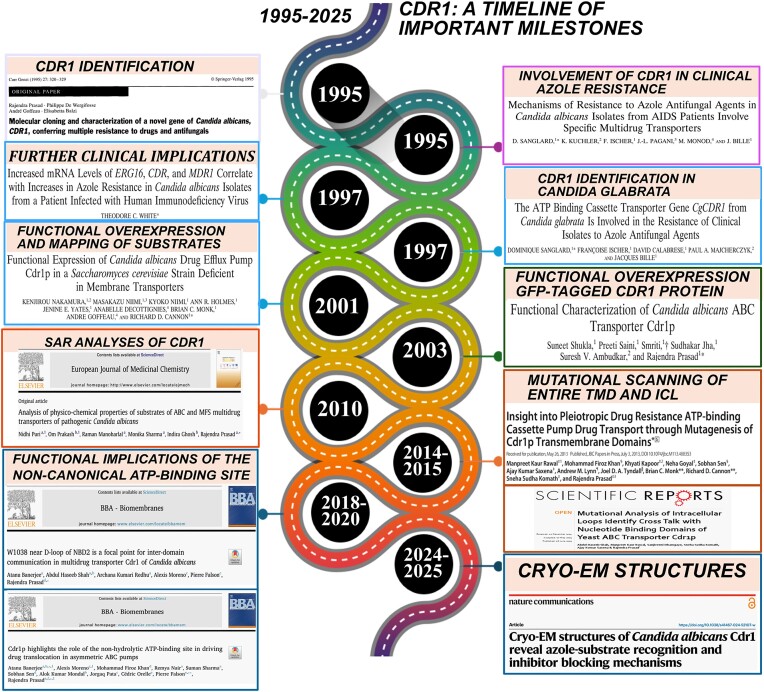
Drug resistance mechanisms in human pathogenic Candida species are constantly evolving. Over time, these species have developed diverse strategies to counter the effects of various drug classes, making them a significant threat to human health. In addition to well-known mechanisms such as drug target modification, overexpression, and chromosome duplication, Candida species have also developed permeability barriers to antifungal drugs through reduced drug import or increased efflux. The genomes of Candida species contain a multitude of drug resistance genes, many of which encode membrane efflux transporters that actively expel drugs, preventing their toxic accumulation inside the cells and contributing to multidrug resistance. This brief personal retrospective piece for the "Thematic Issue on Celebrating 30 Years of Cdr1 Research: new trends in antifungal therapy and drug resistance" looks back as to how antifungal research has shifted focus since the identification of the first multidrug transporter gene, CDR1 (Candida Drug Resistance 1), leading to new insights into how reduced azole permeability across Candida cell membranes influences antifungal susceptibility.
期刊介绍:
FEMS Yeast Research offers efficient publication of high-quality original Research Articles, Mini-reviews, Letters to the Editor, Perspectives and Commentaries that express current opinions. The journal will select for publication only those manuscripts deemed to be of major relevance to the field and generally will not consider articles that are largely descriptive without insights on underlying mechanism or biology. Submissions on any yeast species are welcome provided they report results within the scope outlined below and are of significance to the yeast field.




 京公网安备 11010802042870号
京ICP备2023020795号-1
京公网安备 11010802042870号
京ICP备2023020795号-1

 分享
分享
 求助内容:
求助内容: 应助结果提醒方式:
 扫码关注我们
