Xuechunzi Bai, Stefan Uddenberg, Brandon P Labbree, Alexander Todorov
{"title":"从太少中学到太多:错误的面孔刻板印象从少数例子中产生,并因采样不足而持续存在。","authors":"Xuechunzi Bai, Stefan Uddenberg, Brandon P Labbree, Alexander Todorov","doi":"10.1037/pspa0000422","DOIUrl":null,"url":null,"abstract":"<p><p>Face stereotypes are prevalent, consequential, yet oftentimes inaccurate. How do false first impressions arise and persist despite counter-evidence? Building on the overgeneralization hypothesis, we propose a domain-general cognitive mechanism: insufficient statistical learning, or Insta-learn. This mechanism posits that humans are quick statistical learners but insufficient samplers. Humans extract statistical regularities from very few exemplars in their immediate context and prematurely decide to stop sampling, creating and perpetuating locally accurate-but globally inaccurate-impressions. Six experiments (N = 1,565) tested this hypothesis using novel pairs of computer-generated faces and social behaviors by fixing the population-level statistics of face-behavior associations to zero (i.e., no relationship). The initial sample contained either 11, five, or three examples with either a positive, zero, or negative linear relationship between facial features and social behaviors. The sampling procedure contained a free-sampling condition in which participants were free to decide when to stop viewing more examples and a fixed-sampling condition in which participants were forced to view all stimuli before making decisions. Consistent with the Insta-learn mechanism, participants learned novel face stereotypes quickly, with as few as three examples, and did not sample enough when they were given the freedom to do so. This domain-general cognitive mechanism provides one plausible origin of false face stereotypes, demonstrating negative consequences when people learn too much from too little. (PsycInfo Database Record (c) 2025 APA, all rights reserved).</p>","PeriodicalId":16691,"journal":{"name":"Journal of personality and social psychology","volume":"128 1","pages":"61-81"},"PeriodicalIF":6.7000,"publicationDate":"2025-01-01","publicationTypes":"Journal Article","fieldsOfStudy":null,"isOpenAccess":false,"openAccessPdf":"","citationCount":"0","resultStr":"{\"title\":\"Learning too much from too little: False face stereotypes emerge from a few exemplars and persist via insufficient sampling.\",\"authors\":\"Xuechunzi Bai, Stefan Uddenberg, Brandon P Labbree, Alexander Todorov\",\"doi\":\"10.1037/pspa0000422\",\"DOIUrl\":null,\"url\":null,\"abstract\":\"<p><p>Face stereotypes are prevalent, consequential, yet oftentimes inaccurate. How do false first impressions arise and persist despite counter-evidence? Building on the overgeneralization hypothesis, we propose a domain-general cognitive mechanism: insufficient statistical learning, or Insta-learn. This mechanism posits that humans are quick statistical learners but insufficient samplers. Humans extract statistical regularities from very few exemplars in their immediate context and prematurely decide to stop sampling, creating and perpetuating locally accurate-but globally inaccurate-impressions. Six experiments (N = 1,565) tested this hypothesis using novel pairs of computer-generated faces and social behaviors by fixing the population-level statistics of face-behavior associations to zero (i.e., no relationship). The initial sample contained either 11, five, or three examples with either a positive, zero, or negative linear relationship between facial features and social behaviors. The sampling procedure contained a free-sampling condition in which participants were free to decide when to stop viewing more examples and a fixed-sampling condition in which participants were forced to view all stimuli before making decisions. Consistent with the Insta-learn mechanism, participants learned novel face stereotypes quickly, with as few as three examples, and did not sample enough when they were given the freedom to do so. This domain-general cognitive mechanism provides one plausible origin of false face stereotypes, demonstrating negative consequences when people learn too much from too little. (PsycInfo Database Record (c) 2025 APA, all rights reserved).</p>\",\"PeriodicalId\":16691,\"journal\":{\"name\":\"Journal of personality and social psychology\",\"volume\":\"128 1\",\"pages\":\"61-81\"},\"PeriodicalIF\":6.7000,\"publicationDate\":\"2025-01-01\",\"publicationTypes\":\"Journal Article\",\"fieldsOfStudy\":null,\"isOpenAccess\":false,\"openAccessPdf\":\"\",\"citationCount\":\"0\",\"resultStr\":null,\"platform\":\"Semanticscholar\",\"paperid\":null,\"PeriodicalName\":\"Journal of personality and social psychology\",\"FirstCategoryId\":\"102\",\"ListUrlMain\":\"https://doi.org/10.1037/pspa0000422\",\"RegionNum\":1,\"RegionCategory\":\"心理学\",\"ArticlePicture\":[],\"TitleCN\":null,\"AbstractTextCN\":null,\"PMCID\":null,\"EPubDate\":\"\",\"PubModel\":\"\",\"JCR\":\"Q1\",\"JCRName\":\"PSYCHOLOGY, SOCIAL\",\"Score\":null,\"Total\":0}","platform":"Semanticscholar","paperid":null,"PeriodicalName":"Journal of personality and social psychology","FirstCategoryId":"102","ListUrlMain":"https://doi.org/10.1037/pspa0000422","RegionNum":1,"RegionCategory":"心理学","ArticlePicture":[],"TitleCN":null,"AbstractTextCN":null,"PMCID":null,"EPubDate":"","PubModel":"","JCR":"Q1","JCRName":"PSYCHOLOGY, SOCIAL","Score":null,"Total":0}
引用次数: 0
摘要
对面孔的刻板印象是普遍的、重要的,但往往是不准确的。尽管有反证,错误的第一印象是如何产生并持续存在的?在过度泛化假设的基础上,我们提出了一个领域通用认知机制:统计学习不足,或Insta-learn。这种机制假设人类是快速的统计学习者,但采样不足。人类从极少的例子中提取统计规律,过早地决定停止抽样,创造和延续局部准确的印象,但全球不准确。6个实验(N = 1,565)通过将面部行为关联的人口统计数据固定为零(即没有关系),使用计算机生成的新面孔和社会行为对这一假设进行了验证。初始样本包含11个、5个或3个例子,其中面部特征与社会行为之间存在正线性关系、零线性关系或负线性关系。抽样过程包括一个自由抽样条件,在这个条件下,参与者可以自由决定何时停止观看更多的例子,而在一个固定抽样条件下,参与者在做出决定之前被迫观看所有的刺激。与Insta-learn机制一致,参与者很快就学会了新的面孔刻板印象,只有三个例子,当他们被允许这样做时,他们没有足够的样本。这一领域普遍认知机制为虚假面孔刻板印象提供了一个合理的来源,表明当人们从太少中学到太多时,会产生负面后果。(PsycInfo Database Record (c) 2025 APA,版权所有)。
Learning too much from too little: False face stereotypes emerge from a few exemplars and persist via insufficient sampling.
Face stereotypes are prevalent, consequential, yet oftentimes inaccurate. How do false first impressions arise and persist despite counter-evidence? Building on the overgeneralization hypothesis, we propose a domain-general cognitive mechanism: insufficient statistical learning, or Insta-learn. This mechanism posits that humans are quick statistical learners but insufficient samplers. Humans extract statistical regularities from very few exemplars in their immediate context and prematurely decide to stop sampling, creating and perpetuating locally accurate-but globally inaccurate-impressions. Six experiments (N = 1,565) tested this hypothesis using novel pairs of computer-generated faces and social behaviors by fixing the population-level statistics of face-behavior associations to zero (i.e., no relationship). The initial sample contained either 11, five, or three examples with either a positive, zero, or negative linear relationship between facial features and social behaviors. The sampling procedure contained a free-sampling condition in which participants were free to decide when to stop viewing more examples and a fixed-sampling condition in which participants were forced to view all stimuli before making decisions. Consistent with the Insta-learn mechanism, participants learned novel face stereotypes quickly, with as few as three examples, and did not sample enough when they were given the freedom to do so. This domain-general cognitive mechanism provides one plausible origin of false face stereotypes, demonstrating negative consequences when people learn too much from too little. (PsycInfo Database Record (c) 2025 APA, all rights reserved).
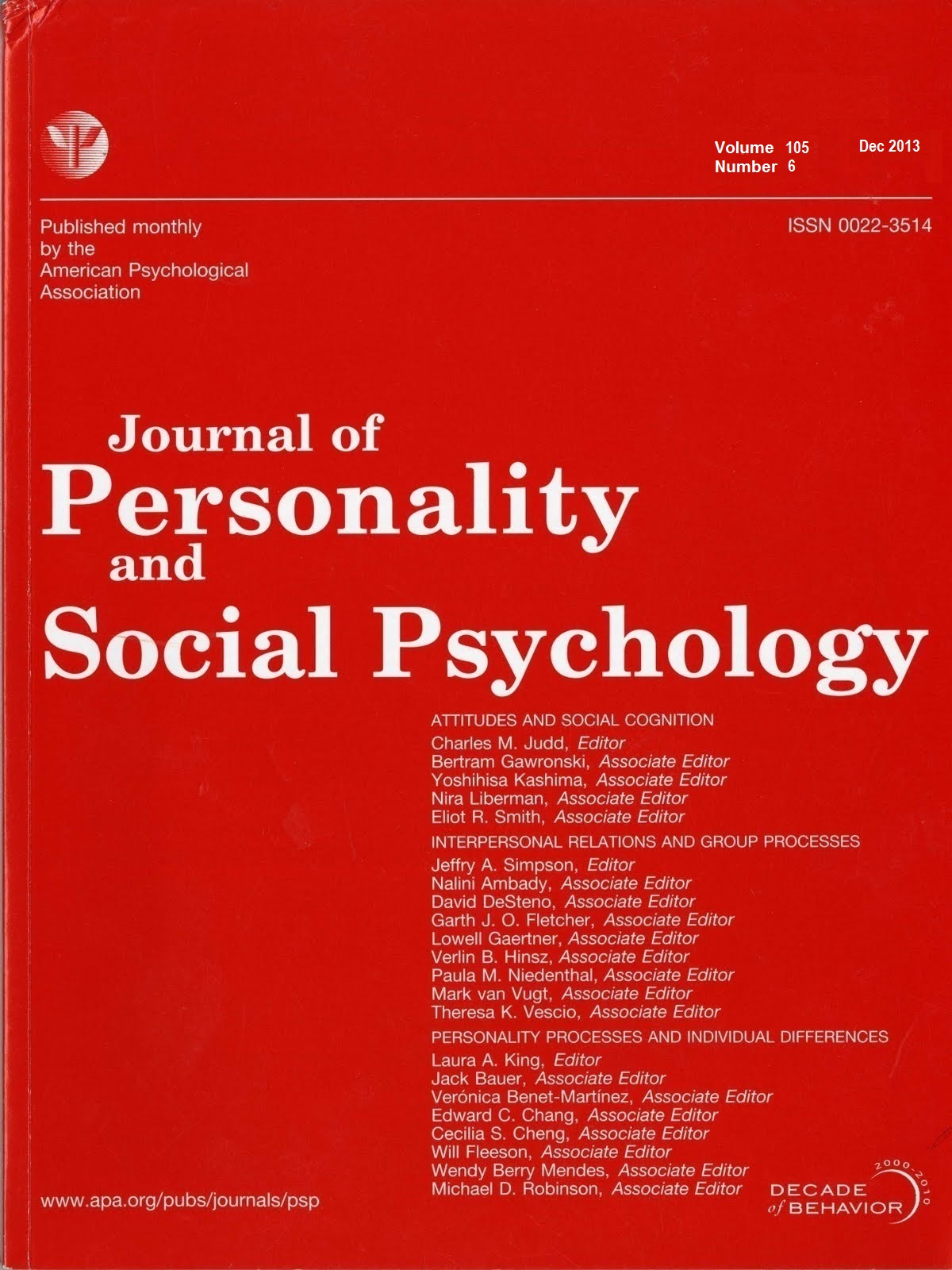
期刊介绍:
Journal of personality and social psychology publishes original papers in all areas of personality and social psychology and emphasizes empirical reports, but may include specialized theoretical, methodological, and review papers.Journal of personality and social psychology is divided into three independently edited sections. Attitudes and Social Cognition addresses all aspects of psychology (e.g., attitudes, cognition, emotion, motivation) that take place in significant micro- and macrolevel social contexts.




 京公网安备 11010802042870号
京ICP备2023020795号-1
京公网安备 11010802042870号
京ICP备2023020795号-1

 分享
分享
 求助内容:
求助内容: 应助结果提醒方式:
 扫码关注我们
