Nicholas K Canby, Elizabeth A Cosby, Roman Palitsky, Deanna M Kaplan, Josie Lee, Golnoosh Mahdavi, Adrian A Lopez, Roberta E Goldman, Kristina Eichel, Jared R Lindahl, Willoughby B Britton
{"title":"儿童创伤和亚临床创伤后应激障碍症状预示着两种基于正念的治疗活动抑郁症的不良影响和更糟糕的结果。","authors":"Nicholas K Canby, Elizabeth A Cosby, Roman Palitsky, Deanna M Kaplan, Josie Lee, Golnoosh Mahdavi, Adrian A Lopez, Roberta E Goldman, Kristina Eichel, Jared R Lindahl, Willoughby B Britton","doi":"10.1371/journal.pone.0318499","DOIUrl":null,"url":null,"abstract":"<p><p>Within mindfulness-based programs (MBPs), mixed results have been found for the role of childhood trauma as a moderator of depression outcomes. Furthermore, childhood trauma and PTSD symptoms have been identified as possible risk factors for the occurrence of meditation-related adverse effects (MRAE). The present research examined multiple forms of childhood trauma and PTSD symptoms as predictors of depression treatment outcomes and MRAEs. Various forms of childhood trauma (e.g., abuse and neglect) were examined as predictors of depression treatment outcomes and participant attrition using secondary analyses of two MBP clinical trials (N = 52 and 104, respectively). Study 2 also examined meditation-related side effects (MRSE) and MRAE as outcomes and current subclinical and past PTSD symptoms as predictors. Childhood trauma led to worse depression outcomes across both study 1 and study 2, such that total childhood trauma and childhood sexual abuse were significant predictors across both studies. Childhood sexual abuse predicted attrition in study 2. Finally, multiple forms of childhood trauma and PTSD symptoms predicted MRSE, while total childhood trauma, childhood emotional abuse, and subclinical PTSD symptoms predicted lasting MRAE. Childhood trauma and PTSD symptoms may lead to worse outcomes and a greater occurrence of adverse effects within MBPs for active depression. These results call for further trauma-sensitive modifications, safety monitoring, participant screening, and provider education when implementing these programs.</p>","PeriodicalId":20189,"journal":{"name":"PLoS ONE","volume":"20 1","pages":"e0318499"},"PeriodicalIF":2.6000,"publicationDate":"2025-01-30","publicationTypes":"Journal Article","fieldsOfStudy":null,"isOpenAccess":false,"openAccessPdf":"https://www.ncbi.nlm.nih.gov/pmc/articles/PMC11781677/pdf/","citationCount":"0","resultStr":"{\"title\":\"Childhood trauma and subclinical PTSD symptoms predict adverse effects and worse outcomes across two mindfulness-based programs for active depression.\",\"authors\":\"Nicholas K Canby, Elizabeth A Cosby, Roman Palitsky, Deanna M Kaplan, Josie Lee, Golnoosh Mahdavi, Adrian A Lopez, Roberta E Goldman, Kristina Eichel, Jared R Lindahl, Willoughby B Britton\",\"doi\":\"10.1371/journal.pone.0318499\",\"DOIUrl\":null,\"url\":null,\"abstract\":\"<p><p>Within mindfulness-based programs (MBPs), mixed results have been found for the role of childhood trauma as a moderator of depression outcomes. Furthermore, childhood trauma and PTSD symptoms have been identified as possible risk factors for the occurrence of meditation-related adverse effects (MRAE). The present research examined multiple forms of childhood trauma and PTSD symptoms as predictors of depression treatment outcomes and MRAEs. Various forms of childhood trauma (e.g., abuse and neglect) were examined as predictors of depression treatment outcomes and participant attrition using secondary analyses of two MBP clinical trials (N = 52 and 104, respectively). Study 2 also examined meditation-related side effects (MRSE) and MRAE as outcomes and current subclinical and past PTSD symptoms as predictors. Childhood trauma led to worse depression outcomes across both study 1 and study 2, such that total childhood trauma and childhood sexual abuse were significant predictors across both studies. Childhood sexual abuse predicted attrition in study 2. Finally, multiple forms of childhood trauma and PTSD symptoms predicted MRSE, while total childhood trauma, childhood emotional abuse, and subclinical PTSD symptoms predicted lasting MRAE. Childhood trauma and PTSD symptoms may lead to worse outcomes and a greater occurrence of adverse effects within MBPs for active depression. These results call for further trauma-sensitive modifications, safety monitoring, participant screening, and provider education when implementing these programs.</p>\",\"PeriodicalId\":20189,\"journal\":{\"name\":\"PLoS ONE\",\"volume\":\"20 1\",\"pages\":\"e0318499\"},\"PeriodicalIF\":2.6000,\"publicationDate\":\"2025-01-30\",\"publicationTypes\":\"Journal Article\",\"fieldsOfStudy\":null,\"isOpenAccess\":false,\"openAccessPdf\":\"https://www.ncbi.nlm.nih.gov/pmc/articles/PMC11781677/pdf/\",\"citationCount\":\"0\",\"resultStr\":null,\"platform\":\"Semanticscholar\",\"paperid\":null,\"PeriodicalName\":\"PLoS ONE\",\"FirstCategoryId\":\"103\",\"ListUrlMain\":\"https://doi.org/10.1371/journal.pone.0318499\",\"RegionNum\":3,\"RegionCategory\":\"综合性期刊\",\"ArticlePicture\":[],\"TitleCN\":null,\"AbstractTextCN\":null,\"PMCID\":null,\"EPubDate\":\"2025/1/1 0:00:00\",\"PubModel\":\"eCollection\",\"JCR\":\"Q1\",\"JCRName\":\"MULTIDISCIPLINARY SCIENCES\",\"Score\":null,\"Total\":0}","platform":"Semanticscholar","paperid":null,"PeriodicalName":"PLoS ONE","FirstCategoryId":"103","ListUrlMain":"https://doi.org/10.1371/journal.pone.0318499","RegionNum":3,"RegionCategory":"综合性期刊","ArticlePicture":[],"TitleCN":null,"AbstractTextCN":null,"PMCID":null,"EPubDate":"2025/1/1 0:00:00","PubModel":"eCollection","JCR":"Q1","JCRName":"MULTIDISCIPLINARY SCIENCES","Score":null,"Total":0}
Childhood trauma and subclinical PTSD symptoms predict adverse effects and worse outcomes across two mindfulness-based programs for active depression.
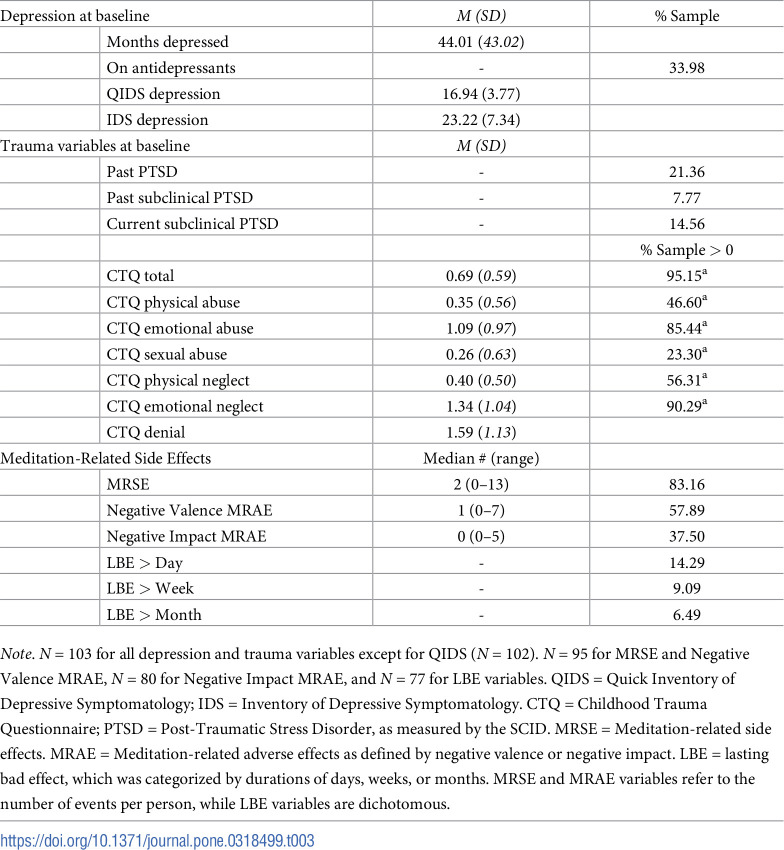
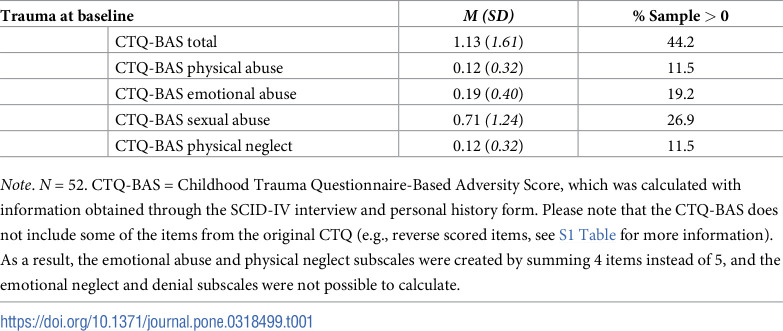
Within mindfulness-based programs (MBPs), mixed results have been found for the role of childhood trauma as a moderator of depression outcomes. Furthermore, childhood trauma and PTSD symptoms have been identified as possible risk factors for the occurrence of meditation-related adverse effects (MRAE). The present research examined multiple forms of childhood trauma and PTSD symptoms as predictors of depression treatment outcomes and MRAEs. Various forms of childhood trauma (e.g., abuse and neglect) were examined as predictors of depression treatment outcomes and participant attrition using secondary analyses of two MBP clinical trials (N = 52 and 104, respectively). Study 2 also examined meditation-related side effects (MRSE) and MRAE as outcomes and current subclinical and past PTSD symptoms as predictors. Childhood trauma led to worse depression outcomes across both study 1 and study 2, such that total childhood trauma and childhood sexual abuse were significant predictors across both studies. Childhood sexual abuse predicted attrition in study 2. Finally, multiple forms of childhood trauma and PTSD symptoms predicted MRSE, while total childhood trauma, childhood emotional abuse, and subclinical PTSD symptoms predicted lasting MRAE. Childhood trauma and PTSD symptoms may lead to worse outcomes and a greater occurrence of adverse effects within MBPs for active depression. These results call for further trauma-sensitive modifications, safety monitoring, participant screening, and provider education when implementing these programs.
期刊介绍:
PLOS ONE is an international, peer-reviewed, open-access, online publication. PLOS ONE welcomes reports on primary research from any scientific discipline. It provides:
* Open-access—freely accessible online, authors retain copyright
* Fast publication times
* Peer review by expert, practicing researchers
* Post-publication tools to indicate quality and impact
* Community-based dialogue on articles
* Worldwide media coverage






 京公网安备 11010802042870号
京ICP备2023020795号-1
京公网安备 11010802042870号
京ICP备2023020795号-1

 分享
分享
 求助内容:
求助内容: 应助结果提醒方式:
 扫码关注我们
