{"title":"在壳聚糖诱导的气孔关闭过程中,活性羰基在活性氧的下游发挥作用。","authors":"Israt Jahan, Md Moshiul Islam, Toshiyuki Nakamura, Yoshimasa Nakamura, Shintaro Munemasa, Jun'ichi Mano, Yoshiyuki Murata","doi":"10.1111/ppl.70094","DOIUrl":null,"url":null,"abstract":"<p><p>An elicitor, chitosan (CHT), induces stomatal closure in plants, which is accompanied by salicylhydroxamic acid (SHAM)-sensitive peroxidases-mediated reactive oxygen species (ROS) production in guard cells. Reactive carbonyl species (RCS) function downstream of ROS in abscisic acid (ABA) and methyl jasmonate (MeJA) signalling in guard cells. However, the involvement of RCS in CHT-induced stomatal closure is still unknown. In this study, we used transgenic tobacco (Nicotiana tabacum) plants overexpressing Arabidopsis thaliana 2-alkenal reductase (AER-OE tobacco) and Arabidopsis wild-type (WT) plants to investigate whether RCS is involved in CHT-induced stomatal closure. Chitosan-induced stomatal closure was inhibited in the tobacco AER-OE plants. In the WT tobacco and Arabidopsis plants, CHT-induced stomatal closure was inhibited by RCS scavengers, carnosine and pyridoxamine. Chitosan significantly increased RCS production in the WT tobacco and Arabidopsis, but in the tobacco AER-OE plants, chitosan did not increase significantly RCS accumulation. Moreover, neither the application of RCS scavengers to both WT plants nor scavenging RCS by AER-OE affected the CHT-induced ROS accumulation. However, treatment with a peroxidase inhibitor, SHAM, significantly inhibited CHT-induced RCS accumulation in WT tobacco and Arabidopsis plants. Taken together, these results suggest that RCS acts downstream of ROS production in CHT signalling in guard cells of A. thaliana and N. tabacum.</p>","PeriodicalId":20164,"journal":{"name":"Physiologia plantarum","volume":"177 1","pages":"e70094"},"PeriodicalIF":3.6000,"publicationDate":"2025-01-01","publicationTypes":"Journal Article","fieldsOfStudy":null,"isOpenAccess":false,"openAccessPdf":"https://www.ncbi.nlm.nih.gov/pmc/articles/PMC11783587/pdf/","citationCount":"0","resultStr":"{\"title\":\"Reactive carbonyl species function downstream of reactive oxygen species in chitosan-induced stomatal closure.\",\"authors\":\"Israt Jahan, Md Moshiul Islam, Toshiyuki Nakamura, Yoshimasa Nakamura, Shintaro Munemasa, Jun'ichi Mano, Yoshiyuki Murata\",\"doi\":\"10.1111/ppl.70094\",\"DOIUrl\":null,\"url\":null,\"abstract\":\"<p><p>An elicitor, chitosan (CHT), induces stomatal closure in plants, which is accompanied by salicylhydroxamic acid (SHAM)-sensitive peroxidases-mediated reactive oxygen species (ROS) production in guard cells. Reactive carbonyl species (RCS) function downstream of ROS in abscisic acid (ABA) and methyl jasmonate (MeJA) signalling in guard cells. However, the involvement of RCS in CHT-induced stomatal closure is still unknown. In this study, we used transgenic tobacco (Nicotiana tabacum) plants overexpressing Arabidopsis thaliana 2-alkenal reductase (AER-OE tobacco) and Arabidopsis wild-type (WT) plants to investigate whether RCS is involved in CHT-induced stomatal closure. Chitosan-induced stomatal closure was inhibited in the tobacco AER-OE plants. In the WT tobacco and Arabidopsis plants, CHT-induced stomatal closure was inhibited by RCS scavengers, carnosine and pyridoxamine. Chitosan significantly increased RCS production in the WT tobacco and Arabidopsis, but in the tobacco AER-OE plants, chitosan did not increase significantly RCS accumulation. Moreover, neither the application of RCS scavengers to both WT plants nor scavenging RCS by AER-OE affected the CHT-induced ROS accumulation. However, treatment with a peroxidase inhibitor, SHAM, significantly inhibited CHT-induced RCS accumulation in WT tobacco and Arabidopsis plants. Taken together, these results suggest that RCS acts downstream of ROS production in CHT signalling in guard cells of A. thaliana and N. tabacum.</p>\",\"PeriodicalId\":20164,\"journal\":{\"name\":\"Physiologia plantarum\",\"volume\":\"177 1\",\"pages\":\"e70094\"},\"PeriodicalIF\":3.6000,\"publicationDate\":\"2025-01-01\",\"publicationTypes\":\"Journal Article\",\"fieldsOfStudy\":null,\"isOpenAccess\":false,\"openAccessPdf\":\"https://www.ncbi.nlm.nih.gov/pmc/articles/PMC11783587/pdf/\",\"citationCount\":\"0\",\"resultStr\":null,\"platform\":\"Semanticscholar\",\"paperid\":null,\"PeriodicalName\":\"Physiologia plantarum\",\"FirstCategoryId\":\"99\",\"ListUrlMain\":\"https://doi.org/10.1111/ppl.70094\",\"RegionNum\":2,\"RegionCategory\":\"生物学\",\"ArticlePicture\":[],\"TitleCN\":null,\"AbstractTextCN\":null,\"PMCID\":null,\"EPubDate\":\"\",\"PubModel\":\"\",\"JCR\":\"Q1\",\"JCRName\":\"PLANT SCIENCES\",\"Score\":null,\"Total\":0}","platform":"Semanticscholar","paperid":null,"PeriodicalName":"Physiologia plantarum","FirstCategoryId":"99","ListUrlMain":"https://doi.org/10.1111/ppl.70094","RegionNum":2,"RegionCategory":"生物学","ArticlePicture":[],"TitleCN":null,"AbstractTextCN":null,"PMCID":null,"EPubDate":"","PubModel":"","JCR":"Q1","JCRName":"PLANT SCIENCES","Score":null,"Total":0}
Reactive carbonyl species function downstream of reactive oxygen species in chitosan-induced stomatal closure.
An elicitor, chitosan (CHT), induces stomatal closure in plants, which is accompanied by salicylhydroxamic acid (SHAM)-sensitive peroxidases-mediated reactive oxygen species (ROS) production in guard cells. Reactive carbonyl species (RCS) function downstream of ROS in abscisic acid (ABA) and methyl jasmonate (MeJA) signalling in guard cells. However, the involvement of RCS in CHT-induced stomatal closure is still unknown. In this study, we used transgenic tobacco (Nicotiana tabacum) plants overexpressing Arabidopsis thaliana 2-alkenal reductase (AER-OE tobacco) and Arabidopsis wild-type (WT) plants to investigate whether RCS is involved in CHT-induced stomatal closure. Chitosan-induced stomatal closure was inhibited in the tobacco AER-OE plants. In the WT tobacco and Arabidopsis plants, CHT-induced stomatal closure was inhibited by RCS scavengers, carnosine and pyridoxamine. Chitosan significantly increased RCS production in the WT tobacco and Arabidopsis, but in the tobacco AER-OE plants, chitosan did not increase significantly RCS accumulation. Moreover, neither the application of RCS scavengers to both WT plants nor scavenging RCS by AER-OE affected the CHT-induced ROS accumulation. However, treatment with a peroxidase inhibitor, SHAM, significantly inhibited CHT-induced RCS accumulation in WT tobacco and Arabidopsis plants. Taken together, these results suggest that RCS acts downstream of ROS production in CHT signalling in guard cells of A. thaliana and N. tabacum.
期刊介绍:
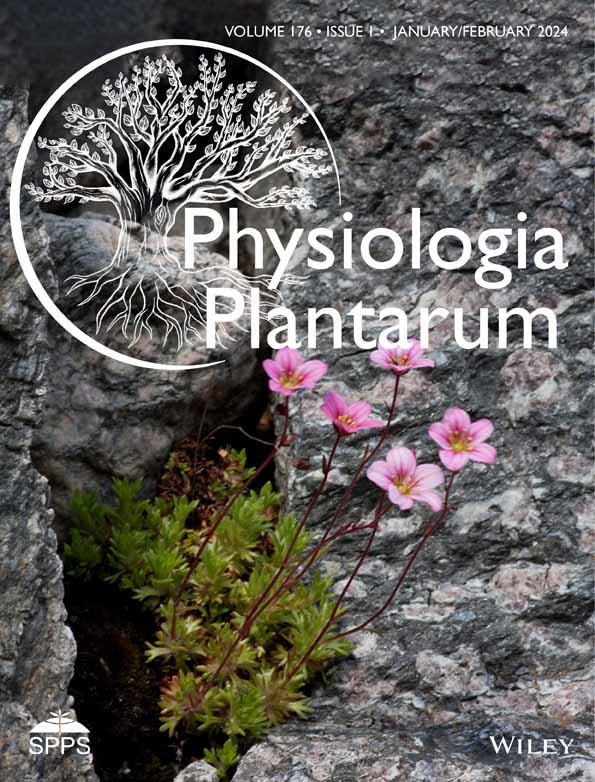
Physiologia Plantarum is an international journal committed to publishing the best full-length original research papers that advance our understanding of primary mechanisms of plant development, growth and productivity as well as plant interactions with the biotic and abiotic environment. All organisational levels of experimental plant biology – from molecular and cell biology, biochemistry and biophysics to ecophysiology and global change biology – fall within the scope of the journal. The content is distributed between 5 main subject areas supervised by Subject Editors specialised in the respective domain: (1) biochemistry and metabolism, (2) ecophysiology, stress and adaptation, (3) uptake, transport and assimilation, (4) development, growth and differentiation, (5) photobiology and photosynthesis.




 京公网安备 11010802042870号
京ICP备2023020795号-1
京公网安备 11010802042870号
京ICP备2023020795号-1

 分享
分享
 求助内容:
求助内容: 应助结果提醒方式:
 扫码关注我们
