Caitlin Shaw, Ghalib Khan, Thorrun Govind, Anna Robinson-Barella
{"title":"实施和提供适合少数民族人口的文化中心药房服务:定性系统评价和元民族志。","authors":"Caitlin Shaw, Ghalib Khan, Thorrun Govind, Anna Robinson-Barella","doi":"10.1111/hex.70165","DOIUrl":null,"url":null,"abstract":"<div>\n \n \n <section>\n \n <h3> Introduction</h3>\n \n <p>Health inequities disproportionately affect people from ethnic minority communities and require a comprehensive effort across healthcare disciplines to tackle them. Ethnically minoritised populations continue to be underserved, despite the growing awareness of the detrimental link between ethnicity and poorer health- and medication-outcomes. Pharmacy has been recognised as an accessible and inclusive healthcare setting, with the ability to meet diverse patient needs. Yet, there still remain distinct gaps in knowledge of how to best design, implement and deliver culturally centred pharmacy services for members of ethnic minority communities.</p>\n </section>\n \n <section>\n \n <h3> Methods</h3>\n \n <p>A systematic literature search was undertaken in November 2023, across four databases: MEDLINE, Embase, CINAHL and PsycINFO. Qualitative studies were included if they addressed barriers, enablers and interventions aimed at tackling medicines- and health service inequalities affecting people from ethnic minority communities. Study quality was assessed using the Joanna Briggs Institute critical appraisal checklist. Data were synthesised using a meta-ethnographic approach, according to Noblit and Hare, forming a qualitative evidence synthesis to further understanding.</p>\n </section>\n \n <section>\n \n <h3> Results</h3>\n \n <p>This meta-ethnographic systematic review synthesised data from 13 international studies eligible for inclusion. Four overarching third-order constructs (termed ‘themes’) were developed through reciprocal translation and focused on: (i) navigating pharmacy systems across the globe; (ii) understanding cultural needs and beliefs that may influence medicine use; (iii) strengthening relationships with pharmacists and other healthcare providers and (iv) addressing possible language and communication barriers.</p>\n </section>\n \n <section>\n \n <h3> Conclusion</h3>\n \n <p>Pharmacists and policymakers should aim to raise awareness of pharmacy services, increase the provision of cultural competency training within the profession, build stronger relationships with minority communities, and facilitate access to interpretation services. A template of recommendations has been developed to further implement and deliver such services on an individual pharmacy-, community- and profession-basis. Future research should seek to utilise lived-experience narratives and participatory co-design methods to further explore ways to address wider healthcare accessibility inequalities for this minoritised population.</p>\n </section>\n \n <section>\n \n <h3> Patient or Public Contribution</h3>\n \n <p>Public contributors and authors (inequity research champions, G.K. and T.G.) informed and shaped this project during study design and conceptualisation; they helped to ensure that the study was conducted, and the findings were reported, with sensitivity.</p>\n </section>\n </div>","PeriodicalId":55070,"journal":{"name":"Health Expectations","volume":"28 1","pages":""},"PeriodicalIF":3.2000,"publicationDate":"2025-01-31","publicationTypes":"Journal Article","fieldsOfStudy":null,"isOpenAccess":false,"openAccessPdf":"https://www.ncbi.nlm.nih.gov/pmc/articles/PMC11783237/pdf/","citationCount":"0","resultStr":"{\"title\":\"Implementing and Delivering Culturally Centred Pharmacy Services Tailored to Ethnically Minoritised Populations: A Qualitative Systematic Review and Meta-Ethnography\",\"authors\":\"Caitlin Shaw, Ghalib Khan, Thorrun Govind, Anna Robinson-Barella\",\"doi\":\"10.1111/hex.70165\",\"DOIUrl\":null,\"url\":null,\"abstract\":\"<div>\\n \\n \\n <section>\\n \\n <h3> Introduction</h3>\\n \\n <p>Health inequities disproportionately affect people from ethnic minority communities and require a comprehensive effort across healthcare disciplines to tackle them. Ethnically minoritised populations continue to be underserved, despite the growing awareness of the detrimental link between ethnicity and poorer health- and medication-outcomes. Pharmacy has been recognised as an accessible and inclusive healthcare setting, with the ability to meet diverse patient needs. Yet, there still remain distinct gaps in knowledge of how to best design, implement and deliver culturally centred pharmacy services for members of ethnic minority communities.</p>\\n </section>\\n \\n <section>\\n \\n <h3> Methods</h3>\\n \\n <p>A systematic literature search was undertaken in November 2023, across four databases: MEDLINE, Embase, CINAHL and PsycINFO. Qualitative studies were included if they addressed barriers, enablers and interventions aimed at tackling medicines- and health service inequalities affecting people from ethnic minority communities. Study quality was assessed using the Joanna Briggs Institute critical appraisal checklist. Data were synthesised using a meta-ethnographic approach, according to Noblit and Hare, forming a qualitative evidence synthesis to further understanding.</p>\\n </section>\\n \\n <section>\\n \\n <h3> Results</h3>\\n \\n <p>This meta-ethnographic systematic review synthesised data from 13 international studies eligible for inclusion. Four overarching third-order constructs (termed ‘themes’) were developed through reciprocal translation and focused on: (i) navigating pharmacy systems across the globe; (ii) understanding cultural needs and beliefs that may influence medicine use; (iii) strengthening relationships with pharmacists and other healthcare providers and (iv) addressing possible language and communication barriers.</p>\\n </section>\\n \\n <section>\\n \\n <h3> Conclusion</h3>\\n \\n <p>Pharmacists and policymakers should aim to raise awareness of pharmacy services, increase the provision of cultural competency training within the profession, build stronger relationships with minority communities, and facilitate access to interpretation services. A template of recommendations has been developed to further implement and deliver such services on an individual pharmacy-, community- and profession-basis. Future research should seek to utilise lived-experience narratives and participatory co-design methods to further explore ways to address wider healthcare accessibility inequalities for this minoritised population.</p>\\n </section>\\n \\n <section>\\n \\n <h3> Patient or Public Contribution</h3>\\n \\n <p>Public contributors and authors (inequity research champions, G.K. and T.G.) informed and shaped this project during study design and conceptualisation; they helped to ensure that the study was conducted, and the findings were reported, with sensitivity.</p>\\n </section>\\n </div>\",\"PeriodicalId\":55070,\"journal\":{\"name\":\"Health Expectations\",\"volume\":\"28 1\",\"pages\":\"\"},\"PeriodicalIF\":3.2000,\"publicationDate\":\"2025-01-31\",\"publicationTypes\":\"Journal Article\",\"fieldsOfStudy\":null,\"isOpenAccess\":false,\"openAccessPdf\":\"https://www.ncbi.nlm.nih.gov/pmc/articles/PMC11783237/pdf/\",\"citationCount\":\"0\",\"resultStr\":null,\"platform\":\"Semanticscholar\",\"paperid\":null,\"PeriodicalName\":\"Health Expectations\",\"FirstCategoryId\":\"3\",\"ListUrlMain\":\"https://onlinelibrary.wiley.com/doi/10.1111/hex.70165\",\"RegionNum\":3,\"RegionCategory\":\"医学\",\"ArticlePicture\":[],\"TitleCN\":null,\"AbstractTextCN\":null,\"PMCID\":null,\"EPubDate\":\"\",\"PubModel\":\"\",\"JCR\":\"Q2\",\"JCRName\":\"HEALTH CARE SCIENCES & SERVICES\",\"Score\":null,\"Total\":0}","platform":"Semanticscholar","paperid":null,"PeriodicalName":"Health Expectations","FirstCategoryId":"3","ListUrlMain":"https://onlinelibrary.wiley.com/doi/10.1111/hex.70165","RegionNum":3,"RegionCategory":"医学","ArticlePicture":[],"TitleCN":null,"AbstractTextCN":null,"PMCID":null,"EPubDate":"","PubModel":"","JCR":"Q2","JCRName":"HEALTH CARE SCIENCES & SERVICES","Score":null,"Total":0}
Implementing and Delivering Culturally Centred Pharmacy Services Tailored to Ethnically Minoritised Populations: A Qualitative Systematic Review and Meta-Ethnography
Introduction
Health inequities disproportionately affect people from ethnic minority communities and require a comprehensive effort across healthcare disciplines to tackle them. Ethnically minoritised populations continue to be underserved, despite the growing awareness of the detrimental link between ethnicity and poorer health- and medication-outcomes. Pharmacy has been recognised as an accessible and inclusive healthcare setting, with the ability to meet diverse patient needs. Yet, there still remain distinct gaps in knowledge of how to best design, implement and deliver culturally centred pharmacy services for members of ethnic minority communities.
Methods
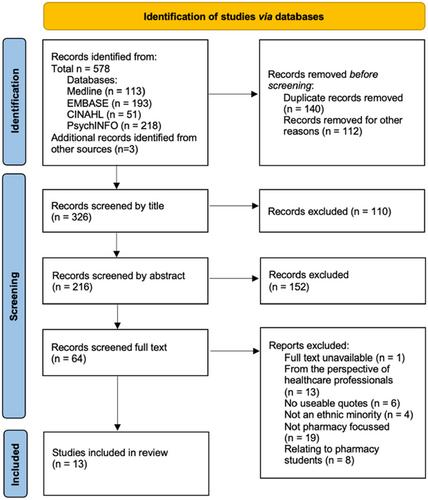
A systematic literature search was undertaken in November 2023, across four databases: MEDLINE, Embase, CINAHL and PsycINFO. Qualitative studies were included if they addressed barriers, enablers and interventions aimed at tackling medicines- and health service inequalities affecting people from ethnic minority communities. Study quality was assessed using the Joanna Briggs Institute critical appraisal checklist. Data were synthesised using a meta-ethnographic approach, according to Noblit and Hare, forming a qualitative evidence synthesis to further understanding.
Results
This meta-ethnographic systematic review synthesised data from 13 international studies eligible for inclusion. Four overarching third-order constructs (termed ‘themes’) were developed through reciprocal translation and focused on: (i) navigating pharmacy systems across the globe; (ii) understanding cultural needs and beliefs that may influence medicine use; (iii) strengthening relationships with pharmacists and other healthcare providers and (iv) addressing possible language and communication barriers.
Conclusion
Pharmacists and policymakers should aim to raise awareness of pharmacy services, increase the provision of cultural competency training within the profession, build stronger relationships with minority communities, and facilitate access to interpretation services. A template of recommendations has been developed to further implement and deliver such services on an individual pharmacy-, community- and profession-basis. Future research should seek to utilise lived-experience narratives and participatory co-design methods to further explore ways to address wider healthcare accessibility inequalities for this minoritised population.
Patient or Public Contribution
Public contributors and authors (inequity research champions, G.K. and T.G.) informed and shaped this project during study design and conceptualisation; they helped to ensure that the study was conducted, and the findings were reported, with sensitivity.
期刊介绍:
Health Expectations promotes critical thinking and informed debate about all aspects of patient and public involvement and engagement (PPIE) in health and social care, health policy and health services research including:
• Person-centred care and quality improvement
• Patients'' participation in decisions about disease prevention and management
• Public perceptions of health services
• Citizen involvement in health care policy making and priority-setting
• Methods for monitoring and evaluating participation
• Empowerment and consumerism
• Patients'' role in safety and quality
• Patient and public role in health services research
• Co-production (researchers working with patients and the public) of research, health care and policy
Health Expectations is a quarterly, peer-reviewed journal publishing original research, review articles and critical commentaries. It includes papers which clarify concepts, develop theories, and critically analyse and evaluate specific policies and practices. The Journal provides an inter-disciplinary and international forum in which researchers (including PPIE researchers) from a range of backgrounds and expertise can present their work to other researchers, policy-makers, health care professionals, managers, patients and consumer advocates.




 京公网安备 11010802042870号
京ICP备2023020795号-1
京公网安备 11010802042870号
京ICP备2023020795号-1

 分享
分享
 求助内容:
求助内容: 应助结果提醒方式:
 扫码关注我们
