Angela Che Ing Tang, Gil Bohrer, Avni Malhotra, Justine Missik, Fausto Machado-Silva, Inke Forbrich
{"title":"海平面上升和植被变化导致五大湖沿海淡水湿地甲烷排放和二氧化碳吸收大幅减少","authors":"Angela Che Ing Tang, Gil Bohrer, Avni Malhotra, Justine Missik, Fausto Machado-Silva, Inke Forbrich","doi":"10.1111/gcb.70053","DOIUrl":null,"url":null,"abstract":"<p>Coastal freshwater wetlands are critical ecosystems for both local and global carbon cycles, sequestering substantial carbon while also emitting methane (CH<sub>4</sub>) due to anoxic conditions. Estuarine freshwater wetlands face unique challenges from fluctuating water levels, which influence water quality, vegetation, and carbon cycling. However, the response of CH<sub>4</sub> fluxes and their drivers to altered hydrology and vegetation remains unclear, hindering mechanistic modeling. To address these knowledge gaps, we studied an estuarine freshwater wetland in the Great Lakes region, where rising water levels led to a vegetation shift from emergent <i>Typha</i> dominance in 2015–2016 to floating-leaved species in 2020–2022. Using eddy covariance flux measurements during the peak growing season (June–September) of both periods, we observed a 60% decrease in CH<sub>4</sub> emissions, from 81 ± 4 g C m<sup>−2</sup> in 2015–2016 to 31 ± 3 g C m<sup>−2</sup> in 2020–2022. This decline was driven by two main factors: (1) higher water levels, which suppressed ebullitive fluxes via increased hydrostatic pressure and extended CH<sub>4</sub> residence time, enhancing oxidation potential in the water column; and (2) reduced CH<sub>4</sub> conductance through plants. Net carbon dioxide (CO<sub>2</sub>) uptake decreased by 90%, from −267 ± 26 g C m<sup>−2</sup> in 2015–2016 to −27 ± 49 g C m<sup>−2</sup> in 2020–2022. Additionally, diel CH<sub>4</sub> flux patterns shifted, with a distinct morning peak observed in 2015–2016 but absent in 2020–2022, suggesting changes in plant-mediated transport and a potential decoupling from photosynthesis. The dominant factors influencing CH<sub>4</sub> fluxes shifted from water temperature and gross primary productivity in 2015–2016 to atmospheric pressure in 2020–2022, suggesting an increased role of ebullition as a primary transport pathway. Our results demonstrate that changes in water levels and vegetation can substantially alter CH<sub>4</sub> and CO<sub>2</sub> fluxes in coastal freshwater wetlands, underscoring the critical role of hydrological shifts in driving carbon dynamics in these ecosystems.</p>","PeriodicalId":175,"journal":{"name":"Global Change Biology","volume":"31 2","pages":""},"PeriodicalIF":12.0000,"publicationDate":"2025-02-01","publicationTypes":"Journal Article","fieldsOfStudy":null,"isOpenAccess":false,"openAccessPdf":"https://onlinelibrary.wiley.com/doi/epdf/10.1111/gcb.70053","citationCount":"0","resultStr":"{\"title\":\"Rising Water Levels and Vegetation Shifts Drive Substantial Reductions in Methane Emissions and Carbon Dioxide Uptake in a Great Lakes Coastal Freshwater Wetland\",\"authors\":\"Angela Che Ing Tang, Gil Bohrer, Avni Malhotra, Justine Missik, Fausto Machado-Silva, Inke Forbrich\",\"doi\":\"10.1111/gcb.70053\",\"DOIUrl\":null,\"url\":null,\"abstract\":\"<p>Coastal freshwater wetlands are critical ecosystems for both local and global carbon cycles, sequestering substantial carbon while also emitting methane (CH<sub>4</sub>) due to anoxic conditions. Estuarine freshwater wetlands face unique challenges from fluctuating water levels, which influence water quality, vegetation, and carbon cycling. However, the response of CH<sub>4</sub> fluxes and their drivers to altered hydrology and vegetation remains unclear, hindering mechanistic modeling. To address these knowledge gaps, we studied an estuarine freshwater wetland in the Great Lakes region, where rising water levels led to a vegetation shift from emergent <i>Typha</i> dominance in 2015–2016 to floating-leaved species in 2020–2022. Using eddy covariance flux measurements during the peak growing season (June–September) of both periods, we observed a 60% decrease in CH<sub>4</sub> emissions, from 81 ± 4 g C m<sup>−2</sup> in 2015–2016 to 31 ± 3 g C m<sup>−2</sup> in 2020–2022. This decline was driven by two main factors: (1) higher water levels, which suppressed ebullitive fluxes via increased hydrostatic pressure and extended CH<sub>4</sub> residence time, enhancing oxidation potential in the water column; and (2) reduced CH<sub>4</sub> conductance through plants. Net carbon dioxide (CO<sub>2</sub>) uptake decreased by 90%, from −267 ± 26 g C m<sup>−2</sup> in 2015–2016 to −27 ± 49 g C m<sup>−2</sup> in 2020–2022. Additionally, diel CH<sub>4</sub> flux patterns shifted, with a distinct morning peak observed in 2015–2016 but absent in 2020–2022, suggesting changes in plant-mediated transport and a potential decoupling from photosynthesis. The dominant factors influencing CH<sub>4</sub> fluxes shifted from water temperature and gross primary productivity in 2015–2016 to atmospheric pressure in 2020–2022, suggesting an increased role of ebullition as a primary transport pathway. Our results demonstrate that changes in water levels and vegetation can substantially alter CH<sub>4</sub> and CO<sub>2</sub> fluxes in coastal freshwater wetlands, underscoring the critical role of hydrological shifts in driving carbon dynamics in these ecosystems.</p>\",\"PeriodicalId\":175,\"journal\":{\"name\":\"Global Change Biology\",\"volume\":\"31 2\",\"pages\":\"\"},\"PeriodicalIF\":12.0000,\"publicationDate\":\"2025-02-01\",\"publicationTypes\":\"Journal Article\",\"fieldsOfStudy\":null,\"isOpenAccess\":false,\"openAccessPdf\":\"https://onlinelibrary.wiley.com/doi/epdf/10.1111/gcb.70053\",\"citationCount\":\"0\",\"resultStr\":null,\"platform\":\"Semanticscholar\",\"paperid\":null,\"PeriodicalName\":\"Global Change Biology\",\"FirstCategoryId\":\"93\",\"ListUrlMain\":\"https://onlinelibrary.wiley.com/doi/10.1111/gcb.70053\",\"RegionNum\":1,\"RegionCategory\":\"环境科学与生态学\",\"ArticlePicture\":[],\"TitleCN\":null,\"AbstractTextCN\":null,\"PMCID\":null,\"EPubDate\":\"\",\"PubModel\":\"\",\"JCR\":\"Q1\",\"JCRName\":\"BIODIVERSITY CONSERVATION\",\"Score\":null,\"Total\":0}","platform":"Semanticscholar","paperid":null,"PeriodicalName":"Global Change Biology","FirstCategoryId":"93","ListUrlMain":"https://onlinelibrary.wiley.com/doi/10.1111/gcb.70053","RegionNum":1,"RegionCategory":"环境科学与生态学","ArticlePicture":[],"TitleCN":null,"AbstractTextCN":null,"PMCID":null,"EPubDate":"","PubModel":"","JCR":"Q1","JCRName":"BIODIVERSITY CONSERVATION","Score":null,"Total":0}
引用次数: 0
摘要
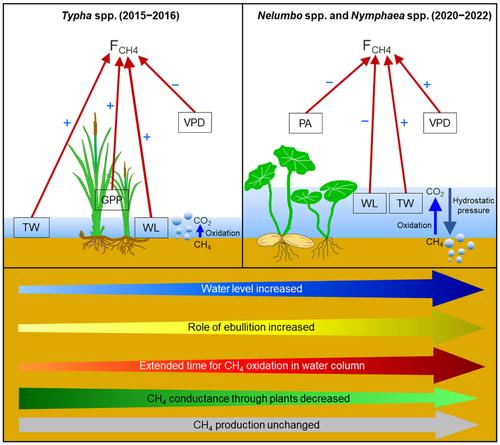
沿海淡水湿地是当地和全球碳循环的关键生态系统,在隔离大量碳的同时,由于缺氧条件也会排放甲烷(CH4)。河口淡水湿地面临着来自水位波动的独特挑战,水位波动会影响水质、植被和碳循环。然而,CH4通量及其驱动因素对水文和植被变化的响应尚不清楚,这阻碍了机理模拟。为了解决这些知识空白,我们研究了大湖地区的河口淡水湿地,水位上升导致植被从2015-2016年的新兴台风为主转变为2020-2022年的浮叶物种。利用这两个时期生长高峰期(6 - 9月)的涡动相关通量测量,我们观察到CH4排放量减少了60%,从2015-2016年的81±4 g C m−2减少到2020-2022年的31±3 g C m−2。这种下降主要由两个因素驱动:(1)水位升高,通过增加静水压力和延长CH4停留时间抑制了沸腾通量,增强了水柱中的氧化电位;(2)通过植物降低CH4电导。净二氧化碳(CO2)吸收量下降了90%,从2015-2016年的- 267±26 g cm - 2下降到2020-2022年的- 27±49 g cm - 2。此外,大气CH4通量模式发生了变化,在2015-2016年观测到明显的早晨峰值,但在2020-2022年没有观测到,这表明植物介导的运输发生了变化,并可能与光合作用脱钩。2015-2016年影响CH4通量的主要因素由水温和总初级生产力转变为2020-2022年的大气压力,表明泡腾作为主要运输途径的作用增强。我们的研究结果表明,水位和植被的变化可以显著改变沿海淡水湿地的CH4和CO2通量,强调了水文变化在这些生态系统中驱动碳动态的关键作用。
Rising Water Levels and Vegetation Shifts Drive Substantial Reductions in Methane Emissions and Carbon Dioxide Uptake in a Great Lakes Coastal Freshwater Wetland
Coastal freshwater wetlands are critical ecosystems for both local and global carbon cycles, sequestering substantial carbon while also emitting methane (CH4) due to anoxic conditions. Estuarine freshwater wetlands face unique challenges from fluctuating water levels, which influence water quality, vegetation, and carbon cycling. However, the response of CH4 fluxes and their drivers to altered hydrology and vegetation remains unclear, hindering mechanistic modeling. To address these knowledge gaps, we studied an estuarine freshwater wetland in the Great Lakes region, where rising water levels led to a vegetation shift from emergent Typha dominance in 2015–2016 to floating-leaved species in 2020–2022. Using eddy covariance flux measurements during the peak growing season (June–September) of both periods, we observed a 60% decrease in CH4 emissions, from 81 ± 4 g C m−2 in 2015–2016 to 31 ± 3 g C m−2 in 2020–2022. This decline was driven by two main factors: (1) higher water levels, which suppressed ebullitive fluxes via increased hydrostatic pressure and extended CH4 residence time, enhancing oxidation potential in the water column; and (2) reduced CH4 conductance through plants. Net carbon dioxide (CO2) uptake decreased by 90%, from −267 ± 26 g C m−2 in 2015–2016 to −27 ± 49 g C m−2 in 2020–2022. Additionally, diel CH4 flux patterns shifted, with a distinct morning peak observed in 2015–2016 but absent in 2020–2022, suggesting changes in plant-mediated transport and a potential decoupling from photosynthesis. The dominant factors influencing CH4 fluxes shifted from water temperature and gross primary productivity in 2015–2016 to atmospheric pressure in 2020–2022, suggesting an increased role of ebullition as a primary transport pathway. Our results demonstrate that changes in water levels and vegetation can substantially alter CH4 and CO2 fluxes in coastal freshwater wetlands, underscoring the critical role of hydrological shifts in driving carbon dynamics in these ecosystems.
期刊介绍:
Global Change Biology is an environmental change journal committed to shaping the future and addressing the world's most pressing challenges, including sustainability, climate change, environmental protection, food and water safety, and global health.
Dedicated to fostering a profound understanding of the impacts of global change on biological systems and offering innovative solutions, the journal publishes a diverse range of content, including primary research articles, technical advances, research reviews, reports, opinions, perspectives, commentaries, and letters. Starting with the 2024 volume, Global Change Biology will transition to an online-only format, enhancing accessibility and contributing to the evolution of scholarly communication.





 京公网安备 11010802042870号
京ICP备2023020795号-1
京公网安备 11010802042870号
京ICP备2023020795号-1

 分享
分享
 求助内容:
求助内容: 应助结果提醒方式:
 扫码关注我们
