Natalia Cullell, Giovanni Caruana, Andrea Elias-Mas, Ariane Delgado-Sanchez, Cristina Artero, Maria Teresa Buongiorno, Marta Almería, Nicola J Ray, Sonia A L Correa, Jerzy Krupinski
{"title":"淋巴系统清除和阿尔茨海默病风险:一项脑脊液蛋白质组研究。","authors":"Natalia Cullell, Giovanni Caruana, Andrea Elias-Mas, Ariane Delgado-Sanchez, Cristina Artero, Maria Teresa Buongiorno, Marta Almería, Nicola J Ray, Sonia A L Correa, Jerzy Krupinski","doi":"10.1186/s13195-024-01612-7","DOIUrl":null,"url":null,"abstract":"<p><strong>Background: </strong>The emerging evidence of the role of the glymphatic system (GS) in Alzheimer's disease (AD) provides new opportunities for intervention from the earliest stages of the disease. The aim of the study is to evaluate the efficacy of GS in AD to identify new disease biomarkers.</p><p><strong>Methods: </strong>We performed a two-stage proteomic study to evaluate the GS health using intravenous gadolinium-based contrast agent (GBCA) with serial T1 3T magnetic resonance imaging (MRI) in individuals with amnestic mild cognitive impairment (aMCI). In Stage 1 (evaluated in the Cohort 1 of aMCI participants (n = 11)), we correlated the levels of 7K cerebrospinal fluid (CSF) proteins (estimated by SOMAscan) with GS health in 78 Freesurfer-segmented brain regions of interest (ROIs).</p><p><strong>Results: </strong>A total of seven different proteins were significantly associated with GS health (p-value < 6.4 × 10<sup>-4</sup>). The stronger correlations were identified for NSUN6, GRAAK, OLFML3, ACTN2, RUXF, SHPS1 and TIM-4. A pathway enrichment analysis revealed that the proteins associated with GS health were mainly implicated in neurodegenerative processes, immunity and inflammation. In Stage 2, we validated these proteomic results in a new cohort of aMCI participants (with and without evidence of AD pathology in CSF (aMCI(-) and aMCI/AD( +); n = 22 and 7, respectively) and healthy controls (n = 10). Proteomic prediction models were generated in each ROI. These were compared with demographic-only models for identifying participants with aMCI(-) and aMCI/AD( +) vs controls. This analysis was repeated to determine if the models could identify those with aMCI/AD( +) from both aMCI(-) and controls. The proteomic models were found to outperform the demographic-only models.</p><p><strong>Conclusions: </strong>Our study identifies proteins linked with GS health and involved the immune system in aMCI participants.</p>","PeriodicalId":7516,"journal":{"name":"Alzheimer's Research & Therapy","volume":"17 1","pages":"31"},"PeriodicalIF":7.6000,"publicationDate":"2025-01-31","publicationTypes":"Journal Article","fieldsOfStudy":null,"isOpenAccess":false,"openAccessPdf":"https://www.ncbi.nlm.nih.gov/pmc/articles/PMC11786353/pdf/","citationCount":"0","resultStr":"{\"title\":\"Glymphatic system clearance and Alzheimer's disease risk: a CSF proteome-wide study.\",\"authors\":\"Natalia Cullell, Giovanni Caruana, Andrea Elias-Mas, Ariane Delgado-Sanchez, Cristina Artero, Maria Teresa Buongiorno, Marta Almería, Nicola J Ray, Sonia A L Correa, Jerzy Krupinski\",\"doi\":\"10.1186/s13195-024-01612-7\",\"DOIUrl\":null,\"url\":null,\"abstract\":\"<p><strong>Background: </strong>The emerging evidence of the role of the glymphatic system (GS) in Alzheimer's disease (AD) provides new opportunities for intervention from the earliest stages of the disease. The aim of the study is to evaluate the efficacy of GS in AD to identify new disease biomarkers.</p><p><strong>Methods: </strong>We performed a two-stage proteomic study to evaluate the GS health using intravenous gadolinium-based contrast agent (GBCA) with serial T1 3T magnetic resonance imaging (MRI) in individuals with amnestic mild cognitive impairment (aMCI). In Stage 1 (evaluated in the Cohort 1 of aMCI participants (n = 11)), we correlated the levels of 7K cerebrospinal fluid (CSF) proteins (estimated by SOMAscan) with GS health in 78 Freesurfer-segmented brain regions of interest (ROIs).</p><p><strong>Results: </strong>A total of seven different proteins were significantly associated with GS health (p-value < 6.4 × 10<sup>-4</sup>). The stronger correlations were identified for NSUN6, GRAAK, OLFML3, ACTN2, RUXF, SHPS1 and TIM-4. A pathway enrichment analysis revealed that the proteins associated with GS health were mainly implicated in neurodegenerative processes, immunity and inflammation. In Stage 2, we validated these proteomic results in a new cohort of aMCI participants (with and without evidence of AD pathology in CSF (aMCI(-) and aMCI/AD( +); n = 22 and 7, respectively) and healthy controls (n = 10). Proteomic prediction models were generated in each ROI. These were compared with demographic-only models for identifying participants with aMCI(-) and aMCI/AD( +) vs controls. This analysis was repeated to determine if the models could identify those with aMCI/AD( +) from both aMCI(-) and controls. The proteomic models were found to outperform the demographic-only models.</p><p><strong>Conclusions: </strong>Our study identifies proteins linked with GS health and involved the immune system in aMCI participants.</p>\",\"PeriodicalId\":7516,\"journal\":{\"name\":\"Alzheimer's Research & Therapy\",\"volume\":\"17 1\",\"pages\":\"31\"},\"PeriodicalIF\":7.6000,\"publicationDate\":\"2025-01-31\",\"publicationTypes\":\"Journal Article\",\"fieldsOfStudy\":null,\"isOpenAccess\":false,\"openAccessPdf\":\"https://www.ncbi.nlm.nih.gov/pmc/articles/PMC11786353/pdf/\",\"citationCount\":\"0\",\"resultStr\":null,\"platform\":\"Semanticscholar\",\"paperid\":null,\"PeriodicalName\":\"Alzheimer's Research & Therapy\",\"FirstCategoryId\":\"3\",\"ListUrlMain\":\"https://doi.org/10.1186/s13195-024-01612-7\",\"RegionNum\":1,\"RegionCategory\":\"医学\",\"ArticlePicture\":[],\"TitleCN\":null,\"AbstractTextCN\":null,\"PMCID\":null,\"EPubDate\":\"\",\"PubModel\":\"\",\"JCR\":\"Q1\",\"JCRName\":\"CLINICAL NEUROLOGY\",\"Score\":null,\"Total\":0}","platform":"Semanticscholar","paperid":null,"PeriodicalName":"Alzheimer's Research & Therapy","FirstCategoryId":"3","ListUrlMain":"https://doi.org/10.1186/s13195-024-01612-7","RegionNum":1,"RegionCategory":"医学","ArticlePicture":[],"TitleCN":null,"AbstractTextCN":null,"PMCID":null,"EPubDate":"","PubModel":"","JCR":"Q1","JCRName":"CLINICAL NEUROLOGY","Score":null,"Total":0}
引用次数: 0
摘要
背景:关于淋巴系统(GS)在阿尔茨海默病(AD)中的作用的新证据为从疾病的早期阶段进行干预提供了新的机会。该研究的目的是评估GS在AD中的疗效,以识别新的疾病生物标志物。方法:我们进行了一项两阶段蛋白质组学研究,利用静脉注射钆基对比剂(GBCA)和连续T1 - 3T磁共振成像(MRI)对健忘轻度认知障碍(aMCI)患者进行GS健康评估。在第一阶段(在aMCI参与者的队列1中评估(n = 11)),我们将78个Freesurfer-segmented brain regions of interest (roi)中的7K脑脊液(CSF)蛋白水平(由SOMAscan估计)与GS健康状况相关联。结果:共有7种不同的蛋白与GS健康显著相关(p值为-4)。NSUN6、GRAAK、OLFML3、ACTN2、RUXF、SHPS1和TIM-4的相关性较强。途径富集分析显示,与GS健康相关的蛋白质主要与神经退行性过程、免疫和炎症有关。在第二阶段,我们在一个新的aMCI参与者队列中验证了这些蛋白质组学结果(有和没有证据表明CSF中有AD病理(aMCI(-)和aMCI/AD(+));N = 22和7)和健康对照(N = 10)。在每个ROI中生成蛋白质组预测模型。将这些模型与人口统计学模型进行比较,以确定aMCI(-)和aMCI/AD(+)与对照组的参与者。重复此分析以确定模型是否可以从aMCI(-)和对照中识别出aMCI/AD(+)患者。研究发现,蛋白质组学模型的表现优于纯人口统计学模型。结论:我们的研究确定了与GS健康相关的蛋白质,并涉及aMCI参与者的免疫系统。
Glymphatic system clearance and Alzheimer's disease risk: a CSF proteome-wide study.
Background: The emerging evidence of the role of the glymphatic system (GS) in Alzheimer's disease (AD) provides new opportunities for intervention from the earliest stages of the disease. The aim of the study is to evaluate the efficacy of GS in AD to identify new disease biomarkers.
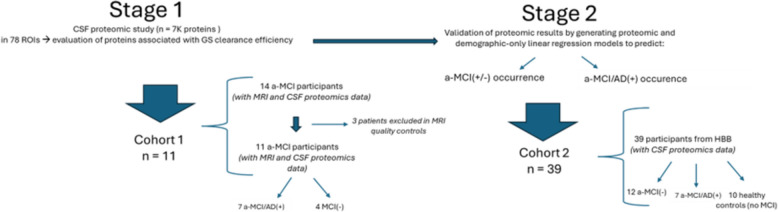
Methods: We performed a two-stage proteomic study to evaluate the GS health using intravenous gadolinium-based contrast agent (GBCA) with serial T1 3T magnetic resonance imaging (MRI) in individuals with amnestic mild cognitive impairment (aMCI). In Stage 1 (evaluated in the Cohort 1 of aMCI participants (n = 11)), we correlated the levels of 7K cerebrospinal fluid (CSF) proteins (estimated by SOMAscan) with GS health in 78 Freesurfer-segmented brain regions of interest (ROIs).
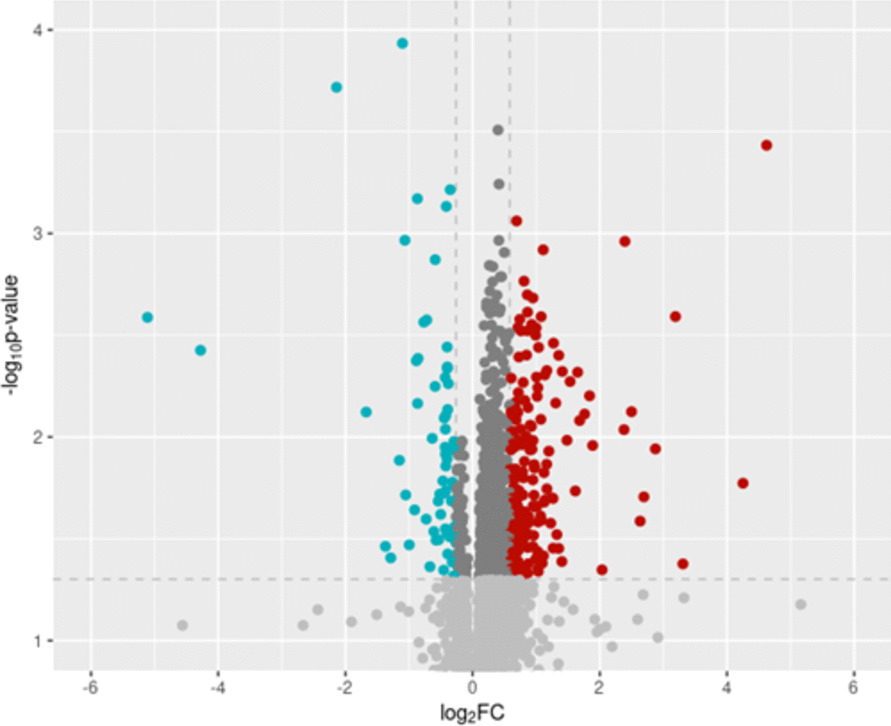
Results: A total of seven different proteins were significantly associated with GS health (p-value < 6.4 × 10⁻⁴). The stronger correlations were identified for NSUN6, GRAAK, OLFML3, ACTN2, RUXF, SHPS1 and TIM-4. A pathway enrichment analysis revealed that the proteins associated with GS health were mainly implicated in neurodegenerative processes, immunity and inflammation. In Stage 2, we validated these proteomic results in a new cohort of aMCI participants (with and without evidence of AD pathology in CSF (aMCI(-) and aMCI/AD( +); n = 22 and 7, respectively) and healthy controls (n = 10). Proteomic prediction models were generated in each ROI. These were compared with demographic-only models for identifying participants with aMCI(-) and aMCI/AD( +) vs controls. This analysis was repeated to determine if the models could identify those with aMCI/AD( +) from both aMCI(-) and controls. The proteomic models were found to outperform the demographic-only models.
Conclusions: Our study identifies proteins linked with GS health and involved the immune system in aMCI participants.
期刊介绍:
Alzheimer's Research & Therapy is an international peer-reviewed journal that focuses on translational research into Alzheimer's disease and other neurodegenerative diseases. It publishes open-access basic research, clinical trials, drug discovery and development studies, and epidemiologic studies. The journal also includes reviews, viewpoints, commentaries, debates, and reports. All articles published in Alzheimer's Research & Therapy are included in several reputable databases such as CAS, Current contents, DOAJ, Embase, Journal Citation Reports/Science Edition, MEDLINE, PubMed, PubMed Central, Science Citation Index Expanded (Web of Science) and Scopus.





 京公网安备 11010802042870号
京ICP备2023020795号-1
京公网安备 11010802042870号
京ICP备2023020795号-1

 分享
分享
 求助内容:
求助内容: 应助结果提醒方式:
 扫码关注我们
