Rion Brattig Correia, Jordan C Rozum, Leonard Cross, Jack Felag, Michael Gallant, Ziqi Guo, Bruce W Herr, Aehong Min, Jon Sanchez-Valle, Deborah Stungis Rocha, Alfonso Valencia, Xuan Wang, Katy Börner, Wendy Miller, Luis M Rocha
{"title":"myAURA:通过知识图谱稀疏化和可视化,为癫痫管理提供个性化的健康图书馆。","authors":"Rion Brattig Correia, Jordan C Rozum, Leonard Cross, Jack Felag, Michael Gallant, Ziqi Guo, Bruce W Herr, Aehong Min, Jon Sanchez-Valle, Deborah Stungis Rocha, Alfonso Valencia, Xuan Wang, Katy Börner, Wendy Miller, Luis M Rocha","doi":"10.1093/jamia/ocaf012","DOIUrl":null,"url":null,"abstract":"<p><strong>Objectives: </strong>Report the development of the patient-centered myAURA application and suite of methods designed to aid epilepsy patients, caregivers, and clinicians in making decisions about self-management and care.</p><p><strong>Materials and methods: </strong>myAURA rests on an unprecedented collection of epilepsy-relevant heterogeneous data resources, such as biomedical databases, social media, and electronic health records (EHRs). We use a patient-centered biomedical dictionary to link the collected data in a multilayer knowledge graph (KG) computed with a generalizable, open-source methodology.</p><p><strong>Results: </strong>Our approach is based on a novel network sparsification method that uses the metric backbone of weighted graphs to discover important edges for inference, recommendation, and visualization. We demonstrate by studying drug-drug interaction from EHRs, extracting epilepsy-focused digital cohorts from social media, and generating a multilayer KG visualization. We also present our patient-centered design and pilot-testing of myAURA, including its user interface.</p><p><strong>Discussion: </strong>The ability to search and explore myAURA's heterogeneous data sources in a single, sparsified, multilayer KG is highly useful for a range of epilepsy studies and stakeholder support.</p><p><strong>Conclusion: </strong>Our stakeholder-driven, scalable approach to integrating traditional and nontraditional data sources enables both clinical discovery and data-powered patient self-management in epilepsy and can be generalized to other chronic conditions.</p>","PeriodicalId":50016,"journal":{"name":"Journal of the American Medical Informatics Association","volume":" ","pages":"167-181"},"PeriodicalIF":4.6000,"publicationDate":"2026-01-01","publicationTypes":"Journal Article","fieldsOfStudy":null,"isOpenAccess":false,"openAccessPdf":"https://www.ncbi.nlm.nih.gov/pmc/articles/PMC12758476/pdf/","citationCount":"0","resultStr":"{\"title\":\"myAURA: a personalized health library for epilepsy management via knowledge graph sparsification and visualization.\",\"authors\":\"Rion Brattig Correia, Jordan C Rozum, Leonard Cross, Jack Felag, Michael Gallant, Ziqi Guo, Bruce W Herr, Aehong Min, Jon Sanchez-Valle, Deborah Stungis Rocha, Alfonso Valencia, Xuan Wang, Katy Börner, Wendy Miller, Luis M Rocha\",\"doi\":\"10.1093/jamia/ocaf012\",\"DOIUrl\":null,\"url\":null,\"abstract\":\"<p><strong>Objectives: </strong>Report the development of the patient-centered myAURA application and suite of methods designed to aid epilepsy patients, caregivers, and clinicians in making decisions about self-management and care.</p><p><strong>Materials and methods: </strong>myAURA rests on an unprecedented collection of epilepsy-relevant heterogeneous data resources, such as biomedical databases, social media, and electronic health records (EHRs). We use a patient-centered biomedical dictionary to link the collected data in a multilayer knowledge graph (KG) computed with a generalizable, open-source methodology.</p><p><strong>Results: </strong>Our approach is based on a novel network sparsification method that uses the metric backbone of weighted graphs to discover important edges for inference, recommendation, and visualization. We demonstrate by studying drug-drug interaction from EHRs, extracting epilepsy-focused digital cohorts from social media, and generating a multilayer KG visualization. We also present our patient-centered design and pilot-testing of myAURA, including its user interface.</p><p><strong>Discussion: </strong>The ability to search and explore myAURA's heterogeneous data sources in a single, sparsified, multilayer KG is highly useful for a range of epilepsy studies and stakeholder support.</p><p><strong>Conclusion: </strong>Our stakeholder-driven, scalable approach to integrating traditional and nontraditional data sources enables both clinical discovery and data-powered patient self-management in epilepsy and can be generalized to other chronic conditions.</p>\",\"PeriodicalId\":50016,\"journal\":{\"name\":\"Journal of the American Medical Informatics Association\",\"volume\":\" \",\"pages\":\"167-181\"},\"PeriodicalIF\":4.6000,\"publicationDate\":\"2026-01-01\",\"publicationTypes\":\"Journal Article\",\"fieldsOfStudy\":null,\"isOpenAccess\":false,\"openAccessPdf\":\"https://www.ncbi.nlm.nih.gov/pmc/articles/PMC12758476/pdf/\",\"citationCount\":\"0\",\"resultStr\":null,\"platform\":\"Semanticscholar\",\"paperid\":null,\"PeriodicalName\":\"Journal of the American Medical Informatics Association\",\"FirstCategoryId\":\"91\",\"ListUrlMain\":\"https://doi.org/10.1093/jamia/ocaf012\",\"RegionNum\":2,\"RegionCategory\":\"医学\",\"ArticlePicture\":[],\"TitleCN\":null,\"AbstractTextCN\":null,\"PMCID\":null,\"EPubDate\":\"\",\"PubModel\":\"\",\"JCR\":\"Q1\",\"JCRName\":\"COMPUTER SCIENCE, INFORMATION SYSTEMS\",\"Score\":null,\"Total\":0}","platform":"Semanticscholar","paperid":null,"PeriodicalName":"Journal of the American Medical Informatics Association","FirstCategoryId":"91","ListUrlMain":"https://doi.org/10.1093/jamia/ocaf012","RegionNum":2,"RegionCategory":"医学","ArticlePicture":[],"TitleCN":null,"AbstractTextCN":null,"PMCID":null,"EPubDate":"","PubModel":"","JCR":"Q1","JCRName":"COMPUTER SCIENCE, INFORMATION SYSTEMS","Score":null,"Total":0}
myAURA: a personalized health library for epilepsy management via knowledge graph sparsification and visualization.
Objectives: Report the development of the patient-centered myAURA application and suite of methods designed to aid epilepsy patients, caregivers, and clinicians in making decisions about self-management and care.
Materials and methods: myAURA rests on an unprecedented collection of epilepsy-relevant heterogeneous data resources, such as biomedical databases, social media, and electronic health records (EHRs). We use a patient-centered biomedical dictionary to link the collected data in a multilayer knowledge graph (KG) computed with a generalizable, open-source methodology.
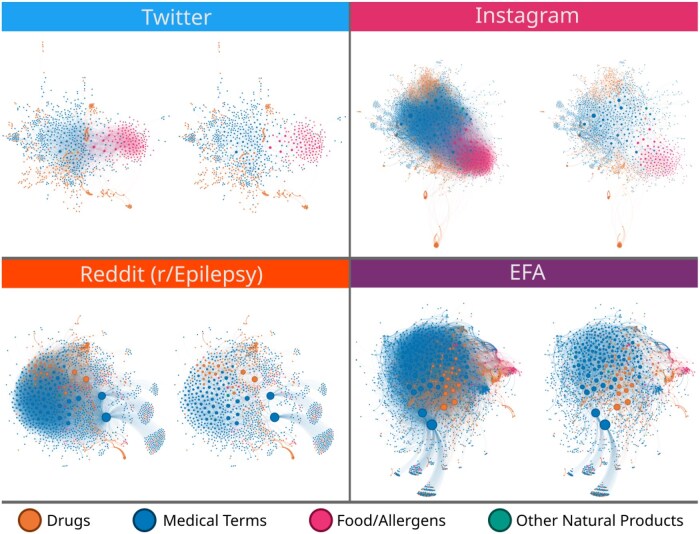
Results: Our approach is based on a novel network sparsification method that uses the metric backbone of weighted graphs to discover important edges for inference, recommendation, and visualization. We demonstrate by studying drug-drug interaction from EHRs, extracting epilepsy-focused digital cohorts from social media, and generating a multilayer KG visualization. We also present our patient-centered design and pilot-testing of myAURA, including its user interface.
Discussion: The ability to search and explore myAURA's heterogeneous data sources in a single, sparsified, multilayer KG is highly useful for a range of epilepsy studies and stakeholder support.
Conclusion: Our stakeholder-driven, scalable approach to integrating traditional and nontraditional data sources enables both clinical discovery and data-powered patient self-management in epilepsy and can be generalized to other chronic conditions.
期刊介绍:
JAMIA is AMIA''s premier peer-reviewed journal for biomedical and health informatics. Covering the full spectrum of activities in the field, JAMIA includes informatics articles in the areas of clinical care, clinical research, translational science, implementation science, imaging, education, consumer health, public health, and policy. JAMIA''s articles describe innovative informatics research and systems that help to advance biomedical science and to promote health. Case reports, perspectives and reviews also help readers stay connected with the most important informatics developments in implementation, policy and education.






 京公网安备 11010802042870号
京ICP备2023020795号-1
京公网安备 11010802042870号
京ICP备2023020795号-1

 分享
分享
 求助内容:
求助内容: 应助结果提醒方式:
 扫码关注我们
