{"title":"全医院跨专业能力建设的创新方法:Côte科特迪瓦国家癌症中心项目。","authors":"Jiyoung Han, Innocent Adoubi, Mee Joo Kang, Sarang Lee, So-Youn Jung, Chong Woo Yoo","doi":"10.1186/s12909-025-06639-4","DOIUrl":null,"url":null,"abstract":"<p><strong>Background: </strong>Capacity-building initiatives targeting medical personnel in low- and middle-income countries have focused on individual medical professionals within specific disciplines. However, it has become evident that the enhancement of healthcare quality necessitates more than just individual capacity-building efforts. As a part of The National Radiotherapy and Medical Oncology Center Project in Côte d'Ivoire, the National Cancer Center Korea has initiated a training project for hospital personnel in Côte d'Ivoire.</p><p><strong>Methods: </strong>From May to November 2023, 51 hospital personnel from 21 disciplines from Côte d'Ivoire underwent invitation-based training in Korea. A quantitative analysis of the training outcomes for the trainees and a qualitative assessment of the enablers of the training, involving trainees, trainers, and the coordinating team, were conducted.</p><p><strong>Results: </strong>The average score at pre- and post-training evaluation of capabilities of the trainees increased from 2.3 to 4.0 (out of 5.0). In addition to medical knowledge and technical skills sharing, trainees collaborated in group activities to develop workflow manuals for disease-, discipline-, and department-specific tasks through a multidisciplinary and cross-functional approach. The qualitative assessment indicated the importance of contextually relevant curriculum development with a special focus on establishing hospital operational plans, maintaining trainee autonomy and motivation, building mutual trust and cooperation between partner countries, engaging stakeholders actively, and providing effective leadership and support structures through a dedicated coordinating team were crucial factors for program success.</p><p><strong>Conclusions: </strong>Effective hospital personnel capacity building programs should not only focus on imparting medical knowledge and technical skills but also actively engage trainees in developing hospital operational plans. Furthermore, ensuring mutual trust and cooperation among various stakeholders, along with the establishment of a dedicated coordinating team, is essential for the success of the program.</p>","PeriodicalId":51234,"journal":{"name":"BMC Medical Education","volume":"25 1","pages":"156"},"PeriodicalIF":4.2000,"publicationDate":"2025-01-31","publicationTypes":"Journal Article","fieldsOfStudy":null,"isOpenAccess":false,"openAccessPdf":"https://www.ncbi.nlm.nih.gov/pmc/articles/PMC11783717/pdf/","citationCount":"0","resultStr":"{\"title\":\"An innovative approach to hospital-wide interprofessional capacity building: Côte d'Ivoire National Cancer Center project.\",\"authors\":\"Jiyoung Han, Innocent Adoubi, Mee Joo Kang, Sarang Lee, So-Youn Jung, Chong Woo Yoo\",\"doi\":\"10.1186/s12909-025-06639-4\",\"DOIUrl\":null,\"url\":null,\"abstract\":\"<p><strong>Background: </strong>Capacity-building initiatives targeting medical personnel in low- and middle-income countries have focused on individual medical professionals within specific disciplines. However, it has become evident that the enhancement of healthcare quality necessitates more than just individual capacity-building efforts. As a part of The National Radiotherapy and Medical Oncology Center Project in Côte d'Ivoire, the National Cancer Center Korea has initiated a training project for hospital personnel in Côte d'Ivoire.</p><p><strong>Methods: </strong>From May to November 2023, 51 hospital personnel from 21 disciplines from Côte d'Ivoire underwent invitation-based training in Korea. A quantitative analysis of the training outcomes for the trainees and a qualitative assessment of the enablers of the training, involving trainees, trainers, and the coordinating team, were conducted.</p><p><strong>Results: </strong>The average score at pre- and post-training evaluation of capabilities of the trainees increased from 2.3 to 4.0 (out of 5.0). In addition to medical knowledge and technical skills sharing, trainees collaborated in group activities to develop workflow manuals for disease-, discipline-, and department-specific tasks through a multidisciplinary and cross-functional approach. The qualitative assessment indicated the importance of contextually relevant curriculum development with a special focus on establishing hospital operational plans, maintaining trainee autonomy and motivation, building mutual trust and cooperation between partner countries, engaging stakeholders actively, and providing effective leadership and support structures through a dedicated coordinating team were crucial factors for program success.</p><p><strong>Conclusions: </strong>Effective hospital personnel capacity building programs should not only focus on imparting medical knowledge and technical skills but also actively engage trainees in developing hospital operational plans. Furthermore, ensuring mutual trust and cooperation among various stakeholders, along with the establishment of a dedicated coordinating team, is essential for the success of the program.</p>\",\"PeriodicalId\":51234,\"journal\":{\"name\":\"BMC Medical Education\",\"volume\":\"25 1\",\"pages\":\"156\"},\"PeriodicalIF\":4.2000,\"publicationDate\":\"2025-01-31\",\"publicationTypes\":\"Journal Article\",\"fieldsOfStudy\":null,\"isOpenAccess\":false,\"openAccessPdf\":\"https://www.ncbi.nlm.nih.gov/pmc/articles/PMC11783717/pdf/\",\"citationCount\":\"0\",\"resultStr\":null,\"platform\":\"Semanticscholar\",\"paperid\":null,\"PeriodicalName\":\"BMC Medical Education\",\"FirstCategoryId\":\"3\",\"ListUrlMain\":\"https://doi.org/10.1186/s12909-025-06639-4\",\"RegionNum\":2,\"RegionCategory\":\"医学\",\"ArticlePicture\":[],\"TitleCN\":null,\"AbstractTextCN\":null,\"PMCID\":null,\"EPubDate\":\"\",\"PubModel\":\"\",\"JCR\":\"Q1\",\"JCRName\":\"EDUCATION & EDUCATIONAL RESEARCH\",\"Score\":null,\"Total\":0}","platform":"Semanticscholar","paperid":null,"PeriodicalName":"BMC Medical Education","FirstCategoryId":"3","ListUrlMain":"https://doi.org/10.1186/s12909-025-06639-4","RegionNum":2,"RegionCategory":"医学","ArticlePicture":[],"TitleCN":null,"AbstractTextCN":null,"PMCID":null,"EPubDate":"","PubModel":"","JCR":"Q1","JCRName":"EDUCATION & EDUCATIONAL RESEARCH","Score":null,"Total":0}
An innovative approach to hospital-wide interprofessional capacity building: Côte d'Ivoire National Cancer Center project.
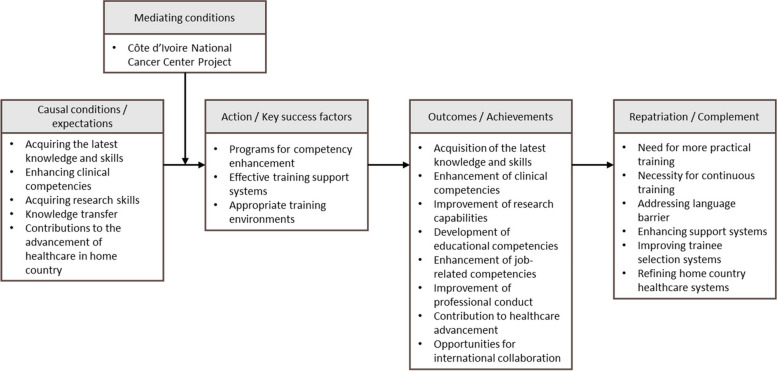
Background: Capacity-building initiatives targeting medical personnel in low- and middle-income countries have focused on individual medical professionals within specific disciplines. However, it has become evident that the enhancement of healthcare quality necessitates more than just individual capacity-building efforts. As a part of The National Radiotherapy and Medical Oncology Center Project in Côte d'Ivoire, the National Cancer Center Korea has initiated a training project for hospital personnel in Côte d'Ivoire.
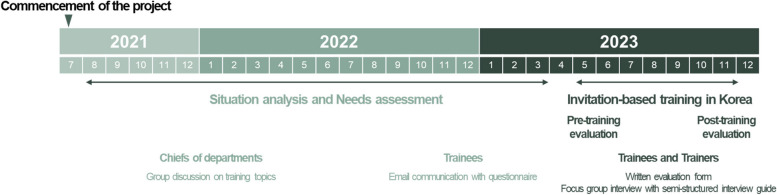
Methods: From May to November 2023, 51 hospital personnel from 21 disciplines from Côte d'Ivoire underwent invitation-based training in Korea. A quantitative analysis of the training outcomes for the trainees and a qualitative assessment of the enablers of the training, involving trainees, trainers, and the coordinating team, were conducted.
Results: The average score at pre- and post-training evaluation of capabilities of the trainees increased from 2.3 to 4.0 (out of 5.0). In addition to medical knowledge and technical skills sharing, trainees collaborated in group activities to develop workflow manuals for disease-, discipline-, and department-specific tasks through a multidisciplinary and cross-functional approach. The qualitative assessment indicated the importance of contextually relevant curriculum development with a special focus on establishing hospital operational plans, maintaining trainee autonomy and motivation, building mutual trust and cooperation between partner countries, engaging stakeholders actively, and providing effective leadership and support structures through a dedicated coordinating team were crucial factors for program success.
Conclusions: Effective hospital personnel capacity building programs should not only focus on imparting medical knowledge and technical skills but also actively engage trainees in developing hospital operational plans. Furthermore, ensuring mutual trust and cooperation among various stakeholders, along with the establishment of a dedicated coordinating team, is essential for the success of the program.
期刊介绍:
BMC Medical Education is an open access journal publishing original peer-reviewed research articles in relation to the training of healthcare professionals, including undergraduate, postgraduate, and continuing education. The journal has a special focus on curriculum development, evaluations of performance, assessment of training needs and evidence-based medicine.





 京公网安备 11010802042870号
京ICP备2023020795号-1
京公网安备 11010802042870号
京ICP备2023020795号-1

 分享
分享
 求助内容:
求助内容: 应助结果提醒方式:
 扫码关注我们
