{"title":"利用交流电场进行静电纺丝。","authors":"Andrei Stanishevsky","doi":"10.1002/marc.202400907","DOIUrl":null,"url":null,"abstract":"<p>Electrospinning is increasingly used as a staple technology for the fabrication of nano- and micro-fibers of different materials. Most processes utilize direct current (DC) electrospinning, and a multitude of DC-electrospinning tools ranging from research to commercial production systems is currently available. Yet, there are numerous studies performed on electrospinning techniques utilizing non-DC, periodic electric fields, or alternating current (AC) electrospinning. Those studies demonstrate the strong potential of AC-electrospinning for the sustainable production of various nanofibrous materials and structures. Although tremendous progress is achieved in the development of AC-electrospinning over the last 10 years, this technique remains uncommon. This paper reviews the AC-electrospinning concepts, instrumentation, and technology. The main focus of this review is the most studied, “electric wind” driven AC-electrospinning technique tentatively named alternating field electrospinning (AFES). The latter term emphasizes the role of the AC electric field's confinement to the fiber-generating electrode and the absence of a counter electrode in such an electrospinning system. The synopses of AFES process parameters, fiber-generating spinneret designs, benefits and obstacles, advancements in AC electrospun nano/micro-fibrous materials/structures and their applications are given, and future directions are discussed.</p>","PeriodicalId":205,"journal":{"name":"Macromolecular Rapid Communications","volume":"46 13","pages":""},"PeriodicalIF":4.3000,"publicationDate":"2025-02-02","publicationTypes":"Journal Article","fieldsOfStudy":null,"isOpenAccess":false,"openAccessPdf":"https://onlinelibrary.wiley.com/doi/epdf/10.1002/marc.202400907","citationCount":"0","resultStr":"{\"title\":\"Electrospinning Using AC Electric Fields\",\"authors\":\"Andrei Stanishevsky\",\"doi\":\"10.1002/marc.202400907\",\"DOIUrl\":null,\"url\":null,\"abstract\":\"<p>Electrospinning is increasingly used as a staple technology for the fabrication of nano- and micro-fibers of different materials. Most processes utilize direct current (DC) electrospinning, and a multitude of DC-electrospinning tools ranging from research to commercial production systems is currently available. Yet, there are numerous studies performed on electrospinning techniques utilizing non-DC, periodic electric fields, or alternating current (AC) electrospinning. Those studies demonstrate the strong potential of AC-electrospinning for the sustainable production of various nanofibrous materials and structures. Although tremendous progress is achieved in the development of AC-electrospinning over the last 10 years, this technique remains uncommon. This paper reviews the AC-electrospinning concepts, instrumentation, and technology. The main focus of this review is the most studied, “electric wind” driven AC-electrospinning technique tentatively named alternating field electrospinning (AFES). The latter term emphasizes the role of the AC electric field's confinement to the fiber-generating electrode and the absence of a counter electrode in such an electrospinning system. The synopses of AFES process parameters, fiber-generating spinneret designs, benefits and obstacles, advancements in AC electrospun nano/micro-fibrous materials/structures and their applications are given, and future directions are discussed.</p>\",\"PeriodicalId\":205,\"journal\":{\"name\":\"Macromolecular Rapid Communications\",\"volume\":\"46 13\",\"pages\":\"\"},\"PeriodicalIF\":4.3000,\"publicationDate\":\"2025-02-02\",\"publicationTypes\":\"Journal Article\",\"fieldsOfStudy\":null,\"isOpenAccess\":false,\"openAccessPdf\":\"https://onlinelibrary.wiley.com/doi/epdf/10.1002/marc.202400907\",\"citationCount\":\"0\",\"resultStr\":null,\"platform\":\"Semanticscholar\",\"paperid\":null,\"PeriodicalName\":\"Macromolecular Rapid Communications\",\"FirstCategoryId\":\"92\",\"ListUrlMain\":\"https://onlinelibrary.wiley.com/doi/10.1002/marc.202400907\",\"RegionNum\":3,\"RegionCategory\":\"化学\",\"ArticlePicture\":[],\"TitleCN\":null,\"AbstractTextCN\":null,\"PMCID\":null,\"EPubDate\":\"\",\"PubModel\":\"\",\"JCR\":\"Q2\",\"JCRName\":\"POLYMER SCIENCE\",\"Score\":null,\"Total\":0}","platform":"Semanticscholar","paperid":null,"PeriodicalName":"Macromolecular Rapid Communications","FirstCategoryId":"92","ListUrlMain":"https://onlinelibrary.wiley.com/doi/10.1002/marc.202400907","RegionNum":3,"RegionCategory":"化学","ArticlePicture":[],"TitleCN":null,"AbstractTextCN":null,"PMCID":null,"EPubDate":"","PubModel":"","JCR":"Q2","JCRName":"POLYMER SCIENCE","Score":null,"Total":0}
Electrospinning is increasingly used as a staple technology for the fabrication of nano- and micro-fibers of different materials. Most processes utilize direct current (DC) electrospinning, and a multitude of DC-electrospinning tools ranging from research to commercial production systems is currently available. Yet, there are numerous studies performed on electrospinning techniques utilizing non-DC, periodic electric fields, or alternating current (AC) electrospinning. Those studies demonstrate the strong potential of AC-electrospinning for the sustainable production of various nanofibrous materials and structures. Although tremendous progress is achieved in the development of AC-electrospinning over the last 10 years, this technique remains uncommon. This paper reviews the AC-electrospinning concepts, instrumentation, and technology. The main focus of this review is the most studied, “electric wind” driven AC-electrospinning technique tentatively named alternating field electrospinning (AFES). The latter term emphasizes the role of the AC electric field's confinement to the fiber-generating electrode and the absence of a counter electrode in such an electrospinning system. The synopses of AFES process parameters, fiber-generating spinneret designs, benefits and obstacles, advancements in AC electrospun nano/micro-fibrous materials/structures and their applications are given, and future directions are discussed.
期刊介绍:
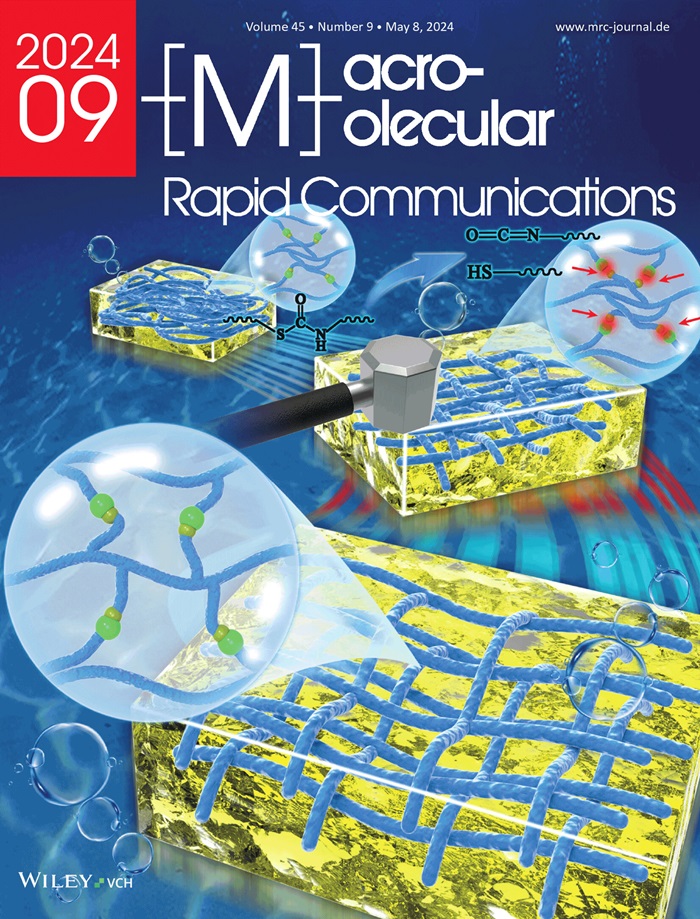
Macromolecular Rapid Communications publishes original research in polymer science, ranging from chemistry and physics of polymers to polymers in materials science and life sciences.




 京公网安备 11010802042870号
京ICP备2023020795号-1
京公网安备 11010802042870号
京ICP备2023020795号-1

 分享
分享
 求助内容:
求助内容: 应助结果提醒方式:
 扫码关注我们
