{"title":"婴儿血管瘤消退过程中发热相关基因的综合生物信息学分析及免疫细胞浸润分析。","authors":"Lan Liu, Sheng Lin, Jianxi Bai, Bing Zhang","doi":"10.2147/CCID.S492535","DOIUrl":null,"url":null,"abstract":"<p><strong>Background: </strong>Infantile hemangiomas (IHs) are characterized by spontaneous regression, and their pathogenesis involves immune cell infiltration and programmed cell death. The molecular pathways and mechanisms involved in pyroptosis in IHs are still unclear. This study aimed to identify genes related to pyroptosis in IH regression by bioinformatics methods and to explore the effects of these pyroptosis-related genes (PRGs) on disease pathology and immune cell infiltration.</p><p><strong>Methods: </strong>The microarray dataset GSE127487 was assessed to identify differentially expressed genes (DEGs) between proliferation-phase IH (PIHs) and involution-phase IH (IIHs). The DEGs that overlapped with PRGs were considered IH-PRGs. The IH-PRGs were validated and subjected to functional enrichment analysis and Genomes pathway analyses. Gene set enrichment analysis (GSEA) was also performed to analyse the biological significance of the DEGs. The NetworkAnalyst database was used to analyse the correlation network of IH-PRGs and miRNAs as well as that of IH-PRGs and transcription factors. The STRING online database and Cytoscape were used to identify the hub-IH-PRGs. Additionally, a single-sample GSEA algorithm was applied to assess immune cell infiltration in IHs, and correlation analysis was performed between the hub-IH-PRGs and infiltrating immune cells.</p><p><strong>Results: </strong>Fourteen IH-PRGs were identified. IL6, EGFR, IRF1 and IL32 were identified as hub-IH-PRGs and displayed excellent diagnostic performance. Immune cell infiltration analysis revealed notable differences in CD8+ T cells, Tgd cells and Th17 cells between PIHs and IIHs. IL-6 was significantly positively correlated with Th17 cell infiltration and significantly negatively correlated with Tgd cell infiltration; EGFR was negatively correlated with Tgd cell infiltration; and IRF1 and IL32 were significantly negatively correlated with Th17 cell infiltration.</p><p><strong>Conclusion: </strong>Four PRGs, namely, IL6, EGFR, IRF1 and IL32, may play a significant role in IH regression. This study provides insights into the molecular mechanisms underlying IH pathogenesis, highlighting the importance of pyroptosis and immune cell infiltration.</p>","PeriodicalId":10447,"journal":{"name":"Clinical, Cosmetic and Investigational Dermatology","volume":"18 ","pages":"291-302"},"PeriodicalIF":2.2000,"publicationDate":"2025-01-27","publicationTypes":"Journal Article","fieldsOfStudy":null,"isOpenAccess":false,"openAccessPdf":"https://www.ncbi.nlm.nih.gov/pmc/articles/PMC11784316/pdf/","citationCount":"0","resultStr":"{\"title\":\"Integrative Bioinformatics Analysis of Pyroptosis-Related Genes and Analysis of Immune Cell Infiltration in Infantile Hemangioma Regression.\",\"authors\":\"Lan Liu, Sheng Lin, Jianxi Bai, Bing Zhang\",\"doi\":\"10.2147/CCID.S492535\",\"DOIUrl\":null,\"url\":null,\"abstract\":\"<p><strong>Background: </strong>Infantile hemangiomas (IHs) are characterized by spontaneous regression, and their pathogenesis involves immune cell infiltration and programmed cell death. The molecular pathways and mechanisms involved in pyroptosis in IHs are still unclear. This study aimed to identify genes related to pyroptosis in IH regression by bioinformatics methods and to explore the effects of these pyroptosis-related genes (PRGs) on disease pathology and immune cell infiltration.</p><p><strong>Methods: </strong>The microarray dataset GSE127487 was assessed to identify differentially expressed genes (DEGs) between proliferation-phase IH (PIHs) and involution-phase IH (IIHs). The DEGs that overlapped with PRGs were considered IH-PRGs. The IH-PRGs were validated and subjected to functional enrichment analysis and Genomes pathway analyses. Gene set enrichment analysis (GSEA) was also performed to analyse the biological significance of the DEGs. The NetworkAnalyst database was used to analyse the correlation network of IH-PRGs and miRNAs as well as that of IH-PRGs and transcription factors. The STRING online database and Cytoscape were used to identify the hub-IH-PRGs. Additionally, a single-sample GSEA algorithm was applied to assess immune cell infiltration in IHs, and correlation analysis was performed between the hub-IH-PRGs and infiltrating immune cells.</p><p><strong>Results: </strong>Fourteen IH-PRGs were identified. IL6, EGFR, IRF1 and IL32 were identified as hub-IH-PRGs and displayed excellent diagnostic performance. Immune cell infiltration analysis revealed notable differences in CD8+ T cells, Tgd cells and Th17 cells between PIHs and IIHs. IL-6 was significantly positively correlated with Th17 cell infiltration and significantly negatively correlated with Tgd cell infiltration; EGFR was negatively correlated with Tgd cell infiltration; and IRF1 and IL32 were significantly negatively correlated with Th17 cell infiltration.</p><p><strong>Conclusion: </strong>Four PRGs, namely, IL6, EGFR, IRF1 and IL32, may play a significant role in IH regression. This study provides insights into the molecular mechanisms underlying IH pathogenesis, highlighting the importance of pyroptosis and immune cell infiltration.</p>\",\"PeriodicalId\":10447,\"journal\":{\"name\":\"Clinical, Cosmetic and Investigational Dermatology\",\"volume\":\"18 \",\"pages\":\"291-302\"},\"PeriodicalIF\":2.2000,\"publicationDate\":\"2025-01-27\",\"publicationTypes\":\"Journal Article\",\"fieldsOfStudy\":null,\"isOpenAccess\":false,\"openAccessPdf\":\"https://www.ncbi.nlm.nih.gov/pmc/articles/PMC11784316/pdf/\",\"citationCount\":\"0\",\"resultStr\":null,\"platform\":\"Semanticscholar\",\"paperid\":null,\"PeriodicalName\":\"Clinical, Cosmetic and Investigational Dermatology\",\"FirstCategoryId\":\"3\",\"ListUrlMain\":\"https://doi.org/10.2147/CCID.S492535\",\"RegionNum\":4,\"RegionCategory\":\"医学\",\"ArticlePicture\":[],\"TitleCN\":null,\"AbstractTextCN\":null,\"PMCID\":null,\"EPubDate\":\"2025/1/1 0:00:00\",\"PubModel\":\"eCollection\",\"JCR\":\"Q3\",\"JCRName\":\"DERMATOLOGY\",\"Score\":null,\"Total\":0}","platform":"Semanticscholar","paperid":null,"PeriodicalName":"Clinical, Cosmetic and Investigational Dermatology","FirstCategoryId":"3","ListUrlMain":"https://doi.org/10.2147/CCID.S492535","RegionNum":4,"RegionCategory":"医学","ArticlePicture":[],"TitleCN":null,"AbstractTextCN":null,"PMCID":null,"EPubDate":"2025/1/1 0:00:00","PubModel":"eCollection","JCR":"Q3","JCRName":"DERMATOLOGY","Score":null,"Total":0}
Integrative Bioinformatics Analysis of Pyroptosis-Related Genes and Analysis of Immune Cell Infiltration in Infantile Hemangioma Regression.
Background: Infantile hemangiomas (IHs) are characterized by spontaneous regression, and their pathogenesis involves immune cell infiltration and programmed cell death. The molecular pathways and mechanisms involved in pyroptosis in IHs are still unclear. This study aimed to identify genes related to pyroptosis in IH regression by bioinformatics methods and to explore the effects of these pyroptosis-related genes (PRGs) on disease pathology and immune cell infiltration.
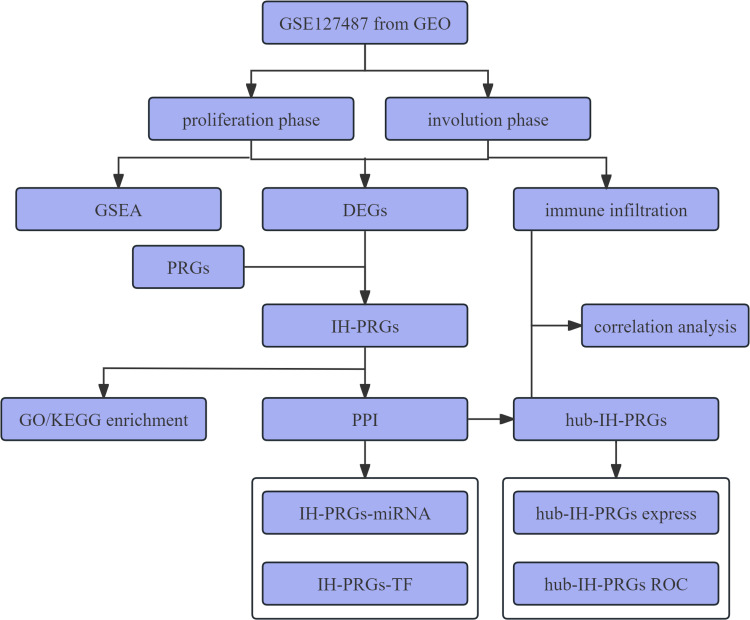
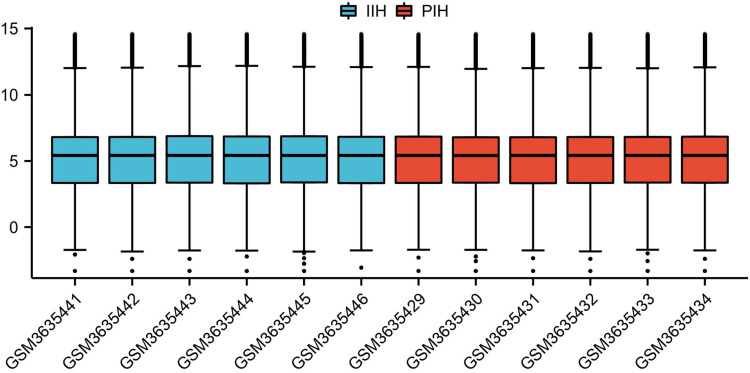
Methods: The microarray dataset GSE127487 was assessed to identify differentially expressed genes (DEGs) between proliferation-phase IH (PIHs) and involution-phase IH (IIHs). The DEGs that overlapped with PRGs were considered IH-PRGs. The IH-PRGs were validated and subjected to functional enrichment analysis and Genomes pathway analyses. Gene set enrichment analysis (GSEA) was also performed to analyse the biological significance of the DEGs. The NetworkAnalyst database was used to analyse the correlation network of IH-PRGs and miRNAs as well as that of IH-PRGs and transcription factors. The STRING online database and Cytoscape were used to identify the hub-IH-PRGs. Additionally, a single-sample GSEA algorithm was applied to assess immune cell infiltration in IHs, and correlation analysis was performed between the hub-IH-PRGs and infiltrating immune cells.
Results: Fourteen IH-PRGs were identified. IL6, EGFR, IRF1 and IL32 were identified as hub-IH-PRGs and displayed excellent diagnostic performance. Immune cell infiltration analysis revealed notable differences in CD8+ T cells, Tgd cells and Th17 cells between PIHs and IIHs. IL-6 was significantly positively correlated with Th17 cell infiltration and significantly negatively correlated with Tgd cell infiltration; EGFR was negatively correlated with Tgd cell infiltration; and IRF1 and IL32 were significantly negatively correlated with Th17 cell infiltration.
Conclusion: Four PRGs, namely, IL6, EGFR, IRF1 and IL32, may play a significant role in IH regression. This study provides insights into the molecular mechanisms underlying IH pathogenesis, highlighting the importance of pyroptosis and immune cell infiltration.
期刊介绍:
Clinical, Cosmetic and Investigational Dermatology is an international, peer-reviewed, open access journal that focuses on the latest clinical and experimental research in all aspects of skin disease and cosmetic interventions. Normal and pathological processes in skin development and aging, their modification and treatment, as well as basic research into histology of dermal and dermal structures that provide clinical insights and potential treatment options are key topics for the journal.
Patient satisfaction, preference, quality of life, compliance, persistence and their role in developing new management options to optimize outcomes for target conditions constitute major areas of interest.
The journal is characterized by the rapid reporting of clinical studies, reviews and original research in skin research and skin care.
All areas of dermatology will be covered; contributions will be welcomed from all clinicians and basic science researchers globally.






 京公网安备 11010802042870号
京ICP备2023020795号-1
京公网安备 11010802042870号
京ICP备2023020795号-1

 分享
分享
 求助内容:
求助内容: 应助结果提醒方式:
 扫码关注我们
