Neha Kishan Lalchandani, Clare Hume, Lynne Giles, Shona Crabb, Jo Hendrikx, Caroline Miller
{"title":"预览:南澳大利亚学校儿童午餐盒的食物,废物和包装特征。","authors":"Neha Kishan Lalchandani, Clare Hume, Lynne Giles, Shona Crabb, Jo Hendrikx, Caroline Miller","doi":"10.1017/S1368980025000126","DOIUrl":null,"url":null,"abstract":"<p><strong>Objective: </strong>To characterise children's lunchbox contents for food, waste and packaging.</p><p><strong>Design: </strong>A cross-sectional study was conducted. Lunchboxes were photographed at two time points on the same day: before first morning break to capture food and packaging and post-lunch break to capture food waste. Contents were coded using an audit tool developed using REDCap.</p><p><strong>Setting: </strong>Twenty-three sites across metropolitan Adelaide, South Australia including fourteen preschools and nine primary schools in low (<i>n</i> 8), medium (<i>n</i> 7) and high (<i>n</i> 8) socioeconomic areas.</p><p><strong>Participants: </strong>Preschool (ages 3-5 years) to Grade 7 primary school (ages 6-13 years) students.</p><p><strong>Results: </strong>673 lunchboxes were analysed. Grain foods dominated (with at least half of them being discretionary varieties), with 92 % of lunchboxes having at least one item from that category, followed by fruits (78 %), snacks (62 %), dairy (32 %) and vegetables (26 %). Lunchboxes of preschool children contained more fruits (92 % <i>v</i>. 65 %; χ2(1) = 73·3, <i>P</i> < 0·01), vegetables (36 % <i>v</i>. 16 %; χ2(1) = 34·0, <i>P</i> < 0·01) and dairy items (45 % <i>v</i>. 19 %; χ2(1) = 53·6, <i>P</i> < 0·01), compared to lunchboxes of primary school children. Snack foods were more prevalent in primary school (68 %) than preschool (55 %; χ2(1) = 11·2, <i>P</i> < 0·01). Discretionary foods appeared more frequently, and single-use packaging accounted for half (53 %) of all packaging in lunchboxes, primarily from snacks and grain foods. Preschool children had less single-use packaging but more food waste. Vegetables were the most wasted food group.</p><p><strong>Conclusions: </strong>Sandwiches, fruits and various snacks are typical lunchbox foods, often accompanied by single-use packaging. Considering both health and environmental factors in lunchbox choices could benefit children and sustainability efforts in schools.</p>","PeriodicalId":20951,"journal":{"name":"Public Health Nutrition","volume":" ","pages":"e52"},"PeriodicalIF":3.0000,"publicationDate":"2025-02-03","publicationTypes":"Journal Article","fieldsOfStudy":null,"isOpenAccess":false,"openAccessPdf":"https://www.ncbi.nlm.nih.gov/pmc/articles/PMC11984001/pdf/","citationCount":"0","resultStr":"{\"title\":\"Sneak peek: food, waste and packaging characteristics of South Australian school children's lunchboxes.\",\"authors\":\"Neha Kishan Lalchandani, Clare Hume, Lynne Giles, Shona Crabb, Jo Hendrikx, Caroline Miller\",\"doi\":\"10.1017/S1368980025000126\",\"DOIUrl\":null,\"url\":null,\"abstract\":\"<p><strong>Objective: </strong>To characterise children's lunchbox contents for food, waste and packaging.</p><p><strong>Design: </strong>A cross-sectional study was conducted. Lunchboxes were photographed at two time points on the same day: before first morning break to capture food and packaging and post-lunch break to capture food waste. Contents were coded using an audit tool developed using REDCap.</p><p><strong>Setting: </strong>Twenty-three sites across metropolitan Adelaide, South Australia including fourteen preschools and nine primary schools in low (<i>n</i> 8), medium (<i>n</i> 7) and high (<i>n</i> 8) socioeconomic areas.</p><p><strong>Participants: </strong>Preschool (ages 3-5 years) to Grade 7 primary school (ages 6-13 years) students.</p><p><strong>Results: </strong>673 lunchboxes were analysed. Grain foods dominated (with at least half of them being discretionary varieties), with 92 % of lunchboxes having at least one item from that category, followed by fruits (78 %), snacks (62 %), dairy (32 %) and vegetables (26 %). Lunchboxes of preschool children contained more fruits (92 % <i>v</i>. 65 %; χ2(1) = 73·3, <i>P</i> < 0·01), vegetables (36 % <i>v</i>. 16 %; χ2(1) = 34·0, <i>P</i> < 0·01) and dairy items (45 % <i>v</i>. 19 %; χ2(1) = 53·6, <i>P</i> < 0·01), compared to lunchboxes of primary school children. Snack foods were more prevalent in primary school (68 %) than preschool (55 %; χ2(1) = 11·2, <i>P</i> < 0·01). Discretionary foods appeared more frequently, and single-use packaging accounted for half (53 %) of all packaging in lunchboxes, primarily from snacks and grain foods. Preschool children had less single-use packaging but more food waste. Vegetables were the most wasted food group.</p><p><strong>Conclusions: </strong>Sandwiches, fruits and various snacks are typical lunchbox foods, often accompanied by single-use packaging. Considering both health and environmental factors in lunchbox choices could benefit children and sustainability efforts in schools.</p>\",\"PeriodicalId\":20951,\"journal\":{\"name\":\"Public Health Nutrition\",\"volume\":\" \",\"pages\":\"e52\"},\"PeriodicalIF\":3.0000,\"publicationDate\":\"2025-02-03\",\"publicationTypes\":\"Journal Article\",\"fieldsOfStudy\":null,\"isOpenAccess\":false,\"openAccessPdf\":\"https://www.ncbi.nlm.nih.gov/pmc/articles/PMC11984001/pdf/\",\"citationCount\":\"0\",\"resultStr\":null,\"platform\":\"Semanticscholar\",\"paperid\":null,\"PeriodicalName\":\"Public Health Nutrition\",\"FirstCategoryId\":\"3\",\"ListUrlMain\":\"https://doi.org/10.1017/S1368980025000126\",\"RegionNum\":3,\"RegionCategory\":\"医学\",\"ArticlePicture\":[],\"TitleCN\":null,\"AbstractTextCN\":null,\"PMCID\":null,\"EPubDate\":\"\",\"PubModel\":\"\",\"JCR\":\"Q2\",\"JCRName\":\"NUTRITION & DIETETICS\",\"Score\":null,\"Total\":0}","platform":"Semanticscholar","paperid":null,"PeriodicalName":"Public Health Nutrition","FirstCategoryId":"3","ListUrlMain":"https://doi.org/10.1017/S1368980025000126","RegionNum":3,"RegionCategory":"医学","ArticlePicture":[],"TitleCN":null,"AbstractTextCN":null,"PMCID":null,"EPubDate":"","PubModel":"","JCR":"Q2","JCRName":"NUTRITION & DIETETICS","Score":null,"Total":0}
Sneak peek: food, waste and packaging characteristics of South Australian school children's lunchboxes.
Objective: To characterise children's lunchbox contents for food, waste and packaging.
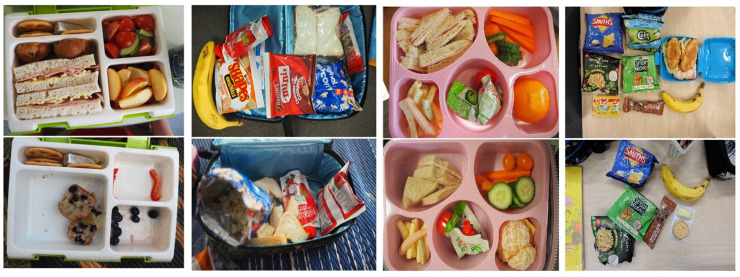
Design: A cross-sectional study was conducted. Lunchboxes were photographed at two time points on the same day: before first morning break to capture food and packaging and post-lunch break to capture food waste. Contents were coded using an audit tool developed using REDCap.
Setting: Twenty-three sites across metropolitan Adelaide, South Australia including fourteen preschools and nine primary schools in low (n 8), medium (n 7) and high (n 8) socioeconomic areas.
Participants: Preschool (ages 3-5 years) to Grade 7 primary school (ages 6-13 years) students.
Results: 673 lunchboxes were analysed. Grain foods dominated (with at least half of them being discretionary varieties), with 92 % of lunchboxes having at least one item from that category, followed by fruits (78 %), snacks (62 %), dairy (32 %) and vegetables (26 %). Lunchboxes of preschool children contained more fruits (92 % v. 65 %; χ2(1) = 73·3, P < 0·01), vegetables (36 % v. 16 %; χ2(1) = 34·0, P < 0·01) and dairy items (45 % v. 19 %; χ2(1) = 53·6, P < 0·01), compared to lunchboxes of primary school children. Snack foods were more prevalent in primary school (68 %) than preschool (55 %; χ2(1) = 11·2, P < 0·01). Discretionary foods appeared more frequently, and single-use packaging accounted for half (53 %) of all packaging in lunchboxes, primarily from snacks and grain foods. Preschool children had less single-use packaging but more food waste. Vegetables were the most wasted food group.
Conclusions: Sandwiches, fruits and various snacks are typical lunchbox foods, often accompanied by single-use packaging. Considering both health and environmental factors in lunchbox choices could benefit children and sustainability efforts in schools.
期刊介绍:
Public Health Nutrition provides an international peer-reviewed forum for the publication and dissemination of research and scholarship aimed at understanding the causes of, and approaches and solutions to nutrition-related public health achievements, situations and problems around the world. The journal publishes original and commissioned articles, commentaries and discussion papers for debate. The journal is of interest to epidemiologists and health promotion specialists interested in the role of nutrition in disease prevention; academics and those involved in fieldwork and the application of research to identify practical solutions to important public health problems.






 京公网安备 11010802042870号
京ICP备2023020795号-1
京公网安备 11010802042870号
京ICP备2023020795号-1

 分享
分享
 求助内容:
求助内容: 应助结果提醒方式:
 扫码关注我们
