{"title":"影响韩国青少年含糖饮料消费的社会生态因素:一项横断面研究。","authors":"Jin Suk Ra, Sun Hwa Kim","doi":"10.4094/chnr.2024.041","DOIUrl":null,"url":null,"abstract":"<p><strong>Purpose: </strong>This study explored the intrapersonal, interpersonal, and school factors, following the socioecological model, associated with sugar-sweetened beverage (SSB) consumption in Korean high-school students.</p><p><strong>Methods: </strong>A total of 231 students from first to third grade, aged 15-18 years, participated in this cross-sectional study. Multiple linear regression analysis was conducted to identify the factors.</p><p><strong>Results: </strong>Among the intrapersonal factors, fast-food consumption (β=0.13, t=1.97, p=.050) and habit strength of SSB consumption were positively associated (β=0.35, t=4.30, p<.001), and sleep duration was negatively associated with SSB consumption (β=-0.14, t=-2.02, p=.045). Among interpersonal factors, perceived SSB consumption by peers was positively associated (β=0.30, t=4.93, p<.001), and among school factors, vending machines at school (β=0.13, t=2.07, p=.039) and supermarkets and convenience stores near schools were positively associated with SSB consumption (β=0.17, t=2.87, p=.005).</p><p><strong>Conclusion: </strong>School nurses should propose policies and interventions that consider the multilevel factors to reduce SSB consumption in adolescents.</p>","PeriodicalId":37360,"journal":{"name":"Child Health Nursing Research","volume":"31 1","pages":"28-39"},"PeriodicalIF":0.0000,"publicationDate":"2025-01-01","publicationTypes":"Journal Article","fieldsOfStudy":null,"isOpenAccess":false,"openAccessPdf":"https://www.ncbi.nlm.nih.gov/pmc/articles/PMC11837365/pdf/","citationCount":"0","resultStr":"{\"title\":\"Socioecological factors influencing sugar-sweetened beverage consumption among adolescents in South Korea: a cross-sectional study.\",\"authors\":\"Jin Suk Ra, Sun Hwa Kim\",\"doi\":\"10.4094/chnr.2024.041\",\"DOIUrl\":null,\"url\":null,\"abstract\":\"<p><strong>Purpose: </strong>This study explored the intrapersonal, interpersonal, and school factors, following the socioecological model, associated with sugar-sweetened beverage (SSB) consumption in Korean high-school students.</p><p><strong>Methods: </strong>A total of 231 students from first to third grade, aged 15-18 years, participated in this cross-sectional study. Multiple linear regression analysis was conducted to identify the factors.</p><p><strong>Results: </strong>Among the intrapersonal factors, fast-food consumption (β=0.13, t=1.97, p=.050) and habit strength of SSB consumption were positively associated (β=0.35, t=4.30, p<.001), and sleep duration was negatively associated with SSB consumption (β=-0.14, t=-2.02, p=.045). Among interpersonal factors, perceived SSB consumption by peers was positively associated (β=0.30, t=4.93, p<.001), and among school factors, vending machines at school (β=0.13, t=2.07, p=.039) and supermarkets and convenience stores near schools were positively associated with SSB consumption (β=0.17, t=2.87, p=.005).</p><p><strong>Conclusion: </strong>School nurses should propose policies and interventions that consider the multilevel factors to reduce SSB consumption in adolescents.</p>\",\"PeriodicalId\":37360,\"journal\":{\"name\":\"Child Health Nursing Research\",\"volume\":\"31 1\",\"pages\":\"28-39\"},\"PeriodicalIF\":0.0000,\"publicationDate\":\"2025-01-01\",\"publicationTypes\":\"Journal Article\",\"fieldsOfStudy\":null,\"isOpenAccess\":false,\"openAccessPdf\":\"https://www.ncbi.nlm.nih.gov/pmc/articles/PMC11837365/pdf/\",\"citationCount\":\"0\",\"resultStr\":null,\"platform\":\"Semanticscholar\",\"paperid\":null,\"PeriodicalName\":\"Child Health Nursing Research\",\"FirstCategoryId\":\"1085\",\"ListUrlMain\":\"https://doi.org/10.4094/chnr.2024.041\",\"RegionNum\":0,\"RegionCategory\":null,\"ArticlePicture\":[],\"TitleCN\":null,\"AbstractTextCN\":null,\"PMCID\":null,\"EPubDate\":\"2025/1/31 0:00:00\",\"PubModel\":\"Epub\",\"JCR\":\"Q3\",\"JCRName\":\"Medicine\",\"Score\":null,\"Total\":0}","platform":"Semanticscholar","paperid":null,"PeriodicalName":"Child Health Nursing Research","FirstCategoryId":"1085","ListUrlMain":"https://doi.org/10.4094/chnr.2024.041","RegionNum":0,"RegionCategory":null,"ArticlePicture":[],"TitleCN":null,"AbstractTextCN":null,"PMCID":null,"EPubDate":"2025/1/31 0:00:00","PubModel":"Epub","JCR":"Q3","JCRName":"Medicine","Score":null,"Total":0}
Socioecological factors influencing sugar-sweetened beverage consumption among adolescents in South Korea: a cross-sectional study.
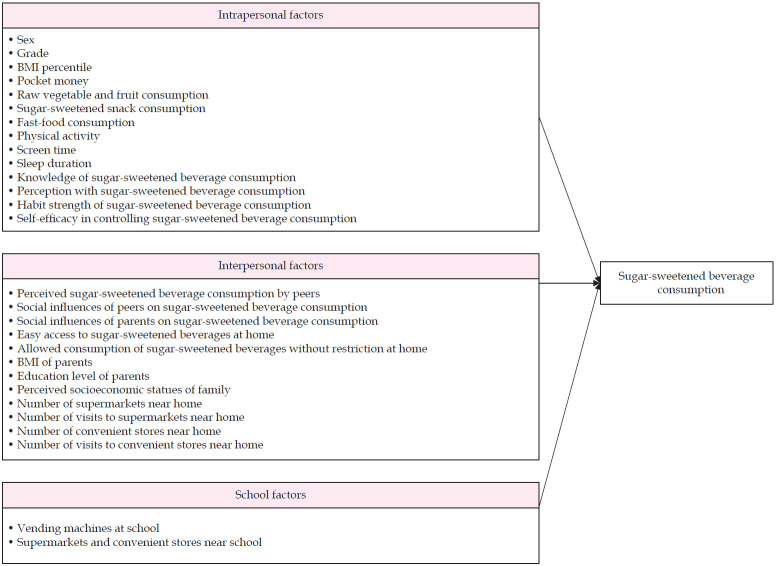
Purpose: This study explored the intrapersonal, interpersonal, and school factors, following the socioecological model, associated with sugar-sweetened beverage (SSB) consumption in Korean high-school students.
Methods: A total of 231 students from first to third grade, aged 15-18 years, participated in this cross-sectional study. Multiple linear regression analysis was conducted to identify the factors.
Results: Among the intrapersonal factors, fast-food consumption (β=0.13, t=1.97, p=.050) and habit strength of SSB consumption were positively associated (β=0.35, t=4.30, p<.001), and sleep duration was negatively associated with SSB consumption (β=-0.14, t=-2.02, p=.045). Among interpersonal factors, perceived SSB consumption by peers was positively associated (β=0.30, t=4.93, p<.001), and among school factors, vending machines at school (β=0.13, t=2.07, p=.039) and supermarkets and convenience stores near schools were positively associated with SSB consumption (β=0.17, t=2.87, p=.005).
Conclusion: School nurses should propose policies and interventions that consider the multilevel factors to reduce SSB consumption in adolescents.





 京公网安备 11010802042870号
京ICP备2023020795号-1
京公网安备 11010802042870号
京ICP备2023020795号-1

 分享
分享
 求助内容:
求助内容: 应助结果提醒方式:
 扫码关注我们
