{"title":"美国可再生能源消费对能源相关不确定性冲击弹性的时间探索","authors":"Adeel Riaz , Zia Ullah , Shujahat Haider Hashmi","doi":"10.1016/j.jclepro.2025.144946","DOIUrl":null,"url":null,"abstract":"<div><div>Recently, there has been growing concern about the impact of uncertainties in the energy market as it undergoes a transition from traditional fossil fuels to renewable energy sources. This necessitates an investigation of how recently developed energy-related uncertainty influences renewable energy consumption from different sources. Therefore, the present study investigates the dynamic effect of the newly developed energy-related uncertainty index on renewable energy consumption in the US by employing the TVP–SV–VAR model, as this understanding can inform effective policy measures. Our findings indicate that the relationship between energy-related uncertainty and renewable energy consumption from different sources changes dynamically over time. While most renewables experienced negative shocks in the short term, wind energy remained resilient due to technological advancements and government incentives during the period. Solar energy also demonstrated resilience to the shocks from the energy-related uncertainty in comparison to the traditional sources of energy, e.g., geothermal, hydro, and biofuels in the short, medium, and long term during the post COVID-19 times, highlighting the era of expansion for solar energy consumption. In the medium term, wind energy consumption declined, reflecting market uncertainties driven by the 2008 financial crisis and inconsistent policy support. Between 2009 and 2017, global energy policy shifts contributed negatively for the renewables, both in the short and long term. Post-2020, geothermal and hydro energy showed a long-term negative trend in response to the uncertainty shocks. These findings suggest policymakers should encourage the adoption of solar and wind energy in the wake of increasing uncertainty in the energy sector.</div></div>","PeriodicalId":349,"journal":{"name":"Journal of Cleaner Production","volume":"493 ","pages":"Article 144946"},"PeriodicalIF":10.0000,"publicationDate":"2025-02-15","publicationTypes":"Journal Article","fieldsOfStudy":null,"isOpenAccess":false,"openAccessPdf":"","citationCount":"0","resultStr":"{\"title\":\"A temporal exploration of resilience of renewable energy consumption to the energy-related uncertainty shocks in the US\",\"authors\":\"Adeel Riaz , Zia Ullah , Shujahat Haider Hashmi\",\"doi\":\"10.1016/j.jclepro.2025.144946\",\"DOIUrl\":null,\"url\":null,\"abstract\":\"<div><div>Recently, there has been growing concern about the impact of uncertainties in the energy market as it undergoes a transition from traditional fossil fuels to renewable energy sources. This necessitates an investigation of how recently developed energy-related uncertainty influences renewable energy consumption from different sources. Therefore, the present study investigates the dynamic effect of the newly developed energy-related uncertainty index on renewable energy consumption in the US by employing the TVP–SV–VAR model, as this understanding can inform effective policy measures. Our findings indicate that the relationship between energy-related uncertainty and renewable energy consumption from different sources changes dynamically over time. While most renewables experienced negative shocks in the short term, wind energy remained resilient due to technological advancements and government incentives during the period. Solar energy also demonstrated resilience to the shocks from the energy-related uncertainty in comparison to the traditional sources of energy, e.g., geothermal, hydro, and biofuels in the short, medium, and long term during the post COVID-19 times, highlighting the era of expansion for solar energy consumption. In the medium term, wind energy consumption declined, reflecting market uncertainties driven by the 2008 financial crisis and inconsistent policy support. Between 2009 and 2017, global energy policy shifts contributed negatively for the renewables, both in the short and long term. Post-2020, geothermal and hydro energy showed a long-term negative trend in response to the uncertainty shocks. These findings suggest policymakers should encourage the adoption of solar and wind energy in the wake of increasing uncertainty in the energy sector.</div></div>\",\"PeriodicalId\":349,\"journal\":{\"name\":\"Journal of Cleaner Production\",\"volume\":\"493 \",\"pages\":\"Article 144946\"},\"PeriodicalIF\":10.0000,\"publicationDate\":\"2025-02-15\",\"publicationTypes\":\"Journal Article\",\"fieldsOfStudy\":null,\"isOpenAccess\":false,\"openAccessPdf\":\"\",\"citationCount\":\"0\",\"resultStr\":null,\"platform\":\"Semanticscholar\",\"paperid\":null,\"PeriodicalName\":\"Journal of Cleaner Production\",\"FirstCategoryId\":\"93\",\"ListUrlMain\":\"https://www.sciencedirect.com/science/article/pii/S0959652625002963\",\"RegionNum\":1,\"RegionCategory\":\"环境科学与生态学\",\"ArticlePicture\":[],\"TitleCN\":null,\"AbstractTextCN\":null,\"PMCID\":null,\"EPubDate\":\"2025/2/4 0:00:00\",\"PubModel\":\"Epub\",\"JCR\":\"Q1\",\"JCRName\":\"ENGINEERING, ENVIRONMENTAL\",\"Score\":null,\"Total\":0}","platform":"Semanticscholar","paperid":null,"PeriodicalName":"Journal of Cleaner Production","FirstCategoryId":"93","ListUrlMain":"https://www.sciencedirect.com/science/article/pii/S0959652625002963","RegionNum":1,"RegionCategory":"环境科学与生态学","ArticlePicture":[],"TitleCN":null,"AbstractTextCN":null,"PMCID":null,"EPubDate":"2025/2/4 0:00:00","PubModel":"Epub","JCR":"Q1","JCRName":"ENGINEERING, ENVIRONMENTAL","Score":null,"Total":0}
A temporal exploration of resilience of renewable energy consumption to the energy-related uncertainty shocks in the US
Recently, there has been growing concern about the impact of uncertainties in the energy market as it undergoes a transition from traditional fossil fuels to renewable energy sources. This necessitates an investigation of how recently developed energy-related uncertainty influences renewable energy consumption from different sources. Therefore, the present study investigates the dynamic effect of the newly developed energy-related uncertainty index on renewable energy consumption in the US by employing the TVP–SV–VAR model, as this understanding can inform effective policy measures. Our findings indicate that the relationship between energy-related uncertainty and renewable energy consumption from different sources changes dynamically over time. While most renewables experienced negative shocks in the short term, wind energy remained resilient due to technological advancements and government incentives during the period. Solar energy also demonstrated resilience to the shocks from the energy-related uncertainty in comparison to the traditional sources of energy, e.g., geothermal, hydro, and biofuels in the short, medium, and long term during the post COVID-19 times, highlighting the era of expansion for solar energy consumption. In the medium term, wind energy consumption declined, reflecting market uncertainties driven by the 2008 financial crisis and inconsistent policy support. Between 2009 and 2017, global energy policy shifts contributed negatively for the renewables, both in the short and long term. Post-2020, geothermal and hydro energy showed a long-term negative trend in response to the uncertainty shocks. These findings suggest policymakers should encourage the adoption of solar and wind energy in the wake of increasing uncertainty in the energy sector.
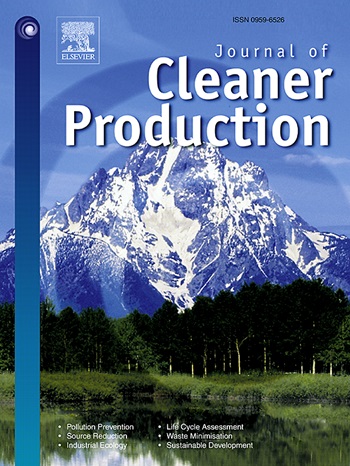
期刊介绍:
The Journal of Cleaner Production is an international, transdisciplinary journal that addresses and discusses theoretical and practical Cleaner Production, Environmental, and Sustainability issues. It aims to help societies become more sustainable by focusing on the concept of 'Cleaner Production', which aims at preventing waste production and increasing efficiencies in energy, water, resources, and human capital use. The journal serves as a platform for corporations, governments, education institutions, regions, and societies to engage in discussions and research related to Cleaner Production, environmental, and sustainability practices.




 京公网安备 11010802042870号
京ICP备2023020795号-1
京公网安备 11010802042870号
京ICP备2023020795号-1

 分享
分享
 求助内容:
求助内容: 应助结果提醒方式:
 扫码关注我们
