Shutong Qin, Jiao Dai, Mingjie Wang, Hanyuan Zhang, Shihao Cheng, Weilin Xu, Jun Wan* and Huanyu Jin*,
{"title":"释放亚稳材料在电催化水分解中的潜力","authors":"Shutong Qin, Jiao Dai, Mingjie Wang, Hanyuan Zhang, Shihao Cheng, Weilin Xu, Jun Wan* and Huanyu Jin*, ","doi":"10.1021/acsmaterialslett.4c02197","DOIUrl":null,"url":null,"abstract":"<p >Electrocatalytic water splitting is pivotal for advancing the hydrogen economy, yet conventional stable-phase catalysts are constrained by rigid crystal structures and electronic states, leading to fixed active sites, limited adaptability, and sluggish kinetics. Metastable materials emerge as promising alternatives due to their structural flexibility and tunable electronic properties; however, their dynamic regulatory mechanisms remain underexplored. This review uniquely offers a comprehensive analysis of metastable catalysts, emphasizing how factors such as size, phase structure, electronic properties, defects, and interfaces significantly enhance catalytic performance. By dissecting a range of materials (metals, alloys, oxides, sulfides, nitrides, and hydroxides), we elucidate precise modulation strategies that improve efficiency and stability. Practical applications highlight their superior adaptability and activity compared to traditional catalysts. Addressing key challenges and technical bottlenecks, this review provides innovative insights and strategic directions for optimizing metastable materials, thereby advancing efficient water splitting and sustainable energy conversion technologies.</p>","PeriodicalId":19,"journal":{"name":"ACS Materials Letters","volume":"7 2","pages":"524–543 524–543"},"PeriodicalIF":8.7000,"publicationDate":"2025-01-06","publicationTypes":"Journal Article","fieldsOfStudy":null,"isOpenAccess":false,"openAccessPdf":"","citationCount":"0","resultStr":"{\"title\":\"Unleashing the Potential of Metastable Materials in Electrocatalytic Water Splitting\",\"authors\":\"Shutong Qin, Jiao Dai, Mingjie Wang, Hanyuan Zhang, Shihao Cheng, Weilin Xu, Jun Wan* and Huanyu Jin*, \",\"doi\":\"10.1021/acsmaterialslett.4c02197\",\"DOIUrl\":null,\"url\":null,\"abstract\":\"<p >Electrocatalytic water splitting is pivotal for advancing the hydrogen economy, yet conventional stable-phase catalysts are constrained by rigid crystal structures and electronic states, leading to fixed active sites, limited adaptability, and sluggish kinetics. Metastable materials emerge as promising alternatives due to their structural flexibility and tunable electronic properties; however, their dynamic regulatory mechanisms remain underexplored. This review uniquely offers a comprehensive analysis of metastable catalysts, emphasizing how factors such as size, phase structure, electronic properties, defects, and interfaces significantly enhance catalytic performance. By dissecting a range of materials (metals, alloys, oxides, sulfides, nitrides, and hydroxides), we elucidate precise modulation strategies that improve efficiency and stability. Practical applications highlight their superior adaptability and activity compared to traditional catalysts. Addressing key challenges and technical bottlenecks, this review provides innovative insights and strategic directions for optimizing metastable materials, thereby advancing efficient water splitting and sustainable energy conversion technologies.</p>\",\"PeriodicalId\":19,\"journal\":{\"name\":\"ACS Materials Letters\",\"volume\":\"7 2\",\"pages\":\"524–543 524–543\"},\"PeriodicalIF\":8.7000,\"publicationDate\":\"2025-01-06\",\"publicationTypes\":\"Journal Article\",\"fieldsOfStudy\":null,\"isOpenAccess\":false,\"openAccessPdf\":\"\",\"citationCount\":\"0\",\"resultStr\":null,\"platform\":\"Semanticscholar\",\"paperid\":null,\"PeriodicalName\":\"ACS Materials Letters\",\"FirstCategoryId\":\"92\",\"ListUrlMain\":\"https://pubs.acs.org/doi/10.1021/acsmaterialslett.4c02197\",\"RegionNum\":1,\"RegionCategory\":\"化学\",\"ArticlePicture\":[],\"TitleCN\":null,\"AbstractTextCN\":null,\"PMCID\":null,\"EPubDate\":\"\",\"PubModel\":\"\",\"JCR\":\"Q1\",\"JCRName\":\"MATERIALS SCIENCE, MULTIDISCIPLINARY\",\"Score\":null,\"Total\":0}","platform":"Semanticscholar","paperid":null,"PeriodicalName":"ACS Materials Letters","FirstCategoryId":"92","ListUrlMain":"https://pubs.acs.org/doi/10.1021/acsmaterialslett.4c02197","RegionNum":1,"RegionCategory":"化学","ArticlePicture":[],"TitleCN":null,"AbstractTextCN":null,"PMCID":null,"EPubDate":"","PubModel":"","JCR":"Q1","JCRName":"MATERIALS SCIENCE, MULTIDISCIPLINARY","Score":null,"Total":0}
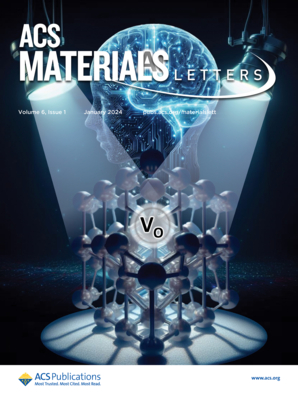
Unleashing the Potential of Metastable Materials in Electrocatalytic Water Splitting
Electrocatalytic water splitting is pivotal for advancing the hydrogen economy, yet conventional stable-phase catalysts are constrained by rigid crystal structures and electronic states, leading to fixed active sites, limited adaptability, and sluggish kinetics. Metastable materials emerge as promising alternatives due to their structural flexibility and tunable electronic properties; however, their dynamic regulatory mechanisms remain underexplored. This review uniquely offers a comprehensive analysis of metastable catalysts, emphasizing how factors such as size, phase structure, electronic properties, defects, and interfaces significantly enhance catalytic performance. By dissecting a range of materials (metals, alloys, oxides, sulfides, nitrides, and hydroxides), we elucidate precise modulation strategies that improve efficiency and stability. Practical applications highlight their superior adaptability and activity compared to traditional catalysts. Addressing key challenges and technical bottlenecks, this review provides innovative insights and strategic directions for optimizing metastable materials, thereby advancing efficient water splitting and sustainable energy conversion technologies.
期刊介绍:
ACS Materials Letters is a journal that publishes high-quality and urgent papers at the forefront of fundamental and applied research in the field of materials science. It aims to bridge the gap between materials and other disciplines such as chemistry, engineering, and biology. The journal encourages multidisciplinary and innovative research that addresses global challenges. Papers submitted to ACS Materials Letters should clearly demonstrate the need for rapid disclosure of key results. The journal is interested in various areas including the design, synthesis, characterization, and evaluation of emerging materials, understanding the relationships between structure, property, and performance, as well as developing materials for applications in energy, environment, biomedical, electronics, and catalysis. The journal has a 2-year impact factor of 11.4 and is dedicated to publishing transformative materials research with fast processing times. The editors and staff of ACS Materials Letters actively participate in major scientific conferences and engage closely with readers and authors. The journal also maintains an active presence on social media to provide authors with greater visibility.





 京公网安备 11010802042870号
京ICP备2023020795号-1
京公网安备 11010802042870号
京ICP备2023020795号-1

 分享
分享
 求助内容:
求助内容: 应助结果提醒方式:
 扫码关注我们
