Carlos Romero , Nuria Nicodemus , Rosa Carabaño , Javier García
{"title":"两种中性洗涤纤维水平下生长兔饲粮中苜蓿干草和麦秸研磨类型的评价","authors":"Carlos Romero , Nuria Nicodemus , Rosa Carabaño , Javier García","doi":"10.1016/j.anifeedsci.2024.116193","DOIUrl":null,"url":null,"abstract":"<div><div>To evaluate the effects of insoluble fibre level and its potential interaction with type of grinding on growing rabbits, four diets in a 2 × 2 factorial arrangement were used with normal (NF) and low (LF) neutral detergent fibre (using α-amylase and ash free, aNDFom) level (340 vs. 270 g aNDFom/kg DM, dry matter) and coarse (<strong>CG</strong>) and normal (<strong>NG</strong>) type of grinding of lucerne hay and wheat straw (coarse: 9-mm vs. normal: 1-mm). This resulted in a proportion of fibrous large particles (> 315 μm) of 234, 183, 171 and 140 g aNDFom/kg DM for NF-CG, NF-NG, LF-CG and LF-NG diets, respectively. Diets contained a similar digestible [protein/energy] ratio of 10.7 g/MJ. A total of 464 crossbred mixed-sex rabbits (116 per diet) weaned at 25 days of age were used to record growth performance and mortality rate between 25 and 60 days of age, ileal (at 39 d) and faecal (at 39 and 60 d) digestibilities, digestive traits (organs weight and caecal pH at 39 and 60 d, caecal total volatile fatty acid concentration, VFA, at 39 d) and morphology of jejunal mucosa (at 39 d). The reduction of dietary aNDFom from 340 to 270 g/kg impaired growth rate (45.2 vs. 41.8 g/d, P = 0.002) and mortality (12.2 vs. 20.9 %, P < 0.001), with no effect on feed efficiency (0.457 g/g on average). It resulted in lower [villus height/crypt depth] ratio in the jejunal mucosa (5.48 vs. 4.26, P < 0.001) and caecal VFA (65.2 vs. 56.7 mmol/l, P = 0.002), and higher ileal and faecal digestibilities of DM (0.529 vs. 0.599, and 0.671 vs. 0.741, respectively, P < 0.001), and relative weight of caecal contents at 60 days of age (58.6 vs. 69.4 g/kg body weight, P = 0.006). In rabbits fed NF diets, coarse grinding reduced mortality rate (15.1 vs. 9.3 %, P < 0.05). Coarse grinding in LF diets reduced relative weight of caecal contents at 39 days (77.6 vs. 61.6 g/kg body weight, P < 0.05), but not at 60 d. Nevertheless, the mortality still remained higher with the LF-CG diet (19.8 %) than with the NF diets. In conclusion, aNDFom level should not be reduced in diets for fattening rabbits below the minimal requirement (330 g/kg DM), and a coarse grinding of the dietary fibrous ingredients cannot make up for a deficitary dietary aNDFom concentration.</div></div>","PeriodicalId":7861,"journal":{"name":"Animal Feed Science and Technology","volume":"319 ","pages":"Article 116193"},"PeriodicalIF":2.7000,"publicationDate":"2025-01-01","publicationTypes":"Journal Article","fieldsOfStudy":null,"isOpenAccess":false,"openAccessPdf":"","citationCount":"0","resultStr":"{\"title\":\"Evaluation of type of grinding of lucerne hay and wheat straw in diets for growing rabbits with two levels of neutral detergent fibre\",\"authors\":\"Carlos Romero , Nuria Nicodemus , Rosa Carabaño , Javier García\",\"doi\":\"10.1016/j.anifeedsci.2024.116193\",\"DOIUrl\":null,\"url\":null,\"abstract\":\"<div><div>To evaluate the effects of insoluble fibre level and its potential interaction with type of grinding on growing rabbits, four diets in a 2 × 2 factorial arrangement were used with normal (NF) and low (LF) neutral detergent fibre (using α-amylase and ash free, aNDFom) level (340 vs. 270 g aNDFom/kg DM, dry matter) and coarse (<strong>CG</strong>) and normal (<strong>NG</strong>) type of grinding of lucerne hay and wheat straw (coarse: 9-mm vs. normal: 1-mm). This resulted in a proportion of fibrous large particles (> 315 μm) of 234, 183, 171 and 140 g aNDFom/kg DM for NF-CG, NF-NG, LF-CG and LF-NG diets, respectively. Diets contained a similar digestible [protein/energy] ratio of 10.7 g/MJ. A total of 464 crossbred mixed-sex rabbits (116 per diet) weaned at 25 days of age were used to record growth performance and mortality rate between 25 and 60 days of age, ileal (at 39 d) and faecal (at 39 and 60 d) digestibilities, digestive traits (organs weight and caecal pH at 39 and 60 d, caecal total volatile fatty acid concentration, VFA, at 39 d) and morphology of jejunal mucosa (at 39 d). The reduction of dietary aNDFom from 340 to 270 g/kg impaired growth rate (45.2 vs. 41.8 g/d, P = 0.002) and mortality (12.2 vs. 20.9 %, P < 0.001), with no effect on feed efficiency (0.457 g/g on average). It resulted in lower [villus height/crypt depth] ratio in the jejunal mucosa (5.48 vs. 4.26, P < 0.001) and caecal VFA (65.2 vs. 56.7 mmol/l, P = 0.002), and higher ileal and faecal digestibilities of DM (0.529 vs. 0.599, and 0.671 vs. 0.741, respectively, P < 0.001), and relative weight of caecal contents at 60 days of age (58.6 vs. 69.4 g/kg body weight, P = 0.006). In rabbits fed NF diets, coarse grinding reduced mortality rate (15.1 vs. 9.3 %, P < 0.05). Coarse grinding in LF diets reduced relative weight of caecal contents at 39 days (77.6 vs. 61.6 g/kg body weight, P < 0.05), but not at 60 d. Nevertheless, the mortality still remained higher with the LF-CG diet (19.8 %) than with the NF diets. In conclusion, aNDFom level should not be reduced in diets for fattening rabbits below the minimal requirement (330 g/kg DM), and a coarse grinding of the dietary fibrous ingredients cannot make up for a deficitary dietary aNDFom concentration.</div></div>\",\"PeriodicalId\":7861,\"journal\":{\"name\":\"Animal Feed Science and Technology\",\"volume\":\"319 \",\"pages\":\"Article 116193\"},\"PeriodicalIF\":2.7000,\"publicationDate\":\"2025-01-01\",\"publicationTypes\":\"Journal Article\",\"fieldsOfStudy\":null,\"isOpenAccess\":false,\"openAccessPdf\":\"\",\"citationCount\":\"0\",\"resultStr\":null,\"platform\":\"Semanticscholar\",\"paperid\":null,\"PeriodicalName\":\"Animal Feed Science and Technology\",\"FirstCategoryId\":\"97\",\"ListUrlMain\":\"https://www.sciencedirect.com/science/article/pii/S0377840124003213\",\"RegionNum\":2,\"RegionCategory\":\"农林科学\",\"ArticlePicture\":[],\"TitleCN\":null,\"AbstractTextCN\":null,\"PMCID\":null,\"EPubDate\":\"2024/12/16 0:00:00\",\"PubModel\":\"Epub\",\"JCR\":\"Q1\",\"JCRName\":\"AGRICULTURE, DAIRY & ANIMAL SCIENCE\",\"Score\":null,\"Total\":0}","platform":"Semanticscholar","paperid":null,"PeriodicalName":"Animal Feed Science and Technology","FirstCategoryId":"97","ListUrlMain":"https://www.sciencedirect.com/science/article/pii/S0377840124003213","RegionNum":2,"RegionCategory":"农林科学","ArticlePicture":[],"TitleCN":null,"AbstractTextCN":null,"PMCID":null,"EPubDate":"2024/12/16 0:00:00","PubModel":"Epub","JCR":"Q1","JCRName":"AGRICULTURE, DAIRY & ANIMAL SCIENCE","Score":null,"Total":0}
引用次数: 0
摘要
为评价不溶性纤维水平对生长兔的影响及其与研磨方式的潜在交互作用,采用2 × 2因子组合的4种饲粮,分别为正常(NF)和低(LF)中性洗涤纤维(α-淀粉酶和无灰(aNDFom))水平(340和270 g和fom /kg DM(干物质))和粗(CG)和正常(NG)研磨苜蓿干草和麦秸(粗:9 mm对正常:1 mm)。这导致了纤维大颗粒的比例(>;NF-CG、NF-NG、LF-CG和LF-NG饲粮在234、183、171和140 g /kg DM下分别达到315 μm。日粮的可消化[蛋白质/能量]比为10.7 g/MJ。464杂交一对兔子每饮食(116)断奶在25天的年龄被用来记录增长25 - 60天之间的性能和死亡率年龄、回肠(d) 39号和粪便(39岁和60 d)消化,消化特征(器官重量和盲肠的pH值在39岁和60 d,盲肠的总挥发性脂肪酸浓度,浓度,在39 d)和空肠黏膜形态学(39号d)。从340年到270年减少饮食aNDFom g / kg受损的增长率(45.2 vs 41.8 g / d,P = 0.002)和死亡率(12.2 vs. 20.9 %,P <; 0.001),对饲料效率(平均0.457 g/g)无影响。它导致降低(绒毛高度/隐窝深度)比在空肠粘膜(5.48 vs 4.26, P & lt; 0.001)和盲肠的VFA (65.2 vs 56.7 更易与l P = 0.002),和更高的回肠和粪便DM的消化率(0.529 vs 0.599和0.671和0.741,分别P & lt; 0.001),和相对重量的盲肠的内容在60天的年龄(58.6 vs 69.4 克/公斤体重,P = 0.006)。在饲粮中,粗磨可降低死亡率(15.1 vs. 9.3 %,P <; 0.05)。粗磨饲粮降低了39 d盲肠内容物的相对重量(77.6 vs. 61.6 g/kg体重,P <; 0.05),但在60 d时没有降低。尽管如此,LF- cg饲粮的死亡率仍高于NF饲粮(19.8 %)。综上所述,育肥兔饲粮中andfo水平不应低于最低要求(330 g/kg DM),粗磨饲粮纤维成分不能弥补饲粮中andfo浓度的不足。
Evaluation of type of grinding of lucerne hay and wheat straw in diets for growing rabbits with two levels of neutral detergent fibre
To evaluate the effects of insoluble fibre level and its potential interaction with type of grinding on growing rabbits, four diets in a 2 × 2 factorial arrangement were used with normal (NF) and low (LF) neutral detergent fibre (using α-amylase and ash free, aNDFom) level (340 vs. 270 g aNDFom/kg DM, dry matter) and coarse (CG) and normal (NG) type of grinding of lucerne hay and wheat straw (coarse: 9-mm vs. normal: 1-mm). This resulted in a proportion of fibrous large particles (> 315 μm) of 234, 183, 171 and 140 g aNDFom/kg DM for NF-CG, NF-NG, LF-CG and LF-NG diets, respectively. Diets contained a similar digestible [protein/energy] ratio of 10.7 g/MJ. A total of 464 crossbred mixed-sex rabbits (116 per diet) weaned at 25 days of age were used to record growth performance and mortality rate between 25 and 60 days of age, ileal (at 39 d) and faecal (at 39 and 60 d) digestibilities, digestive traits (organs weight and caecal pH at 39 and 60 d, caecal total volatile fatty acid concentration, VFA, at 39 d) and morphology of jejunal mucosa (at 39 d). The reduction of dietary aNDFom from 340 to 270 g/kg impaired growth rate (45.2 vs. 41.8 g/d, P = 0.002) and mortality (12.2 vs. 20.9 %, P < 0.001), with no effect on feed efficiency (0.457 g/g on average). It resulted in lower [villus height/crypt depth] ratio in the jejunal mucosa (5.48 vs. 4.26, P < 0.001) and caecal VFA (65.2 vs. 56.7 mmol/l, P = 0.002), and higher ileal and faecal digestibilities of DM (0.529 vs. 0.599, and 0.671 vs. 0.741, respectively, P < 0.001), and relative weight of caecal contents at 60 days of age (58.6 vs. 69.4 g/kg body weight, P = 0.006). In rabbits fed NF diets, coarse grinding reduced mortality rate (15.1 vs. 9.3 %, P < 0.05). Coarse grinding in LF diets reduced relative weight of caecal contents at 39 days (77.6 vs. 61.6 g/kg body weight, P < 0.05), but not at 60 d. Nevertheless, the mortality still remained higher with the LF-CG diet (19.8 %) than with the NF diets. In conclusion, aNDFom level should not be reduced in diets for fattening rabbits below the minimal requirement (330 g/kg DM), and a coarse grinding of the dietary fibrous ingredients cannot make up for a deficitary dietary aNDFom concentration.
期刊介绍:
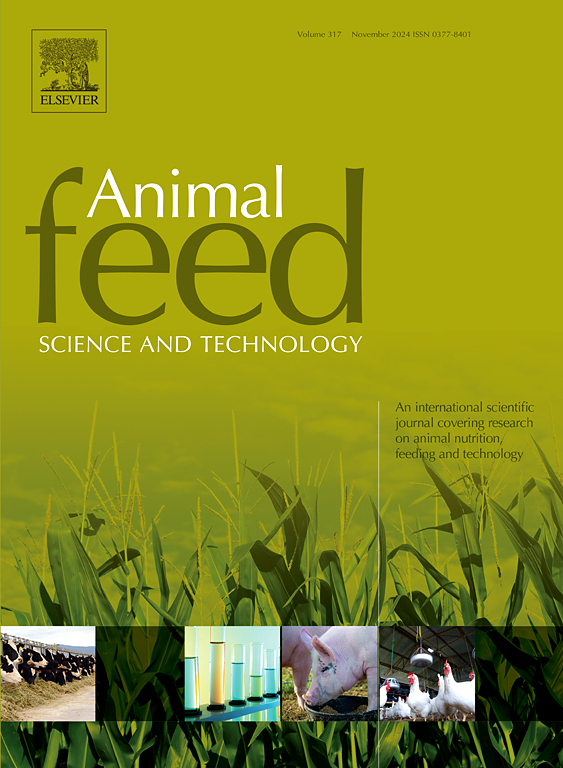
Animal Feed Science and Technology is a unique journal publishing scientific papers of international interest focusing on animal feeds and their feeding.
Papers describing research on feed for ruminants and non-ruminants, including poultry, horses, companion animals and aquatic animals, are welcome.
The journal covers the following areas:
Nutritive value of feeds (e.g., assessment, improvement)
Methods of conserving and processing feeds that affect their nutritional value
Agronomic and climatic factors influencing the nutritive value of feeds
Utilization of feeds and the improvement of such
Metabolic, production, reproduction and health responses, as well as potential environmental impacts, of diet inputs and feed technologies (e.g., feeds, feed additives, feed components, mycotoxins)
Mathematical models relating directly to animal-feed interactions
Analytical and experimental methods for feed evaluation
Environmental impacts of feed technologies in animal production.




 京公网安备 11010802042870号
京ICP备2023020795号-1
京公网安备 11010802042870号
京ICP备2023020795号-1

 分享
分享
 求助内容:
求助内容: 应助结果提醒方式:
 扫码关注我们
