Yasmine Ahmed Sharaf , Mai H. Abd El-Fattah , Amr M. Mahmoud , Heba M. El-Sayed , Said A. Hassan
{"title":"MWCNT和ca掺杂ZnO纳米复合材料修饰的新型碳糊传感器用于新冠肺炎患者Favipiravir治疗监测","authors":"Yasmine Ahmed Sharaf , Mai H. Abd El-Fattah , Amr M. Mahmoud , Heba M. El-Sayed , Said A. Hassan","doi":"10.1016/j.microc.2024.112364","DOIUrl":null,"url":null,"abstract":"<div><div>Favipiravir (FAV) is a prodrug with a proven antiviral efficacy against coronavirus 2. Close therapeutic monitoring of FAV is crucial for COVID-19 patients due to its variable dosing, complex pharmacokinetics, and notable drug interactions. This study presents a novel, selective electrochemical sensor for FAV detection, using a carbon paste electrode (CPE) modified with multi-walled carbon nanotubes (MWCNTs) and calcium-doped ZnO nanoparticles (Ca-ZnO NPs). Characterization of the Ca-ZnO NPs was performed using Fourier-transform infrared spectroscopy (FT-IR), field emission-scanning electron microscope (FE-SEM), and X-ray photoelectron spectroscopy (XPS). Several operational parameters were optimized, including carbon paste composition, buffer selection, pH, and electrochemical waveform settings. Under optimized conditions, an oxidation signal of FAV was identified at approximately + 1.22 V versus an Ag/AgCl reference electrode in Britton-Robinson buffer (BRB) at pH 4.0. Differential pulse voltammetry (DPV) facilitated the detection of FAV across a wide dynamic concentration range of 0.6–100.0 µM, with detection and quantification limits of 0.17 and 0.51 µM, respectively. The developed method demonstrated high selectivity towards FAV, effectively distinguishing it from its acidic degradation product (ADP), qualifying it as a stability-indicating assay. Evaluations using the GAPI, AGREE, and RGB 12 metrics confirmed alignment with green and white analytical chemistry principles. Furthermore, this method was successfully applied to quantify FAV in human plasma, making it suitable for therapeutic drug monitoring (TDM) in COVID-19 patients.</div></div>","PeriodicalId":391,"journal":{"name":"Microchemical Journal","volume":"208 ","pages":"Article 112364"},"PeriodicalIF":4.9000,"publicationDate":"2025-01-01","publicationTypes":"Journal Article","fieldsOfStudy":null,"isOpenAccess":false,"openAccessPdf":"","citationCount":"0","resultStr":"{\"title\":\"Novel carbon paste sensor modified with MWCNT and Ca-doped ZnO nanocomposite for therapeutic monitoring of Favipiravir in COVID-19 patients\",\"authors\":\"Yasmine Ahmed Sharaf , Mai H. Abd El-Fattah , Amr M. Mahmoud , Heba M. El-Sayed , Said A. Hassan\",\"doi\":\"10.1016/j.microc.2024.112364\",\"DOIUrl\":null,\"url\":null,\"abstract\":\"<div><div>Favipiravir (FAV) is a prodrug with a proven antiviral efficacy against coronavirus 2. Close therapeutic monitoring of FAV is crucial for COVID-19 patients due to its variable dosing, complex pharmacokinetics, and notable drug interactions. This study presents a novel, selective electrochemical sensor for FAV detection, using a carbon paste electrode (CPE) modified with multi-walled carbon nanotubes (MWCNTs) and calcium-doped ZnO nanoparticles (Ca-ZnO NPs). Characterization of the Ca-ZnO NPs was performed using Fourier-transform infrared spectroscopy (FT-IR), field emission-scanning electron microscope (FE-SEM), and X-ray photoelectron spectroscopy (XPS). Several operational parameters were optimized, including carbon paste composition, buffer selection, pH, and electrochemical waveform settings. Under optimized conditions, an oxidation signal of FAV was identified at approximately + 1.22 V versus an Ag/AgCl reference electrode in Britton-Robinson buffer (BRB) at pH 4.0. Differential pulse voltammetry (DPV) facilitated the detection of FAV across a wide dynamic concentration range of 0.6–100.0 µM, with detection and quantification limits of 0.17 and 0.51 µM, respectively. The developed method demonstrated high selectivity towards FAV, effectively distinguishing it from its acidic degradation product (ADP), qualifying it as a stability-indicating assay. Evaluations using the GAPI, AGREE, and RGB 12 metrics confirmed alignment with green and white analytical chemistry principles. Furthermore, this method was successfully applied to quantify FAV in human plasma, making it suitable for therapeutic drug monitoring (TDM) in COVID-19 patients.</div></div>\",\"PeriodicalId\":391,\"journal\":{\"name\":\"Microchemical Journal\",\"volume\":\"208 \",\"pages\":\"Article 112364\"},\"PeriodicalIF\":4.9000,\"publicationDate\":\"2025-01-01\",\"publicationTypes\":\"Journal Article\",\"fieldsOfStudy\":null,\"isOpenAccess\":false,\"openAccessPdf\":\"\",\"citationCount\":\"0\",\"resultStr\":null,\"platform\":\"Semanticscholar\",\"paperid\":null,\"PeriodicalName\":\"Microchemical Journal\",\"FirstCategoryId\":\"92\",\"ListUrlMain\":\"https://www.sciencedirect.com/science/article/pii/S0026265X24024779\",\"RegionNum\":2,\"RegionCategory\":\"化学\",\"ArticlePicture\":[],\"TitleCN\":null,\"AbstractTextCN\":null,\"PMCID\":null,\"EPubDate\":\"2024/12/5 0:00:00\",\"PubModel\":\"Epub\",\"JCR\":\"Q1\",\"JCRName\":\"CHEMISTRY, ANALYTICAL\",\"Score\":null,\"Total\":0}","platform":"Semanticscholar","paperid":null,"PeriodicalName":"Microchemical Journal","FirstCategoryId":"92","ListUrlMain":"https://www.sciencedirect.com/science/article/pii/S0026265X24024779","RegionNum":2,"RegionCategory":"化学","ArticlePicture":[],"TitleCN":null,"AbstractTextCN":null,"PMCID":null,"EPubDate":"2024/12/5 0:00:00","PubModel":"Epub","JCR":"Q1","JCRName":"CHEMISTRY, ANALYTICAL","Score":null,"Total":0}
Novel carbon paste sensor modified with MWCNT and Ca-doped ZnO nanocomposite for therapeutic monitoring of Favipiravir in COVID-19 patients
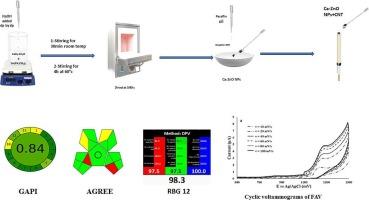
Favipiravir (FAV) is a prodrug with a proven antiviral efficacy against coronavirus 2. Close therapeutic monitoring of FAV is crucial for COVID-19 patients due to its variable dosing, complex pharmacokinetics, and notable drug interactions. This study presents a novel, selective electrochemical sensor for FAV detection, using a carbon paste electrode (CPE) modified with multi-walled carbon nanotubes (MWCNTs) and calcium-doped ZnO nanoparticles (Ca-ZnO NPs). Characterization of the Ca-ZnO NPs was performed using Fourier-transform infrared spectroscopy (FT-IR), field emission-scanning electron microscope (FE-SEM), and X-ray photoelectron spectroscopy (XPS). Several operational parameters were optimized, including carbon paste composition, buffer selection, pH, and electrochemical waveform settings. Under optimized conditions, an oxidation signal of FAV was identified at approximately + 1.22 V versus an Ag/AgCl reference electrode in Britton-Robinson buffer (BRB) at pH 4.0. Differential pulse voltammetry (DPV) facilitated the detection of FAV across a wide dynamic concentration range of 0.6–100.0 µM, with detection and quantification limits of 0.17 and 0.51 µM, respectively. The developed method demonstrated high selectivity towards FAV, effectively distinguishing it from its acidic degradation product (ADP), qualifying it as a stability-indicating assay. Evaluations using the GAPI, AGREE, and RGB 12 metrics confirmed alignment with green and white analytical chemistry principles. Furthermore, this method was successfully applied to quantify FAV in human plasma, making it suitable for therapeutic drug monitoring (TDM) in COVID-19 patients.
期刊介绍:
The Microchemical Journal is a peer reviewed journal devoted to all aspects and phases of analytical chemistry and chemical analysis. The Microchemical Journal publishes articles which are at the forefront of modern analytical chemistry and cover innovations in the techniques to the finest possible limits. This includes fundamental aspects, instrumentation, new developments, innovative and novel methods and applications including environmental and clinical field.
Traditional classical analytical methods such as spectrophotometry and titrimetry as well as established instrumentation methods such as flame and graphite furnace atomic absorption spectrometry, gas chromatography, and modified glassy or carbon electrode electrochemical methods will be considered, provided they show significant improvements and novelty compared to the established methods.




 京公网安备 11010802042870号
京ICP备2023020795号-1
京公网安备 11010802042870号
京ICP备2023020795号-1

 分享
分享
 求助内容:
求助内容: 应助结果提醒方式:
 扫码关注我们
