Shu-qi Niu , Ting Li , Lin Liu , Xiu-wen Bao , Xing-mao Yang , Hao-ran Song , Yang Li , Jing Bai , Li-ying He , Qing-he Wang , Si-jing Liu , Jin-lin Guo
{"title":"减轻川芎镉积累的机理研究。川芎通过根瘤菌节肢杆菌sp. CX-2促进植物生长","authors":"Shu-qi Niu , Ting Li , Lin Liu , Xiu-wen Bao , Xing-mao Yang , Hao-ran Song , Yang Li , Jing Bai , Li-ying He , Qing-he Wang , Si-jing Liu , Jin-lin Guo","doi":"10.1016/j.stress.2025.100748","DOIUrl":null,"url":null,"abstract":"<div><div><em>Ligusticum sinense</em> cv. Chuanxiong is commonly used in traditional Chinese medicine (TCM) to promote blood circulation, dispel wind, and relieve pain. However, the accumulation of cadmium (Cd) in <em>L. Chuanxiong</em> and Cd pollution in its genuine producing areas have resulted in significant concerns about excessive Cd levels in these medicinal materials. In this study, <em>Arthrobacter</em> sp. CX-2, a plant growth-promoting rhizobacteria (PGPR) strain from <em>L. Chuanxiong</em> rhizosphere soil, could promote growth and decrease Cd accumulation of <em>L. Chuanxiong</em> in the field. Inoculation CX-2 significantly increased the dry weight of rhizome (36.98 %), meanwhile decreased the Cd content in leaves (20.50 %) and rhizomes (33.23 %). Specifically, CX-2 could markedly reduce Cd transportation capacity of <em>L. Chuanxiong</em>, such as the translocation factor (TF) <sub>Leaf/root</sub> (30.66 %) and TF <sub>rhizome/root</sub> (41.66 %). Above all, as a TCM, the pharmacological effects of <em>L. Chuanxiong</em> were not affected by the addition of CX-2, which was confirmed through cell experiments. For rhizosphere soil, CX-2 significantly decreased the exchangeable Cd content by 36.84 % and enhanced the availability of nutrients. Metagenome analysis demonstrated that the structure, composition, and function of the rhizosphere microbial community significantly changed in the CX-2 group. There were 24 dominant differential microorganisms in the CK group and 29 in the CX-2 group. Among them, Nitrospirae, Acidobacteria, and Gemmatimonadaceae dominated in the CX-2 group. In addition, regulation of Carbohydrate metabolism, Energy metabolism, and Xenobiotics biodegradation and metabolism pathways by CX-2 in rhizosphere microorganisms might ultimately lead to a change in Cd accumulation of <em>L. Chuanxiong</em>. To our knowledge, this is the first study to explore the application of PGPR from the rhizosphere of <em>L. Chuanxiong</em> in the field environment, promoting its growth and reducing its Cd content. This work provides insights into using PGPR and offers a promising biotechnological approach to solve Cd accumulation in medical plants.</div></div>","PeriodicalId":34736,"journal":{"name":"Plant Stress","volume":"15 ","pages":"Article 100748"},"PeriodicalIF":6.8000,"publicationDate":"2025-03-01","publicationTypes":"Journal Article","fieldsOfStudy":null,"isOpenAccess":false,"openAccessPdf":"","citationCount":"0","resultStr":"{\"title\":\"Mechanistic study on the mitigation of cadmium accumulation in Ligusticum sinense cv. Chuanxiong through plant growth-promoting rhizobacteria Arthrobacter sp. CX-2\",\"authors\":\"Shu-qi Niu , Ting Li , Lin Liu , Xiu-wen Bao , Xing-mao Yang , Hao-ran Song , Yang Li , Jing Bai , Li-ying He , Qing-he Wang , Si-jing Liu , Jin-lin Guo\",\"doi\":\"10.1016/j.stress.2025.100748\",\"DOIUrl\":null,\"url\":null,\"abstract\":\"<div><div><em>Ligusticum sinense</em> cv. Chuanxiong is commonly used in traditional Chinese medicine (TCM) to promote blood circulation, dispel wind, and relieve pain. However, the accumulation of cadmium (Cd) in <em>L. Chuanxiong</em> and Cd pollution in its genuine producing areas have resulted in significant concerns about excessive Cd levels in these medicinal materials. In this study, <em>Arthrobacter</em> sp. CX-2, a plant growth-promoting rhizobacteria (PGPR) strain from <em>L. Chuanxiong</em> rhizosphere soil, could promote growth and decrease Cd accumulation of <em>L. Chuanxiong</em> in the field. Inoculation CX-2 significantly increased the dry weight of rhizome (36.98 %), meanwhile decreased the Cd content in leaves (20.50 %) and rhizomes (33.23 %). Specifically, CX-2 could markedly reduce Cd transportation capacity of <em>L. Chuanxiong</em>, such as the translocation factor (TF) <sub>Leaf/root</sub> (30.66 %) and TF <sub>rhizome/root</sub> (41.66 %). Above all, as a TCM, the pharmacological effects of <em>L. Chuanxiong</em> were not affected by the addition of CX-2, which was confirmed through cell experiments. For rhizosphere soil, CX-2 significantly decreased the exchangeable Cd content by 36.84 % and enhanced the availability of nutrients. Metagenome analysis demonstrated that the structure, composition, and function of the rhizosphere microbial community significantly changed in the CX-2 group. There were 24 dominant differential microorganisms in the CK group and 29 in the CX-2 group. Among them, Nitrospirae, Acidobacteria, and Gemmatimonadaceae dominated in the CX-2 group. In addition, regulation of Carbohydrate metabolism, Energy metabolism, and Xenobiotics biodegradation and metabolism pathways by CX-2 in rhizosphere microorganisms might ultimately lead to a change in Cd accumulation of <em>L. Chuanxiong</em>. To our knowledge, this is the first study to explore the application of PGPR from the rhizosphere of <em>L. Chuanxiong</em> in the field environment, promoting its growth and reducing its Cd content. This work provides insights into using PGPR and offers a promising biotechnological approach to solve Cd accumulation in medical plants.</div></div>\",\"PeriodicalId\":34736,\"journal\":{\"name\":\"Plant Stress\",\"volume\":\"15 \",\"pages\":\"Article 100748\"},\"PeriodicalIF\":6.8000,\"publicationDate\":\"2025-03-01\",\"publicationTypes\":\"Journal Article\",\"fieldsOfStudy\":null,\"isOpenAccess\":false,\"openAccessPdf\":\"\",\"citationCount\":\"0\",\"resultStr\":null,\"platform\":\"Semanticscholar\",\"paperid\":null,\"PeriodicalName\":\"Plant Stress\",\"FirstCategoryId\":\"1085\",\"ListUrlMain\":\"https://www.sciencedirect.com/science/article/pii/S2667064X25000132\",\"RegionNum\":0,\"RegionCategory\":null,\"ArticlePicture\":[],\"TitleCN\":null,\"AbstractTextCN\":null,\"PMCID\":null,\"EPubDate\":\"2025/1/21 0:00:00\",\"PubModel\":\"Epub\",\"JCR\":\"Q1\",\"JCRName\":\"PLANT SCIENCES\",\"Score\":null,\"Total\":0}","platform":"Semanticscholar","paperid":null,"PeriodicalName":"Plant Stress","FirstCategoryId":"1085","ListUrlMain":"https://www.sciencedirect.com/science/article/pii/S2667064X25000132","RegionNum":0,"RegionCategory":null,"ArticlePicture":[],"TitleCN":null,"AbstractTextCN":null,"PMCID":null,"EPubDate":"2025/1/21 0:00:00","PubModel":"Epub","JCR":"Q1","JCRName":"PLANT SCIENCES","Score":null,"Total":0}
Mechanistic study on the mitigation of cadmium accumulation in Ligusticum sinense cv. Chuanxiong through plant growth-promoting rhizobacteria Arthrobacter sp. CX-2
Ligusticum sinense cv. Chuanxiong is commonly used in traditional Chinese medicine (TCM) to promote blood circulation, dispel wind, and relieve pain. However, the accumulation of cadmium (Cd) in L. Chuanxiong and Cd pollution in its genuine producing areas have resulted in significant concerns about excessive Cd levels in these medicinal materials. In this study, Arthrobacter sp. CX-2, a plant growth-promoting rhizobacteria (PGPR) strain from L. Chuanxiong rhizosphere soil, could promote growth and decrease Cd accumulation of L. Chuanxiong in the field. Inoculation CX-2 significantly increased the dry weight of rhizome (36.98 %), meanwhile decreased the Cd content in leaves (20.50 %) and rhizomes (33.23 %). Specifically, CX-2 could markedly reduce Cd transportation capacity of L. Chuanxiong, such as the translocation factor (TF) Leaf/root (30.66 %) and TF rhizome/root (41.66 %). Above all, as a TCM, the pharmacological effects of L. Chuanxiong were not affected by the addition of CX-2, which was confirmed through cell experiments. For rhizosphere soil, CX-2 significantly decreased the exchangeable Cd content by 36.84 % and enhanced the availability of nutrients. Metagenome analysis demonstrated that the structure, composition, and function of the rhizosphere microbial community significantly changed in the CX-2 group. There were 24 dominant differential microorganisms in the CK group and 29 in the CX-2 group. Among them, Nitrospirae, Acidobacteria, and Gemmatimonadaceae dominated in the CX-2 group. In addition, regulation of Carbohydrate metabolism, Energy metabolism, and Xenobiotics biodegradation and metabolism pathways by CX-2 in rhizosphere microorganisms might ultimately lead to a change in Cd accumulation of L. Chuanxiong. To our knowledge, this is the first study to explore the application of PGPR from the rhizosphere of L. Chuanxiong in the field environment, promoting its growth and reducing its Cd content. This work provides insights into using PGPR and offers a promising biotechnological approach to solve Cd accumulation in medical plants.
期刊介绍:
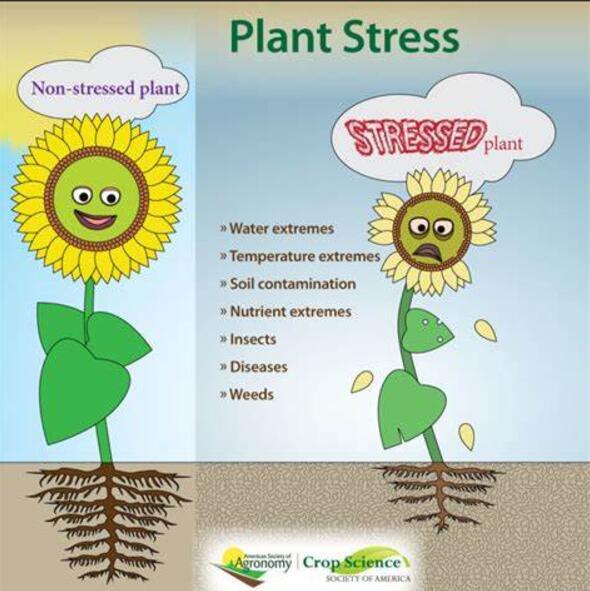
The journal Plant Stress deals with plant (or other photoautotrophs, such as algae, cyanobacteria and lichens) responses to abiotic and biotic stress factors that can result in limited growth and productivity. Such responses can be analyzed and described at a physiological, biochemical and molecular level. Experimental approaches/technologies aiming to improve growth and productivity with a potential for downstream validation under stress conditions will also be considered. Both fundamental and applied research manuscripts are welcome, provided that clear mechanistic hypotheses are made and descriptive approaches are avoided. In addition, high-quality review articles will also be considered, provided they follow a critical approach and stimulate thought for future research avenues.
Plant Stress welcomes high-quality manuscripts related (but not limited) to interactions between plants and:
Lack of water (drought) and excess (flooding),
Salinity stress,
Elevated temperature and/or low temperature (chilling and freezing),
Hypoxia and/or anoxia,
Mineral nutrient excess and/or deficiency,
Heavy metals and/or metalloids,
Plant priming (chemical, biological, physiological, nanomaterial, biostimulant) approaches for improved stress protection,
Viral, phytoplasma, bacterial and fungal plant-pathogen interactions.
The journal welcomes basic and applied research articles, as well as review articles and short communications. All submitted manuscripts will be subject to a thorough peer-reviewing process.




 京公网安备 11010802042870号
京ICP备2023020795号-1
京公网安备 11010802042870号
京ICP备2023020795号-1

 分享
分享
 求助内容:
求助内容: 应助结果提醒方式:
 扫码关注我们
