R. Raman , D. Balasubramanian , K. Mohanraj , N. Jhansi
{"title":"ag掺杂α-Zn2V2O7纳米粒子对亚甲基蓝染料的光催化降解效率及其潜在抗菌活性分析","authors":"R. Raman , D. Balasubramanian , K. Mohanraj , N. Jhansi","doi":"10.1016/j.inoche.2024.113759","DOIUrl":null,"url":null,"abstract":"<div><div>Ag (2 wt%, 4 wt%, and 6 wt%) doped α-Zn<sub>2</sub>V<sub>2</sub>O<sub>7</sub> were synthesized through the hydrothermal method. The impact of different doping percentages on their photocatalytic properties and antibacterial activities was investigated, the sample doped at 6 wt% of Ag exhibited the most superior photocatalytic and antibacterial activities. X-ray diffraction analysis of the doped nanoparticles at different percentages confirmed the monoclinic structure of the synthesized Ag doped α-Zn<sub>2</sub>V<sub>2</sub>O<sub>7</sub> nanoparticles. The average crystallite size, calculated using Scherrer’s formula, was observed to increase with the rise in doping percentage. The morphological properties of the nanoparticles were analyzed through SEM analysis. EDAX spectra confirmed the presence of Ag, Zn, V, and O in the prepared nanoparticles. XPS survey of the prepared sample revealed the presence of Ag, Zn, O, and V without any impurities, except for a small amount of absorbed carbon, and the spectra also confirmed that the sample consisted of a phase of Ag-doped Zn<sub>2</sub>V<sub>2</sub>O<sub>7</sub>. The reduction of band gap values with the increase in doping percentage was identified through UV–visible spectrophotometer investigation. The broad peak of PL emission spectra in the green wavelength region suggested the creation of deep energy levels inside the band gap of the nanoparticles. The photocatalytic activity of the synthesized sample in the degradation of methylene blue dye under sunlight was studied using a UV–visible spectrometer. The efficiency of degradation improved with an increase in doping concentration, achieving peak efficiency in the sample doped at 6 wt%. Values rose from 90.34 for 2 wt% Ag to 99.77 for 6 wt% Ag. The antimicrobial activity of the synthesized chemical compounds was tested with strains Gram-negative against the bacterial strain of Escherichia coli, resulting in the formation of zones of inhibition. The inhibition zones for bacteria associated with Ag-doped α-Zn<sub>2</sub>V<sub>2</sub>O<sub>7</sub> increased from 5 mm at 2 wt% Ag to 23 mm at 6 wt% Ag. The 6 wt% nanoparticles displayed efficient antimicrobial properties compared to others, attributed to their exceptionally large surface area, which allows for better contact with the cell walls of microorganisms.</div></div>","PeriodicalId":13609,"journal":{"name":"Inorganic Chemistry Communications","volume":"172 ","pages":"Article 113759"},"PeriodicalIF":5.9000,"publicationDate":"2025-02-01","publicationTypes":"Journal Article","fieldsOfStudy":null,"isOpenAccess":false,"openAccessPdf":"","citationCount":"0","resultStr":"{\"title\":\"Analyzation of photocatalytic degradation efficiency of an Ag-doped α-Zn2V2O7 nanoparticle on methylene blue dye in sunlight exposure and its potential antimicrobial activities\",\"authors\":\"R. Raman , D. Balasubramanian , K. Mohanraj , N. Jhansi\",\"doi\":\"10.1016/j.inoche.2024.113759\",\"DOIUrl\":null,\"url\":null,\"abstract\":\"<div><div>Ag (2 wt%, 4 wt%, and 6 wt%) doped α-Zn<sub>2</sub>V<sub>2</sub>O<sub>7</sub> were synthesized through the hydrothermal method. The impact of different doping percentages on their photocatalytic properties and antibacterial activities was investigated, the sample doped at 6 wt% of Ag exhibited the most superior photocatalytic and antibacterial activities. X-ray diffraction analysis of the doped nanoparticles at different percentages confirmed the monoclinic structure of the synthesized Ag doped α-Zn<sub>2</sub>V<sub>2</sub>O<sub>7</sub> nanoparticles. The average crystallite size, calculated using Scherrer’s formula, was observed to increase with the rise in doping percentage. The morphological properties of the nanoparticles were analyzed through SEM analysis. EDAX spectra confirmed the presence of Ag, Zn, V, and O in the prepared nanoparticles. XPS survey of the prepared sample revealed the presence of Ag, Zn, O, and V without any impurities, except for a small amount of absorbed carbon, and the spectra also confirmed that the sample consisted of a phase of Ag-doped Zn<sub>2</sub>V<sub>2</sub>O<sub>7</sub>. The reduction of band gap values with the increase in doping percentage was identified through UV–visible spectrophotometer investigation. The broad peak of PL emission spectra in the green wavelength region suggested the creation of deep energy levels inside the band gap of the nanoparticles. The photocatalytic activity of the synthesized sample in the degradation of methylene blue dye under sunlight was studied using a UV–visible spectrometer. The efficiency of degradation improved with an increase in doping concentration, achieving peak efficiency in the sample doped at 6 wt%. Values rose from 90.34 for 2 wt% Ag to 99.77 for 6 wt% Ag. The antimicrobial activity of the synthesized chemical compounds was tested with strains Gram-negative against the bacterial strain of Escherichia coli, resulting in the formation of zones of inhibition. The inhibition zones for bacteria associated with Ag-doped α-Zn<sub>2</sub>V<sub>2</sub>O<sub>7</sub> increased from 5 mm at 2 wt% Ag to 23 mm at 6 wt% Ag. The 6 wt% nanoparticles displayed efficient antimicrobial properties compared to others, attributed to their exceptionally large surface area, which allows for better contact with the cell walls of microorganisms.</div></div>\",\"PeriodicalId\":13609,\"journal\":{\"name\":\"Inorganic Chemistry Communications\",\"volume\":\"172 \",\"pages\":\"Article 113759\"},\"PeriodicalIF\":5.9000,\"publicationDate\":\"2025-02-01\",\"publicationTypes\":\"Journal Article\",\"fieldsOfStudy\":null,\"isOpenAccess\":false,\"openAccessPdf\":\"\",\"citationCount\":\"0\",\"resultStr\":null,\"platform\":\"Semanticscholar\",\"paperid\":null,\"PeriodicalName\":\"Inorganic Chemistry Communications\",\"FirstCategoryId\":\"92\",\"ListUrlMain\":\"https://www.sciencedirect.com/science/article/pii/S1387700324017490\",\"RegionNum\":3,\"RegionCategory\":\"化学\",\"ArticlePicture\":[],\"TitleCN\":null,\"AbstractTextCN\":null,\"PMCID\":null,\"EPubDate\":\"2024/12/17 0:00:00\",\"PubModel\":\"Epub\",\"JCR\":\"Q1\",\"JCRName\":\"CHEMISTRY, INORGANIC & NUCLEAR\",\"Score\":null,\"Total\":0}","platform":"Semanticscholar","paperid":null,"PeriodicalName":"Inorganic Chemistry Communications","FirstCategoryId":"92","ListUrlMain":"https://www.sciencedirect.com/science/article/pii/S1387700324017490","RegionNum":3,"RegionCategory":"化学","ArticlePicture":[],"TitleCN":null,"AbstractTextCN":null,"PMCID":null,"EPubDate":"2024/12/17 0:00:00","PubModel":"Epub","JCR":"Q1","JCRName":"CHEMISTRY, INORGANIC & NUCLEAR","Score":null,"Total":0}
Analyzation of photocatalytic degradation efficiency of an Ag-doped α-Zn2V2O7 nanoparticle on methylene blue dye in sunlight exposure and its potential antimicrobial activities
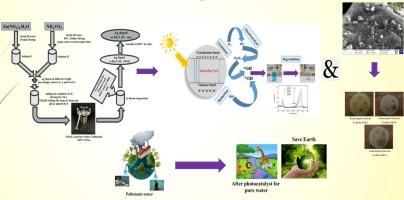
Ag (2 wt%, 4 wt%, and 6 wt%) doped α-Zn2V2O7 were synthesized through the hydrothermal method. The impact of different doping percentages on their photocatalytic properties and antibacterial activities was investigated, the sample doped at 6 wt% of Ag exhibited the most superior photocatalytic and antibacterial activities. X-ray diffraction analysis of the doped nanoparticles at different percentages confirmed the monoclinic structure of the synthesized Ag doped α-Zn2V2O7 nanoparticles. The average crystallite size, calculated using Scherrer’s formula, was observed to increase with the rise in doping percentage. The morphological properties of the nanoparticles were analyzed through SEM analysis. EDAX spectra confirmed the presence of Ag, Zn, V, and O in the prepared nanoparticles. XPS survey of the prepared sample revealed the presence of Ag, Zn, O, and V without any impurities, except for a small amount of absorbed carbon, and the spectra also confirmed that the sample consisted of a phase of Ag-doped Zn2V2O7. The reduction of band gap values with the increase in doping percentage was identified through UV–visible spectrophotometer investigation. The broad peak of PL emission spectra in the green wavelength region suggested the creation of deep energy levels inside the band gap of the nanoparticles. The photocatalytic activity of the synthesized sample in the degradation of methylene blue dye under sunlight was studied using a UV–visible spectrometer. The efficiency of degradation improved with an increase in doping concentration, achieving peak efficiency in the sample doped at 6 wt%. Values rose from 90.34 for 2 wt% Ag to 99.77 for 6 wt% Ag. The antimicrobial activity of the synthesized chemical compounds was tested with strains Gram-negative against the bacterial strain of Escherichia coli, resulting in the formation of zones of inhibition. The inhibition zones for bacteria associated with Ag-doped α-Zn2V2O7 increased from 5 mm at 2 wt% Ag to 23 mm at 6 wt% Ag. The 6 wt% nanoparticles displayed efficient antimicrobial properties compared to others, attributed to their exceptionally large surface area, which allows for better contact with the cell walls of microorganisms.
期刊介绍:
Launched in January 1998, Inorganic Chemistry Communications is an international journal dedicated to the rapid publication of short communications in the major areas of inorganic, organometallic and supramolecular chemistry. Topics include synthetic and reaction chemistry, kinetics and mechanisms of reactions, bioinorganic chemistry, photochemistry and the use of metal and organometallic compounds in stoichiometric and catalytic synthesis or organic compounds.




 京公网安备 11010802042870号
京ICP备2023020795号-1
京公网安备 11010802042870号
京ICP备2023020795号-1

 分享
分享
 求助内容:
求助内容: 应助结果提醒方式:
 扫码关注我们
