Thi Quynh Ngoc Nguyen, Thanh Nhan Pham, Thi Thu Tra Tran, Nu Minh Nguyet Ton, Dang Khoa Cao, Van Viet Man Le
{"title":"用腰果果皮粉制成的抗氧化和富含膳食纤维的饼干","authors":"Thi Quynh Ngoc Nguyen, Thanh Nhan Pham, Thi Thu Tra Tran, Nu Minh Nguyet Ton, Dang Khoa Cao, Van Viet Man Le","doi":"10.1007/s11694-024-03033-4","DOIUrl":null,"url":null,"abstract":"<div><p>The consumption of dietary fiber is recommended to modulate the gut microbiota and promote overall human health. Meanwhile, the inclusion of antioxidants into foods is considered an effective way to reduce their oxidation, such as lipid and protein oxidation, and to bring many health benefits. Utilizing the food byproducts to produce antioxidant- and dietary fiber-enriched products is an attractive approach to reduce food waste and enhance dietary fiber and antioxidant intake. In this study, the cashew nut skin (CNS), a by-product of cashew nut production, was incorporated into a cracker formula at different levels to produce antioxidant- and dietary fiber-enriched crackers. Compared to the control cracker, which did not contain CNS, the cracker incorporated with 10% CNS powder showed an increase of approximately 3.5 times and 11 times in dietary fiber and total phenolic content, respectively. Notably, the total tannin and flavonoid content of the incorporated cracker at 10% was 7.21 mg GAE/ g dw and 6.24 mg QE/ g dw, respectively, while they are undetectable in the control cracker. However, the addition of CNS resulted in reductions in the dimensions, hardness and overall acceptability of the cracker. Specifically, compared to the control cracker, the diameter and thickness of the cracker incorporated with 10% CNS powder were 3 and 7% lower, respectively while the hardness dropped by 47%. The addition of 2.5% CNS did not significantly change the overall acceptability of the product but the addition of 5 to 10% CNS led to a significant decline in acceptability. Transglutaminase treatment of the blended dough at enzyme dose of 1.0 U/g protein and incubation time within 12–24 min was successfully applied to restore the detrimental effects of CNS incorporation on the textural properties and the overall acceptability of the cracker products.</p></div>","PeriodicalId":631,"journal":{"name":"Journal of Food Measurement and Characterization","volume":"19 2","pages":"1186 - 1201"},"PeriodicalIF":3.6000,"publicationDate":"2024-12-18","publicationTypes":"Journal Article","fieldsOfStudy":null,"isOpenAccess":false,"openAccessPdf":"","citationCount":"0","resultStr":"{\"title\":\"Antioxidant- and dietary fiber-enriched crackers using cashew nut skin powder\",\"authors\":\"Thi Quynh Ngoc Nguyen, Thanh Nhan Pham, Thi Thu Tra Tran, Nu Minh Nguyet Ton, Dang Khoa Cao, Van Viet Man Le\",\"doi\":\"10.1007/s11694-024-03033-4\",\"DOIUrl\":null,\"url\":null,\"abstract\":\"<div><p>The consumption of dietary fiber is recommended to modulate the gut microbiota and promote overall human health. Meanwhile, the inclusion of antioxidants into foods is considered an effective way to reduce their oxidation, such as lipid and protein oxidation, and to bring many health benefits. Utilizing the food byproducts to produce antioxidant- and dietary fiber-enriched products is an attractive approach to reduce food waste and enhance dietary fiber and antioxidant intake. In this study, the cashew nut skin (CNS), a by-product of cashew nut production, was incorporated into a cracker formula at different levels to produce antioxidant- and dietary fiber-enriched crackers. Compared to the control cracker, which did not contain CNS, the cracker incorporated with 10% CNS powder showed an increase of approximately 3.5 times and 11 times in dietary fiber and total phenolic content, respectively. Notably, the total tannin and flavonoid content of the incorporated cracker at 10% was 7.21 mg GAE/ g dw and 6.24 mg QE/ g dw, respectively, while they are undetectable in the control cracker. However, the addition of CNS resulted in reductions in the dimensions, hardness and overall acceptability of the cracker. Specifically, compared to the control cracker, the diameter and thickness of the cracker incorporated with 10% CNS powder were 3 and 7% lower, respectively while the hardness dropped by 47%. The addition of 2.5% CNS did not significantly change the overall acceptability of the product but the addition of 5 to 10% CNS led to a significant decline in acceptability. Transglutaminase treatment of the blended dough at enzyme dose of 1.0 U/g protein and incubation time within 12–24 min was successfully applied to restore the detrimental effects of CNS incorporation on the textural properties and the overall acceptability of the cracker products.</p></div>\",\"PeriodicalId\":631,\"journal\":{\"name\":\"Journal of Food Measurement and Characterization\",\"volume\":\"19 2\",\"pages\":\"1186 - 1201\"},\"PeriodicalIF\":3.6000,\"publicationDate\":\"2024-12-18\",\"publicationTypes\":\"Journal Article\",\"fieldsOfStudy\":null,\"isOpenAccess\":false,\"openAccessPdf\":\"\",\"citationCount\":\"0\",\"resultStr\":null,\"platform\":\"Semanticscholar\",\"paperid\":null,\"PeriodicalName\":\"Journal of Food Measurement and Characterization\",\"FirstCategoryId\":\"97\",\"ListUrlMain\":\"https://link.springer.com/article/10.1007/s11694-024-03033-4\",\"RegionNum\":3,\"RegionCategory\":\"农林科学\",\"ArticlePicture\":[],\"TitleCN\":null,\"AbstractTextCN\":null,\"PMCID\":null,\"EPubDate\":\"\",\"PubModel\":\"\",\"JCR\":\"Q2\",\"JCRName\":\"FOOD SCIENCE & TECHNOLOGY\",\"Score\":null,\"Total\":0}","platform":"Semanticscholar","paperid":null,"PeriodicalName":"Journal of Food Measurement and Characterization","FirstCategoryId":"97","ListUrlMain":"https://link.springer.com/article/10.1007/s11694-024-03033-4","RegionNum":3,"RegionCategory":"农林科学","ArticlePicture":[],"TitleCN":null,"AbstractTextCN":null,"PMCID":null,"EPubDate":"","PubModel":"","JCR":"Q2","JCRName":"FOOD SCIENCE & TECHNOLOGY","Score":null,"Total":0}
引用次数: 0
摘要
食用膳食纤维可以调节肠道菌群,促进人体整体健康。同时,在食物中加入抗氧化剂被认为是减少其氧化的有效方法,如脂质和蛋白质氧化,并带来许多健康益处。利用食物副产品生产富含抗氧化剂和膳食纤维的产品是减少食物浪费和增加膳食纤维和抗氧化剂摄入的一种有吸引力的方法。本研究将腰果生产的副产品腰果皮(CNS)添加到不同水平的饼干配方中,生产出富含抗氧化和膳食纤维的饼干。与未添加CNS粉的对照组相比,添加10% CNS粉的饼干的膳食纤维和总酚含量分别提高了约3.5倍和11倍。值得注意的是,添加10%的裂化剂的总单宁和总黄酮含量分别为7.21 mg GAE/ g dw和6.24 mg QE/ g dw,而在对照裂化剂中未检测到。然而,CNS的加入导致了裂纹尺寸、硬度和整体可接受性的降低。其中,添加10% CNS粉的破片直径和厚度分别比对照降低了3%和7%,硬度下降了47%。添加2.5%的CNS不会显著改变产品的总体可接受性,但添加5%至10%的CNS会导致可接受性显著下降。采用转谷氨酰胺酶处理,酶量为1.0 U/g蛋白质,培养时间为12-24 min,成功地恢复了CNS掺入对饼干产品结构特性和整体可接受性的不利影响。
Antioxidant- and dietary fiber-enriched crackers using cashew nut skin powder
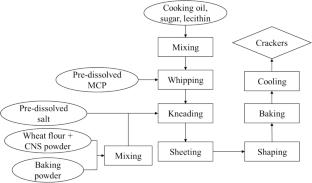
The consumption of dietary fiber is recommended to modulate the gut microbiota and promote overall human health. Meanwhile, the inclusion of antioxidants into foods is considered an effective way to reduce their oxidation, such as lipid and protein oxidation, and to bring many health benefits. Utilizing the food byproducts to produce antioxidant- and dietary fiber-enriched products is an attractive approach to reduce food waste and enhance dietary fiber and antioxidant intake. In this study, the cashew nut skin (CNS), a by-product of cashew nut production, was incorporated into a cracker formula at different levels to produce antioxidant- and dietary fiber-enriched crackers. Compared to the control cracker, which did not contain CNS, the cracker incorporated with 10% CNS powder showed an increase of approximately 3.5 times and 11 times in dietary fiber and total phenolic content, respectively. Notably, the total tannin and flavonoid content of the incorporated cracker at 10% was 7.21 mg GAE/ g dw and 6.24 mg QE/ g dw, respectively, while they are undetectable in the control cracker. However, the addition of CNS resulted in reductions in the dimensions, hardness and overall acceptability of the cracker. Specifically, compared to the control cracker, the diameter and thickness of the cracker incorporated with 10% CNS powder were 3 and 7% lower, respectively while the hardness dropped by 47%. The addition of 2.5% CNS did not significantly change the overall acceptability of the product but the addition of 5 to 10% CNS led to a significant decline in acceptability. Transglutaminase treatment of the blended dough at enzyme dose of 1.0 U/g protein and incubation time within 12–24 min was successfully applied to restore the detrimental effects of CNS incorporation on the textural properties and the overall acceptability of the cracker products.
期刊介绍:
This interdisciplinary journal publishes new measurement results, characteristic properties, differentiating patterns, measurement methods and procedures for such purposes as food process innovation, product development, quality control, and safety assurance.
The journal encompasses all topics related to food property measurement and characterization, including all types of measured properties of food and food materials, features and patterns, measurement principles and techniques, development and evaluation of technologies, novel uses and applications, and industrial implementation of systems and procedures.




 京公网安备 11010802042870号
京ICP备2023020795号-1
京公网安备 11010802042870号
京ICP备2023020795号-1

 分享
分享
 求助内容:
求助内容: 应助结果提醒方式:
 扫码关注我们
