Tehmeena Ahad, Darakshan Majid, Saadiya Naqash, Hilal Ahmad Makroo, Syed Junaid Rashid, B. N. Dar
{"title":"探索冻干葡萄渣提取物中的生物活性化合物:传统和创新提取方法的比较分析","authors":"Tehmeena Ahad, Darakshan Majid, Saadiya Naqash, Hilal Ahmad Makroo, Syed Junaid Rashid, B. N. Dar","doi":"10.1007/s11694-024-03044-1","DOIUrl":null,"url":null,"abstract":"<div><p>This research investigates the efficacy of different solvent-based extraction methods in deriving polyphenols from grape pomace. The study evaluates three distinct extraction techniques: Conventional Extraction (CE), Microwave-Assisted Extraction (MAE), and Ultrasound-Assisted Extraction (UAE), using solvents such as ethanol, methanol, and acetone. The study focuses on evaluating the extraction yield, total phenolic content, total flavonoid content and the antioxidant capacity of the extracts. The results demonstrate that MAE, using ethanol as the solvent, achieved the highest extraction efficiency of 34.53%, followed by UAE and CE at 31.37 and 16.86% respectively. In terms of antioxidant capabilities, ethanol extracts obtained via UAE exhibited superior DPPH Radical Scavenging activity (79.84%) in comparison to MAE ethanol extracts (77.18%), and CE ethanol extract (46.74%). The ethanol extract from UAE contained the most significant concentrations of phenolics (290.47 mg GAE/g) and flavonoids (36.95 mg RE/g), along with the highest ABTS scavenging activity (81.24%) as revealed by High-Performance Liquid Chromatography (HPLC). Additionally, the physical examination of the extracts through scanning electron microscopy showed the agglomerated micro-particles with a diameter of 50–100 μm and an average particle size of 753 nm. These findings underscore the potential of grape pomace as an efficient source of antioxidants, particularly when employing UAE with ethanol, for applications in the food industry.</p></div>","PeriodicalId":631,"journal":{"name":"Journal of Food Measurement and Characterization","volume":"19 2","pages":"1325 - 1336"},"PeriodicalIF":3.6000,"publicationDate":"2024-12-18","publicationTypes":"Journal Article","fieldsOfStudy":null,"isOpenAccess":false,"openAccessPdf":"","citationCount":"0","resultStr":"{\"title\":\"Exploring bioactive compounds in lyophilized grape pomace extracts: comparative analysis of traditional and innovative extraction methods\",\"authors\":\"Tehmeena Ahad, Darakshan Majid, Saadiya Naqash, Hilal Ahmad Makroo, Syed Junaid Rashid, B. N. Dar\",\"doi\":\"10.1007/s11694-024-03044-1\",\"DOIUrl\":null,\"url\":null,\"abstract\":\"<div><p>This research investigates the efficacy of different solvent-based extraction methods in deriving polyphenols from grape pomace. The study evaluates three distinct extraction techniques: Conventional Extraction (CE), Microwave-Assisted Extraction (MAE), and Ultrasound-Assisted Extraction (UAE), using solvents such as ethanol, methanol, and acetone. The study focuses on evaluating the extraction yield, total phenolic content, total flavonoid content and the antioxidant capacity of the extracts. The results demonstrate that MAE, using ethanol as the solvent, achieved the highest extraction efficiency of 34.53%, followed by UAE and CE at 31.37 and 16.86% respectively. In terms of antioxidant capabilities, ethanol extracts obtained via UAE exhibited superior DPPH Radical Scavenging activity (79.84%) in comparison to MAE ethanol extracts (77.18%), and CE ethanol extract (46.74%). The ethanol extract from UAE contained the most significant concentrations of phenolics (290.47 mg GAE/g) and flavonoids (36.95 mg RE/g), along with the highest ABTS scavenging activity (81.24%) as revealed by High-Performance Liquid Chromatography (HPLC). Additionally, the physical examination of the extracts through scanning electron microscopy showed the agglomerated micro-particles with a diameter of 50–100 μm and an average particle size of 753 nm. These findings underscore the potential of grape pomace as an efficient source of antioxidants, particularly when employing UAE with ethanol, for applications in the food industry.</p></div>\",\"PeriodicalId\":631,\"journal\":{\"name\":\"Journal of Food Measurement and Characterization\",\"volume\":\"19 2\",\"pages\":\"1325 - 1336\"},\"PeriodicalIF\":3.6000,\"publicationDate\":\"2024-12-18\",\"publicationTypes\":\"Journal Article\",\"fieldsOfStudy\":null,\"isOpenAccess\":false,\"openAccessPdf\":\"\",\"citationCount\":\"0\",\"resultStr\":null,\"platform\":\"Semanticscholar\",\"paperid\":null,\"PeriodicalName\":\"Journal of Food Measurement and Characterization\",\"FirstCategoryId\":\"97\",\"ListUrlMain\":\"https://link.springer.com/article/10.1007/s11694-024-03044-1\",\"RegionNum\":3,\"RegionCategory\":\"农林科学\",\"ArticlePicture\":[],\"TitleCN\":null,\"AbstractTextCN\":null,\"PMCID\":null,\"EPubDate\":\"\",\"PubModel\":\"\",\"JCR\":\"Q2\",\"JCRName\":\"FOOD SCIENCE & TECHNOLOGY\",\"Score\":null,\"Total\":0}","platform":"Semanticscholar","paperid":null,"PeriodicalName":"Journal of Food Measurement and Characterization","FirstCategoryId":"97","ListUrlMain":"https://link.springer.com/article/10.1007/s11694-024-03044-1","RegionNum":3,"RegionCategory":"农林科学","ArticlePicture":[],"TitleCN":null,"AbstractTextCN":null,"PMCID":null,"EPubDate":"","PubModel":"","JCR":"Q2","JCRName":"FOOD SCIENCE & TECHNOLOGY","Score":null,"Total":0}
Exploring bioactive compounds in lyophilized grape pomace extracts: comparative analysis of traditional and innovative extraction methods
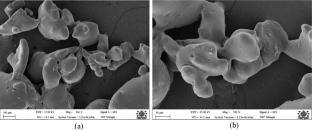
This research investigates the efficacy of different solvent-based extraction methods in deriving polyphenols from grape pomace. The study evaluates three distinct extraction techniques: Conventional Extraction (CE), Microwave-Assisted Extraction (MAE), and Ultrasound-Assisted Extraction (UAE), using solvents such as ethanol, methanol, and acetone. The study focuses on evaluating the extraction yield, total phenolic content, total flavonoid content and the antioxidant capacity of the extracts. The results demonstrate that MAE, using ethanol as the solvent, achieved the highest extraction efficiency of 34.53%, followed by UAE and CE at 31.37 and 16.86% respectively. In terms of antioxidant capabilities, ethanol extracts obtained via UAE exhibited superior DPPH Radical Scavenging activity (79.84%) in comparison to MAE ethanol extracts (77.18%), and CE ethanol extract (46.74%). The ethanol extract from UAE contained the most significant concentrations of phenolics (290.47 mg GAE/g) and flavonoids (36.95 mg RE/g), along with the highest ABTS scavenging activity (81.24%) as revealed by High-Performance Liquid Chromatography (HPLC). Additionally, the physical examination of the extracts through scanning electron microscopy showed the agglomerated micro-particles with a diameter of 50–100 μm and an average particle size of 753 nm. These findings underscore the potential of grape pomace as an efficient source of antioxidants, particularly when employing UAE with ethanol, for applications in the food industry.
期刊介绍:
This interdisciplinary journal publishes new measurement results, characteristic properties, differentiating patterns, measurement methods and procedures for such purposes as food process innovation, product development, quality control, and safety assurance.
The journal encompasses all topics related to food property measurement and characterization, including all types of measured properties of food and food materials, features and patterns, measurement principles and techniques, development and evaluation of technologies, novel uses and applications, and industrial implementation of systems and procedures.




 京公网安备 11010802042870号
京ICP备2023020795号-1
京公网安备 11010802042870号
京ICP备2023020795号-1

 分享
分享
 求助内容:
求助内容: 应助结果提醒方式:
 扫码关注我们
