Shrish G. Wagh, Kiranbala Dahiya, Sudhirkumar S. Katariya, Hemant P. Soni
{"title":"原油用马来酸酐聚合物降凝剂:选择合适的添加剂以节约能源","authors":"Shrish G. Wagh, Kiranbala Dahiya, Sudhirkumar S. Katariya, Hemant P. Soni","doi":"10.1002/slct.202404604","DOIUrl":null,"url":null,"abstract":"<p>Modifying the wax crystal habit is useful for transporting and processing crude oil at low temperatures. Various polymeric pour point depressant (PPD) additives can aid in this maneuver differently. Various morphologies of polymeric additives (like comb, brush, centipede, etc.,) have been shown to lower the pour point of crude oil by providing several nucleation sites for wax precipitation. Out of the large array of materials available, it is challenging to forecast which one will act as a wax-crystal modifier on the crude oil under consideration. We propose, in this study, a detailed classification of wax-crystal modifier additives based on criteria such as linear or branched copolymers, the presence of crystalline or amorphous segments, aromatic units and their positions (such as in the backbone or branch), the ability to self-assemble or aggregate, etc. Accordingly, we synthesized additives from the maleic anhydride class having three different morphologies namely brush, combs, and centipedes, through free radical polymerization (FRP). The detailed characterization of these additives was carried out using structure-sensitive techniques, such as <sup>1</sup>H nuclear magnetic resonance, Fourier transform infrared spectroscopy, thermogravimetric analysis, and gel permeation chromatography. To evaluate the real-time performance of the as-synthesized additives, we selected crude oils from the South Kadi (SK), Limbodara (LM), and Nada (ND) oil fields of the Cambay basin, Gujarat, India having different levels of wax and asphaltenes. The rheological parameters of crude (with and without additive) were investigated using an Advance Rheometer AR-500. Depending on the additive capability to self-aggregate and the composition of the crude oil, the additive AMI-3 is the most effective for ND, EST-2 for LM, and A-18S for SK crude oils. Their 1000 ppm dose can reduce the pour point of these crudes up to 18 °C and improve their rheological parameters accordingly. Finally, we propose the mechanisms of pour point depression by these as-synthesized additives and carry out the microscopic imaging of the precipitated wax crystals from the blank and additive-treated crude oil.</p>","PeriodicalId":146,"journal":{"name":"ChemistrySelect","volume":"10 5","pages":""},"PeriodicalIF":2.3000,"publicationDate":"2025-02-04","publicationTypes":"Journal Article","fieldsOfStudy":null,"isOpenAccess":false,"openAccessPdf":"","citationCount":"0","resultStr":"{\"title\":\"Maleic Anhydride-Based Polymeric Pour Point Depressants for Crude Oils: Select the Right Additive to Save Energy\",\"authors\":\"Shrish G. Wagh, Kiranbala Dahiya, Sudhirkumar S. Katariya, Hemant P. Soni\",\"doi\":\"10.1002/slct.202404604\",\"DOIUrl\":null,\"url\":null,\"abstract\":\"<p>Modifying the wax crystal habit is useful for transporting and processing crude oil at low temperatures. Various polymeric pour point depressant (PPD) additives can aid in this maneuver differently. Various morphologies of polymeric additives (like comb, brush, centipede, etc.,) have been shown to lower the pour point of crude oil by providing several nucleation sites for wax precipitation. Out of the large array of materials available, it is challenging to forecast which one will act as a wax-crystal modifier on the crude oil under consideration. We propose, in this study, a detailed classification of wax-crystal modifier additives based on criteria such as linear or branched copolymers, the presence of crystalline or amorphous segments, aromatic units and their positions (such as in the backbone or branch), the ability to self-assemble or aggregate, etc. Accordingly, we synthesized additives from the maleic anhydride class having three different morphologies namely brush, combs, and centipedes, through free radical polymerization (FRP). The detailed characterization of these additives was carried out using structure-sensitive techniques, such as <sup>1</sup>H nuclear magnetic resonance, Fourier transform infrared spectroscopy, thermogravimetric analysis, and gel permeation chromatography. To evaluate the real-time performance of the as-synthesized additives, we selected crude oils from the South Kadi (SK), Limbodara (LM), and Nada (ND) oil fields of the Cambay basin, Gujarat, India having different levels of wax and asphaltenes. The rheological parameters of crude (with and without additive) were investigated using an Advance Rheometer AR-500. Depending on the additive capability to self-aggregate and the composition of the crude oil, the additive AMI-3 is the most effective for ND, EST-2 for LM, and A-18S for SK crude oils. Their 1000 ppm dose can reduce the pour point of these crudes up to 18 °C and improve their rheological parameters accordingly. Finally, we propose the mechanisms of pour point depression by these as-synthesized additives and carry out the microscopic imaging of the precipitated wax crystals from the blank and additive-treated crude oil.</p>\",\"PeriodicalId\":146,\"journal\":{\"name\":\"ChemistrySelect\",\"volume\":\"10 5\",\"pages\":\"\"},\"PeriodicalIF\":2.3000,\"publicationDate\":\"2025-02-04\",\"publicationTypes\":\"Journal Article\",\"fieldsOfStudy\":null,\"isOpenAccess\":false,\"openAccessPdf\":\"\",\"citationCount\":\"0\",\"resultStr\":null,\"platform\":\"Semanticscholar\",\"paperid\":null,\"PeriodicalName\":\"ChemistrySelect\",\"FirstCategoryId\":\"92\",\"ListUrlMain\":\"https://chemistry-europe.onlinelibrary.wiley.com/doi/10.1002/slct.202404604\",\"RegionNum\":4,\"RegionCategory\":\"化学\",\"ArticlePicture\":[],\"TitleCN\":null,\"AbstractTextCN\":null,\"PMCID\":null,\"EPubDate\":\"\",\"PubModel\":\"\",\"JCR\":\"Q3\",\"JCRName\":\"CHEMISTRY, MULTIDISCIPLINARY\",\"Score\":null,\"Total\":0}","platform":"Semanticscholar","paperid":null,"PeriodicalName":"ChemistrySelect","FirstCategoryId":"92","ListUrlMain":"https://chemistry-europe.onlinelibrary.wiley.com/doi/10.1002/slct.202404604","RegionNum":4,"RegionCategory":"化学","ArticlePicture":[],"TitleCN":null,"AbstractTextCN":null,"PMCID":null,"EPubDate":"","PubModel":"","JCR":"Q3","JCRName":"CHEMISTRY, MULTIDISCIPLINARY","Score":null,"Total":0}
Maleic Anhydride-Based Polymeric Pour Point Depressants for Crude Oils: Select the Right Additive to Save Energy
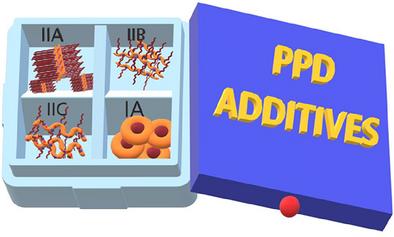
Modifying the wax crystal habit is useful for transporting and processing crude oil at low temperatures. Various polymeric pour point depressant (PPD) additives can aid in this maneuver differently. Various morphologies of polymeric additives (like comb, brush, centipede, etc.,) have been shown to lower the pour point of crude oil by providing several nucleation sites for wax precipitation. Out of the large array of materials available, it is challenging to forecast which one will act as a wax-crystal modifier on the crude oil under consideration. We propose, in this study, a detailed classification of wax-crystal modifier additives based on criteria such as linear or branched copolymers, the presence of crystalline or amorphous segments, aromatic units and their positions (such as in the backbone or branch), the ability to self-assemble or aggregate, etc. Accordingly, we synthesized additives from the maleic anhydride class having three different morphologies namely brush, combs, and centipedes, through free radical polymerization (FRP). The detailed characterization of these additives was carried out using structure-sensitive techniques, such as 1H nuclear magnetic resonance, Fourier transform infrared spectroscopy, thermogravimetric analysis, and gel permeation chromatography. To evaluate the real-time performance of the as-synthesized additives, we selected crude oils from the South Kadi (SK), Limbodara (LM), and Nada (ND) oil fields of the Cambay basin, Gujarat, India having different levels of wax and asphaltenes. The rheological parameters of crude (with and without additive) were investigated using an Advance Rheometer AR-500. Depending on the additive capability to self-aggregate and the composition of the crude oil, the additive AMI-3 is the most effective for ND, EST-2 for LM, and A-18S for SK crude oils. Their 1000 ppm dose can reduce the pour point of these crudes up to 18 °C and improve their rheological parameters accordingly. Finally, we propose the mechanisms of pour point depression by these as-synthesized additives and carry out the microscopic imaging of the precipitated wax crystals from the blank and additive-treated crude oil.
期刊介绍:
ChemistrySelect is the latest journal from ChemPubSoc Europe and Wiley-VCH. It offers researchers a quality society-owned journal in which to publish their work in all areas of chemistry. Manuscripts are evaluated by active researchers to ensure they add meaningfully to the scientific literature, and those accepted are processed quickly to ensure rapid online publication.






 京公网安备 11010802042870号
京ICP备2023020795号-1
京公网安备 11010802042870号
京ICP备2023020795号-1

 分享
分享
 求助内容:
求助内容: 应助结果提醒方式:
 扫码关注我们
