Anne-Christine Mupepele, Vivien von Königslöw, Anna-Maria Bleile, Felix Fornoff, Jochen Fründ, Alexandra-Maria Klein
{"title":"从生产和保护的角度看苹果园植物-传粉者的相互作用","authors":"Anne-Christine Mupepele, Vivien von Königslöw, Anna-Maria Bleile, Felix Fornoff, Jochen Fründ, Alexandra-Maria Klein","doi":"10.1111/csp2.13280","DOIUrl":null,"url":null,"abstract":"<p>In an agricultural landscape, production and conservation ideally go hand in hand. In a win-win scenario, conservation measures, such as hedges and flower strips, provide support for biodiversity and crop production for example by increased pollination and pollinator diversity. However, these conservation measures may also decrease pollination by attracting pollinators and competing with crop flower visits. Here, we studied plant–pollinator interactions from two different perspectives. First, we looked at the production perspective investigating whether plant–pollinator networks differed between apple orchards with and without adjacent flower strips and hedges. With help of the Bayes factor, we investigated similarity and conclude that there are no differences between pollination networks with or without adjacent flower strips and hedges. Second, we looked at the conservation perspective and analyzed the impact of hedges and flower strips on pollinators and their interactions with plants before and after apple bloom in April. We showed that apple pollinators used more flower resources in flower strips and hedges across the whole season compared to isolated orchards. In orchards with flower strips and hedges, interactions were more constant over time. We conclude that flower strips and hedges are beneficial for conservation of apple pollinators without being harmful for apple flower pollination.</p>","PeriodicalId":51337,"journal":{"name":"Conservation Science and Practice","volume":"7 1","pages":""},"PeriodicalIF":2.9000,"publicationDate":"2025-01-11","publicationTypes":"Journal Article","fieldsOfStudy":null,"isOpenAccess":false,"openAccessPdf":"https://onlinelibrary.wiley.com/doi/epdf/10.1111/csp2.13280","citationCount":"0","resultStr":"{\"title\":\"Plant–pollinator interactions in apple orchards from a production and conservation perspective\",\"authors\":\"Anne-Christine Mupepele, Vivien von Königslöw, Anna-Maria Bleile, Felix Fornoff, Jochen Fründ, Alexandra-Maria Klein\",\"doi\":\"10.1111/csp2.13280\",\"DOIUrl\":null,\"url\":null,\"abstract\":\"<p>In an agricultural landscape, production and conservation ideally go hand in hand. In a win-win scenario, conservation measures, such as hedges and flower strips, provide support for biodiversity and crop production for example by increased pollination and pollinator diversity. However, these conservation measures may also decrease pollination by attracting pollinators and competing with crop flower visits. Here, we studied plant–pollinator interactions from two different perspectives. First, we looked at the production perspective investigating whether plant–pollinator networks differed between apple orchards with and without adjacent flower strips and hedges. With help of the Bayes factor, we investigated similarity and conclude that there are no differences between pollination networks with or without adjacent flower strips and hedges. Second, we looked at the conservation perspective and analyzed the impact of hedges and flower strips on pollinators and their interactions with plants before and after apple bloom in April. We showed that apple pollinators used more flower resources in flower strips and hedges across the whole season compared to isolated orchards. In orchards with flower strips and hedges, interactions were more constant over time. We conclude that flower strips and hedges are beneficial for conservation of apple pollinators without being harmful for apple flower pollination.</p>\",\"PeriodicalId\":51337,\"journal\":{\"name\":\"Conservation Science and Practice\",\"volume\":\"7 1\",\"pages\":\"\"},\"PeriodicalIF\":2.9000,\"publicationDate\":\"2025-01-11\",\"publicationTypes\":\"Journal Article\",\"fieldsOfStudy\":null,\"isOpenAccess\":false,\"openAccessPdf\":\"https://onlinelibrary.wiley.com/doi/epdf/10.1111/csp2.13280\",\"citationCount\":\"0\",\"resultStr\":null,\"platform\":\"Semanticscholar\",\"paperid\":null,\"PeriodicalName\":\"Conservation Science and Practice\",\"FirstCategoryId\":\"93\",\"ListUrlMain\":\"https://onlinelibrary.wiley.com/doi/10.1111/csp2.13280\",\"RegionNum\":2,\"RegionCategory\":\"环境科学与生态学\",\"ArticlePicture\":[],\"TitleCN\":null,\"AbstractTextCN\":null,\"PMCID\":null,\"EPubDate\":\"2025/1/6 0:00:00\",\"PubModel\":\"Epub\",\"JCR\":\"Q1\",\"JCRName\":\"BIODIVERSITY CONSERVATION\",\"Score\":null,\"Total\":0}","platform":"Semanticscholar","paperid":null,"PeriodicalName":"Conservation Science and Practice","FirstCategoryId":"93","ListUrlMain":"https://onlinelibrary.wiley.com/doi/10.1111/csp2.13280","RegionNum":2,"RegionCategory":"环境科学与生态学","ArticlePicture":[],"TitleCN":null,"AbstractTextCN":null,"PMCID":null,"EPubDate":"2025/1/6 0:00:00","PubModel":"Epub","JCR":"Q1","JCRName":"BIODIVERSITY CONSERVATION","Score":null,"Total":0}
Plant–pollinator interactions in apple orchards from a production and conservation perspective
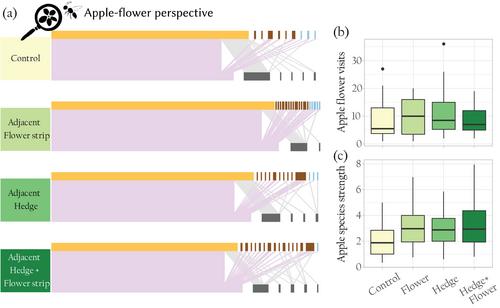
In an agricultural landscape, production and conservation ideally go hand in hand. In a win-win scenario, conservation measures, such as hedges and flower strips, provide support for biodiversity and crop production for example by increased pollination and pollinator diversity. However, these conservation measures may also decrease pollination by attracting pollinators and competing with crop flower visits. Here, we studied plant–pollinator interactions from two different perspectives. First, we looked at the production perspective investigating whether plant–pollinator networks differed between apple orchards with and without adjacent flower strips and hedges. With help of the Bayes factor, we investigated similarity and conclude that there are no differences between pollination networks with or without adjacent flower strips and hedges. Second, we looked at the conservation perspective and analyzed the impact of hedges and flower strips on pollinators and their interactions with plants before and after apple bloom in April. We showed that apple pollinators used more flower resources in flower strips and hedges across the whole season compared to isolated orchards. In orchards with flower strips and hedges, interactions were more constant over time. We conclude that flower strips and hedges are beneficial for conservation of apple pollinators without being harmful for apple flower pollination.








 京公网安备 11010802042870号
京ICP备2023020795号-1
京公网安备 11010802042870号
京ICP备2023020795号-1

 分享
分享
 求助内容:
求助内容: 应助结果提醒方式:
 扫码关注我们
