Xiaoying Zhuang, Bin Li, S. S. Nanthakumar, Thomas Böhlke
{"title":"柔性电复合材料的二阶计算均匀化","authors":"Xiaoying Zhuang, Bin Li, S. S. Nanthakumar, Thomas Böhlke","doi":"10.1002/nme.7598","DOIUrl":null,"url":null,"abstract":"<p>Flexoelectricity shows promising applications for self-powered devices with its increased power density. This paper presents a second-order computational homogenization strategy for flexoelectric composite. The macro-micro scale transition, Hill–Mandel energy condition, periodic boundary conditions, and macroscopic constitutive tangents for the two-scale electromechanical coupling are investigated and considered in the homogenization formulation. The macrostructure and microstructure are discretized using <span></span><math>\n <semantics>\n <mrow>\n <msup>\n <mrow>\n <mi>C</mi>\n </mrow>\n <mrow>\n <mn>1</mn>\n </mrow>\n </msup>\n </mrow>\n <annotation>$$ {C}^1 $$</annotation>\n </semantics></math> triangular finite elements. The second-order multiscale solution scheme is implemented using ABAQUS with user subroutines. Finally, we present numerical examples including parametric analysis of a square plate with holes and the design of piezoelectric materials made of non-piezoelectric materials to demonstrate the numerical implementation and the size-dependent effects of flexoelectricity.</p>","PeriodicalId":13699,"journal":{"name":"International Journal for Numerical Methods in Engineering","volume":"126 1","pages":""},"PeriodicalIF":3.3000,"publicationDate":"2024-10-06","publicationTypes":"Journal Article","fieldsOfStudy":null,"isOpenAccess":false,"openAccessPdf":"https://onlinelibrary.wiley.com/doi/epdf/10.1002/nme.7598","citationCount":"0","resultStr":"{\"title\":\"Second-order computational homogenization of flexoelectric composites\",\"authors\":\"Xiaoying Zhuang, Bin Li, S. S. Nanthakumar, Thomas Böhlke\",\"doi\":\"10.1002/nme.7598\",\"DOIUrl\":null,\"url\":null,\"abstract\":\"<p>Flexoelectricity shows promising applications for self-powered devices with its increased power density. This paper presents a second-order computational homogenization strategy for flexoelectric composite. The macro-micro scale transition, Hill–Mandel energy condition, periodic boundary conditions, and macroscopic constitutive tangents for the two-scale electromechanical coupling are investigated and considered in the homogenization formulation. The macrostructure and microstructure are discretized using <span></span><math>\\n <semantics>\\n <mrow>\\n <msup>\\n <mrow>\\n <mi>C</mi>\\n </mrow>\\n <mrow>\\n <mn>1</mn>\\n </mrow>\\n </msup>\\n </mrow>\\n <annotation>$$ {C}^1 $$</annotation>\\n </semantics></math> triangular finite elements. The second-order multiscale solution scheme is implemented using ABAQUS with user subroutines. Finally, we present numerical examples including parametric analysis of a square plate with holes and the design of piezoelectric materials made of non-piezoelectric materials to demonstrate the numerical implementation and the size-dependent effects of flexoelectricity.</p>\",\"PeriodicalId\":13699,\"journal\":{\"name\":\"International Journal for Numerical Methods in Engineering\",\"volume\":\"126 1\",\"pages\":\"\"},\"PeriodicalIF\":3.3000,\"publicationDate\":\"2024-10-06\",\"publicationTypes\":\"Journal Article\",\"fieldsOfStudy\":null,\"isOpenAccess\":false,\"openAccessPdf\":\"https://onlinelibrary.wiley.com/doi/epdf/10.1002/nme.7598\",\"citationCount\":\"0\",\"resultStr\":null,\"platform\":\"Semanticscholar\",\"paperid\":null,\"PeriodicalName\":\"International Journal for Numerical Methods in Engineering\",\"FirstCategoryId\":\"5\",\"ListUrlMain\":\"https://onlinelibrary.wiley.com/doi/10.1002/nme.7598\",\"RegionNum\":3,\"RegionCategory\":\"工程技术\",\"ArticlePicture\":[],\"TitleCN\":null,\"AbstractTextCN\":null,\"PMCID\":null,\"EPubDate\":\"\",\"PubModel\":\"\",\"JCR\":\"Q1\",\"JCRName\":\"ENGINEERING, MULTIDISCIPLINARY\",\"Score\":null,\"Total\":0}","platform":"Semanticscholar","paperid":null,"PeriodicalName":"International Journal for Numerical Methods in Engineering","FirstCategoryId":"5","ListUrlMain":"https://onlinelibrary.wiley.com/doi/10.1002/nme.7598","RegionNum":3,"RegionCategory":"工程技术","ArticlePicture":[],"TitleCN":null,"AbstractTextCN":null,"PMCID":null,"EPubDate":"","PubModel":"","JCR":"Q1","JCRName":"ENGINEERING, MULTIDISCIPLINARY","Score":null,"Total":0}
Second-order computational homogenization of flexoelectric composites
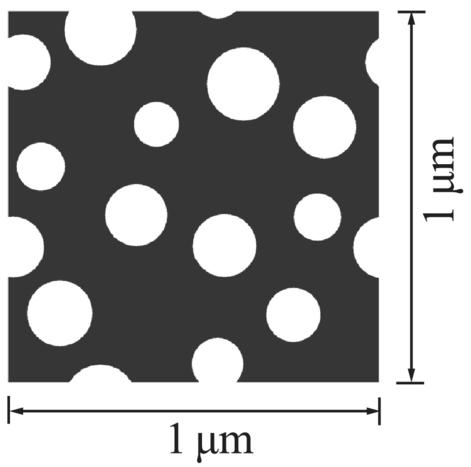
Flexoelectricity shows promising applications for self-powered devices with its increased power density. This paper presents a second-order computational homogenization strategy for flexoelectric composite. The macro-micro scale transition, Hill–Mandel energy condition, periodic boundary conditions, and macroscopic constitutive tangents for the two-scale electromechanical coupling are investigated and considered in the homogenization formulation. The macrostructure and microstructure are discretized using triangular finite elements. The second-order multiscale solution scheme is implemented using ABAQUS with user subroutines. Finally, we present numerical examples including parametric analysis of a square plate with holes and the design of piezoelectric materials made of non-piezoelectric materials to demonstrate the numerical implementation and the size-dependent effects of flexoelectricity.
期刊介绍:
The International Journal for Numerical Methods in Engineering publishes original papers describing significant, novel developments in numerical methods that are applicable to engineering problems.
The Journal is known for welcoming contributions in a wide range of areas in computational engineering, including computational issues in model reduction, uncertainty quantification, verification and validation, inverse analysis and stochastic methods, optimisation, element technology, solution techniques and parallel computing, damage and fracture, mechanics at micro and nano-scales, low-speed fluid dynamics, fluid-structure interaction, electromagnetics, coupled diffusion phenomena, and error estimation and mesh generation. It is emphasized that this is by no means an exhaustive list, and particularly papers on multi-scale, multi-physics or multi-disciplinary problems, and on new, emerging topics are welcome.




 京公网安备 11010802042870号
京ICP备2023020795号-1
京公网安备 11010802042870号
京ICP备2023020795号-1

 分享
分享
 求助内容:
求助内容: 应助结果提醒方式:
 扫码关注我们
