{"title":"不同形式花青素对结直肠癌细胞生长抑制及基因表达的影响","authors":"Weidong Liu, Siting Feng, Dou He, Pei Liu, Jian Guo, Xinyu Chen, Chenghao Hu, Fei Gao, Shuqiang Ren","doi":"10.1155/jfbc/7191862","DOIUrl":null,"url":null,"abstract":"<div>\n <p><b>Scope:</b> Anthocyanins obtained from the diet have therapeutic potential for various cancers, including colorectal cancer (CRC). Given the diverse forms of anthocyanins, it is unclear whether different types of anthocyanins share common pathways in regulating intestinal cell function. This study aims to explore the core gene pathways modulated by anthocyanins in intestinal cells and to identify potential compounds with similar therapeutic effects.</p>\n <p><b>Methods and Results:</b> Three different forms of anthocyanins (cyanidin chloride, cyanidin 3-O-glucoside, and cyanidin 3-O-rutinoside) were used to treat CRC cells at different concentrations and time points, and growth inhibition was observed for all anthocyanins, with varying patterns. RNA-seq analysis showed that the regulatory pathways of anthocyanins with different structures were different, and the time factor had a greater effect. Time-series analysis of regulatory genes shared among different concentrations and structures of anthocyanins was performed. By overlapping with a public PPAR target gene set, a core gene set across three types of anthocyanins was identified and used in Connectivity Map (CMap) analysis to screen for compounds. The repositioned drug candidates included known anticancer drugs that have effects of transcriptome interventions like anthocyanins.</p>\n <p><b>Conclusion:</b> These findings provide new insights into the mechanisms that underlie the anti-CRC effects of anthocyanins and may facilitate the development of novel therapeutic agents for CRC.</p>\n </div>","PeriodicalId":15802,"journal":{"name":"Journal of Food Biochemistry","volume":"2024 1","pages":""},"PeriodicalIF":4.2000,"publicationDate":"2024-12-26","publicationTypes":"Journal Article","fieldsOfStudy":null,"isOpenAccess":false,"openAccessPdf":"https://onlinelibrary.wiley.com/doi/epdf/10.1155/jfbc/7191862","citationCount":"0","resultStr":"{\"title\":\"Effects of Different Forms of Anthocyanins on the Growth Inhibition and Gene Expression of Colorectal Cancer Cells\",\"authors\":\"Weidong Liu, Siting Feng, Dou He, Pei Liu, Jian Guo, Xinyu Chen, Chenghao Hu, Fei Gao, Shuqiang Ren\",\"doi\":\"10.1155/jfbc/7191862\",\"DOIUrl\":null,\"url\":null,\"abstract\":\"<div>\\n <p><b>Scope:</b> Anthocyanins obtained from the diet have therapeutic potential for various cancers, including colorectal cancer (CRC). Given the diverse forms of anthocyanins, it is unclear whether different types of anthocyanins share common pathways in regulating intestinal cell function. This study aims to explore the core gene pathways modulated by anthocyanins in intestinal cells and to identify potential compounds with similar therapeutic effects.</p>\\n <p><b>Methods and Results:</b> Three different forms of anthocyanins (cyanidin chloride, cyanidin 3-O-glucoside, and cyanidin 3-O-rutinoside) were used to treat CRC cells at different concentrations and time points, and growth inhibition was observed for all anthocyanins, with varying patterns. RNA-seq analysis showed that the regulatory pathways of anthocyanins with different structures were different, and the time factor had a greater effect. Time-series analysis of regulatory genes shared among different concentrations and structures of anthocyanins was performed. By overlapping with a public PPAR target gene set, a core gene set across three types of anthocyanins was identified and used in Connectivity Map (CMap) analysis to screen for compounds. The repositioned drug candidates included known anticancer drugs that have effects of transcriptome interventions like anthocyanins.</p>\\n <p><b>Conclusion:</b> These findings provide new insights into the mechanisms that underlie the anti-CRC effects of anthocyanins and may facilitate the development of novel therapeutic agents for CRC.</p>\\n </div>\",\"PeriodicalId\":15802,\"journal\":{\"name\":\"Journal of Food Biochemistry\",\"volume\":\"2024 1\",\"pages\":\"\"},\"PeriodicalIF\":4.2000,\"publicationDate\":\"2024-12-26\",\"publicationTypes\":\"Journal Article\",\"fieldsOfStudy\":null,\"isOpenAccess\":false,\"openAccessPdf\":\"https://onlinelibrary.wiley.com/doi/epdf/10.1155/jfbc/7191862\",\"citationCount\":\"0\",\"resultStr\":null,\"platform\":\"Semanticscholar\",\"paperid\":null,\"PeriodicalName\":\"Journal of Food Biochemistry\",\"FirstCategoryId\":\"97\",\"ListUrlMain\":\"https://onlinelibrary.wiley.com/doi/10.1155/jfbc/7191862\",\"RegionNum\":2,\"RegionCategory\":\"农林科学\",\"ArticlePicture\":[],\"TitleCN\":null,\"AbstractTextCN\":null,\"PMCID\":null,\"EPubDate\":\"\",\"PubModel\":\"\",\"JCR\":\"Q2\",\"JCRName\":\"BIOCHEMISTRY & MOLECULAR BIOLOGY\",\"Score\":null,\"Total\":0}","platform":"Semanticscholar","paperid":null,"PeriodicalName":"Journal of Food Biochemistry","FirstCategoryId":"97","ListUrlMain":"https://onlinelibrary.wiley.com/doi/10.1155/jfbc/7191862","RegionNum":2,"RegionCategory":"农林科学","ArticlePicture":[],"TitleCN":null,"AbstractTextCN":null,"PMCID":null,"EPubDate":"","PubModel":"","JCR":"Q2","JCRName":"BIOCHEMISTRY & MOLECULAR BIOLOGY","Score":null,"Total":0}
引用次数: 0
摘要
范围:从饮食中获得的花青素具有治疗各种癌症的潜力,包括结直肠癌(CRC)。鉴于花青素的形式多样,目前尚不清楚不同类型的花青素是否在调节肠细胞功能方面具有共同的途径。本研究旨在探索花青素在肠细胞中调控的核心基因通路,并寻找具有类似治疗作用的潜在化合物。方法与结果:采用三种不同形式的花青素(花青素氯、花青素3- o -葡萄糖苷、花青素3- o -芦丁苷)在不同浓度和时间点作用于结直肠癌细胞,观察到所有花青素对结直肠癌细胞的生长抑制作用,且抑制作用模式不同。RNA-seq分析表明,不同结构花青素的调控途径不同,时间因素影响较大。对不同花青素浓度和结构的调控基因进行了时间序列分析。通过与公开的PPAR靶基因集重叠,鉴定出三种花青素的核心基因集,并将其用于连接图谱(CMap)分析,以筛选化合物。重新定位的候选药物包括已知的抗癌药物,这些药物具有转录组干预作用,如花青素。结论:这些发现为花青素抗结直肠癌作用的机制提供了新的见解,并可能促进结直肠癌新型治疗药物的开发。
Effects of Different Forms of Anthocyanins on the Growth Inhibition and Gene Expression of Colorectal Cancer Cells
Scope: Anthocyanins obtained from the diet have therapeutic potential for various cancers, including colorectal cancer (CRC). Given the diverse forms of anthocyanins, it is unclear whether different types of anthocyanins share common pathways in regulating intestinal cell function. This study aims to explore the core gene pathways modulated by anthocyanins in intestinal cells and to identify potential compounds with similar therapeutic effects.
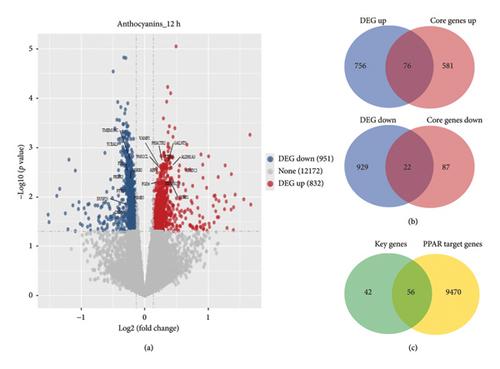
Methods and Results: Three different forms of anthocyanins (cyanidin chloride, cyanidin 3-O-glucoside, and cyanidin 3-O-rutinoside) were used to treat CRC cells at different concentrations and time points, and growth inhibition was observed for all anthocyanins, with varying patterns. RNA-seq analysis showed that the regulatory pathways of anthocyanins with different structures were different, and the time factor had a greater effect. Time-series analysis of regulatory genes shared among different concentrations and structures of anthocyanins was performed. By overlapping with a public PPAR target gene set, a core gene set across three types of anthocyanins was identified and used in Connectivity Map (CMap) analysis to screen for compounds. The repositioned drug candidates included known anticancer drugs that have effects of transcriptome interventions like anthocyanins.
Conclusion: These findings provide new insights into the mechanisms that underlie the anti-CRC effects of anthocyanins and may facilitate the development of novel therapeutic agents for CRC.
期刊介绍:
The Journal of Food Biochemistry publishes fully peer-reviewed original research and review papers on the effects of handling, storage, and processing on the biochemical aspects of food tissues, systems, and bioactive compounds in the diet.
Researchers in food science, food technology, biochemistry, and nutrition, particularly based in academia and industry, will find much of great use and interest in the journal. Coverage includes:
-Biochemistry of postharvest/postmortem and processing problems
-Enzyme chemistry and technology
-Membrane biology and chemistry
-Cell biology
-Biophysics
-Genetic expression
-Pharmacological properties of food ingredients with an emphasis on the content of bioactive ingredients in foods
Examples of topics covered in recently-published papers on two topics of current wide interest, nutraceuticals/functional foods and postharvest/postmortem, include the following:
-Bioactive compounds found in foods, such as chocolate and herbs, as they affect serum cholesterol, diabetes, hypertension, and heart disease
-The mechanism of the ripening process in fruit
-The biogenesis of flavor precursors in meat
-How biochemical changes in farm-raised fish are affecting processing and edible quality




 京公网安备 11010802042870号
京ICP备2023020795号-1
京公网安备 11010802042870号
京ICP备2023020795号-1

 分享
分享
 求助内容:
求助内容: 应助结果提醒方式:
 扫码关注我们
