Ahmad Tarmizi Abd Wahab, Dr. Bashir Abubakar Abdulkadir, Siti Nurqurratulainie Miskan, Dr. Md. Maksudur Rahman Khan, Dr. Herma Dina Setiabudi
{"title":"固态储氢研究进展:多孔空心碳纳米球的作用","authors":"Ahmad Tarmizi Abd Wahab, Dr. Bashir Abubakar Abdulkadir, Siti Nurqurratulainie Miskan, Dr. Md. Maksudur Rahman Khan, Dr. Herma Dina Setiabudi","doi":"10.1002/slct.202404435","DOIUrl":null,"url":null,"abstract":"<p>The hydrogen economy provides an alternative energy source that can be adopted for a long period. One of its key components is an efficient storage system, which has become a topic of significant research interest to meet the energy goals set by the US Department of Energy (DOE). The US DOE outlines the criteria for suitable hydrogen storage materials, which include cost-effectiveness (specifically $300/kg H<sub>2</sub> by 2025 and ultimately $266/kg H<sub>2</sub>), moderate operation temperatures (233–358 K), high storage capacity (5.5 wt% 40 g/L 2025, 11 wt%, 79 g/L ultimate), efficient adsorption/desorption cycles, as well as long lifetime operation (1500 cycles). Nanomaterials, particularly porous hollow carbon nanospheres (PHCNs), have attracted considerable attention due to their high storage capacity and unique characteristics, such as high surface area, tunable pore size, and superior kinetics. As a result, PHCNs may help to increase the hydrogen storage capacity of the solid-state hydrogen storage systems. This paper offered an in-depth analysis of the applications of PHCNs in hydrogen storage, comprising their synthesis, characterization methods, infiltration techniques, and the recent progress on the catalytic effects of the materials concerning hydrogen storage. The review concluded with a suggestion for future studies to increase the storage capacity of PHCNs in solid-state hydrogen storage systems comprehensively, as it represents a pivotal step toward a hydrogen-based economy, promoting energy security, and carbon-neutral energy cycles.</p>","PeriodicalId":146,"journal":{"name":"ChemistrySelect","volume":"10 5","pages":""},"PeriodicalIF":2.3000,"publicationDate":"2025-01-30","publicationTypes":"Journal Article","fieldsOfStudy":null,"isOpenAccess":false,"openAccessPdf":"","citationCount":"0","resultStr":"{\"title\":\"A Review on Advancements in Solid-State Hydrogen Storage: The Role of Porous Hollow Carbon Nanospheres\",\"authors\":\"Ahmad Tarmizi Abd Wahab, Dr. Bashir Abubakar Abdulkadir, Siti Nurqurratulainie Miskan, Dr. Md. Maksudur Rahman Khan, Dr. Herma Dina Setiabudi\",\"doi\":\"10.1002/slct.202404435\",\"DOIUrl\":null,\"url\":null,\"abstract\":\"<p>The hydrogen economy provides an alternative energy source that can be adopted for a long period. One of its key components is an efficient storage system, which has become a topic of significant research interest to meet the energy goals set by the US Department of Energy (DOE). The US DOE outlines the criteria for suitable hydrogen storage materials, which include cost-effectiveness (specifically $300/kg H<sub>2</sub> by 2025 and ultimately $266/kg H<sub>2</sub>), moderate operation temperatures (233–358 K), high storage capacity (5.5 wt% 40 g/L 2025, 11 wt%, 79 g/L ultimate), efficient adsorption/desorption cycles, as well as long lifetime operation (1500 cycles). Nanomaterials, particularly porous hollow carbon nanospheres (PHCNs), have attracted considerable attention due to their high storage capacity and unique characteristics, such as high surface area, tunable pore size, and superior kinetics. As a result, PHCNs may help to increase the hydrogen storage capacity of the solid-state hydrogen storage systems. This paper offered an in-depth analysis of the applications of PHCNs in hydrogen storage, comprising their synthesis, characterization methods, infiltration techniques, and the recent progress on the catalytic effects of the materials concerning hydrogen storage. The review concluded with a suggestion for future studies to increase the storage capacity of PHCNs in solid-state hydrogen storage systems comprehensively, as it represents a pivotal step toward a hydrogen-based economy, promoting energy security, and carbon-neutral energy cycles.</p>\",\"PeriodicalId\":146,\"journal\":{\"name\":\"ChemistrySelect\",\"volume\":\"10 5\",\"pages\":\"\"},\"PeriodicalIF\":2.3000,\"publicationDate\":\"2025-01-30\",\"publicationTypes\":\"Journal Article\",\"fieldsOfStudy\":null,\"isOpenAccess\":false,\"openAccessPdf\":\"\",\"citationCount\":\"0\",\"resultStr\":null,\"platform\":\"Semanticscholar\",\"paperid\":null,\"PeriodicalName\":\"ChemistrySelect\",\"FirstCategoryId\":\"92\",\"ListUrlMain\":\"https://chemistry-europe.onlinelibrary.wiley.com/doi/10.1002/slct.202404435\",\"RegionNum\":4,\"RegionCategory\":\"化学\",\"ArticlePicture\":[],\"TitleCN\":null,\"AbstractTextCN\":null,\"PMCID\":null,\"EPubDate\":\"\",\"PubModel\":\"\",\"JCR\":\"Q3\",\"JCRName\":\"CHEMISTRY, MULTIDISCIPLINARY\",\"Score\":null,\"Total\":0}","platform":"Semanticscholar","paperid":null,"PeriodicalName":"ChemistrySelect","FirstCategoryId":"92","ListUrlMain":"https://chemistry-europe.onlinelibrary.wiley.com/doi/10.1002/slct.202404435","RegionNum":4,"RegionCategory":"化学","ArticlePicture":[],"TitleCN":null,"AbstractTextCN":null,"PMCID":null,"EPubDate":"","PubModel":"","JCR":"Q3","JCRName":"CHEMISTRY, MULTIDISCIPLINARY","Score":null,"Total":0}
A Review on Advancements in Solid-State Hydrogen Storage: The Role of Porous Hollow Carbon Nanospheres
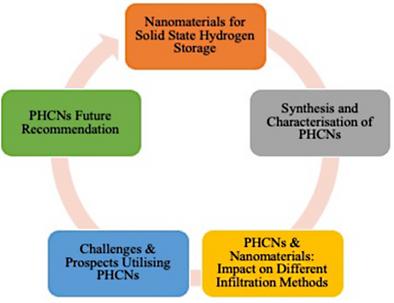
The hydrogen economy provides an alternative energy source that can be adopted for a long period. One of its key components is an efficient storage system, which has become a topic of significant research interest to meet the energy goals set by the US Department of Energy (DOE). The US DOE outlines the criteria for suitable hydrogen storage materials, which include cost-effectiveness (specifically $300/kg H2 by 2025 and ultimately $266/kg H2), moderate operation temperatures (233–358 K), high storage capacity (5.5 wt% 40 g/L 2025, 11 wt%, 79 g/L ultimate), efficient adsorption/desorption cycles, as well as long lifetime operation (1500 cycles). Nanomaterials, particularly porous hollow carbon nanospheres (PHCNs), have attracted considerable attention due to their high storage capacity and unique characteristics, such as high surface area, tunable pore size, and superior kinetics. As a result, PHCNs may help to increase the hydrogen storage capacity of the solid-state hydrogen storage systems. This paper offered an in-depth analysis of the applications of PHCNs in hydrogen storage, comprising their synthesis, characterization methods, infiltration techniques, and the recent progress on the catalytic effects of the materials concerning hydrogen storage. The review concluded with a suggestion for future studies to increase the storage capacity of PHCNs in solid-state hydrogen storage systems comprehensively, as it represents a pivotal step toward a hydrogen-based economy, promoting energy security, and carbon-neutral energy cycles.
期刊介绍:
ChemistrySelect is the latest journal from ChemPubSoc Europe and Wiley-VCH. It offers researchers a quality society-owned journal in which to publish their work in all areas of chemistry. Manuscripts are evaluated by active researchers to ensure they add meaningfully to the scientific literature, and those accepted are processed quickly to ensure rapid online publication.






 京公网安备 11010802042870号
京ICP备2023020795号-1
京公网安备 11010802042870号
京ICP备2023020795号-1

 分享
分享
 求助内容:
求助内容: 应助结果提醒方式:
 扫码关注我们
