{"title":"基于插入式垂直电极阵列的金属纳米颗粒风险评估时空三维细胞阻抗监测","authors":"Yimin Shi, Hui Liu, Mingda Zhao, Sheng Sun, Meiyan Qin, Yang Zhao, Mingxiao Li, Lina Zhang, Lingqian Zhang and Chengjun Huang","doi":"10.1039/D4AN01494D","DOIUrl":null,"url":null,"abstract":"<p >Metal nanoparticles are commonly found in our daily lives and pose great risks to people's health. Therefore, it is crucial to establish a research model for the toxic effects of metal nanoparticles. In recent decades, three-dimensional (3D) cell models have attracted increasing interest in the fields of cell barriers, nanotoxicology, and drug screening, as they have significant advantages over two-dimensional (2D) cell models in accurately simulating <em>in vivo</em> behavior of human cells. The accurate spatiotemporal reaction characteristics achieved through the diffusion effect of metal nanoparticles in Matrigel scaffolds are of great importance in nanotoxicology. However, traditional impedance sensors face challenges in performing spatiotemporal dynamic impedance monitoring and evaluating the toxic impact of metal nanoparticles on 3D cells. Here, we propose an impedance sensor that integrates a plug-in vertical electrode array (PVEA) chip with a multi-channel detection system. This sensor can dynamically record 3D cell impedance in the vertical direction, which is consistent with the temporal and spatial progression of metal nanoparticle penetration, and also closely related to the spatiotemporal activity of cells influenced by metal nanoparticles. This method can detect subtle changes in impedance signals at different positions caused by the diffusion of metal nanoparticles, and has high application value in Nanotoxicology evaluation. This universal, high-throughput 3D cell impedance sensor has great potential in toxicity detection and drug screening.</p>","PeriodicalId":63,"journal":{"name":"Analyst","volume":" 6","pages":" 1081-1090"},"PeriodicalIF":3.3000,"publicationDate":"2025-02-05","publicationTypes":"Journal Article","fieldsOfStudy":null,"isOpenAccess":false,"openAccessPdf":"","citationCount":"0","resultStr":"{\"title\":\"Spatiotemporal 3D cell impedance monitoring for metal nanoparticle risk assessment by plug-in vertical electrode array†\",\"authors\":\"Yimin Shi, Hui Liu, Mingda Zhao, Sheng Sun, Meiyan Qin, Yang Zhao, Mingxiao Li, Lina Zhang, Lingqian Zhang and Chengjun Huang\",\"doi\":\"10.1039/D4AN01494D\",\"DOIUrl\":null,\"url\":null,\"abstract\":\"<p >Metal nanoparticles are commonly found in our daily lives and pose great risks to people's health. Therefore, it is crucial to establish a research model for the toxic effects of metal nanoparticles. In recent decades, three-dimensional (3D) cell models have attracted increasing interest in the fields of cell barriers, nanotoxicology, and drug screening, as they have significant advantages over two-dimensional (2D) cell models in accurately simulating <em>in vivo</em> behavior of human cells. The accurate spatiotemporal reaction characteristics achieved through the diffusion effect of metal nanoparticles in Matrigel scaffolds are of great importance in nanotoxicology. However, traditional impedance sensors face challenges in performing spatiotemporal dynamic impedance monitoring and evaluating the toxic impact of metal nanoparticles on 3D cells. Here, we propose an impedance sensor that integrates a plug-in vertical electrode array (PVEA) chip with a multi-channel detection system. This sensor can dynamically record 3D cell impedance in the vertical direction, which is consistent with the temporal and spatial progression of metal nanoparticle penetration, and also closely related to the spatiotemporal activity of cells influenced by metal nanoparticles. This method can detect subtle changes in impedance signals at different positions caused by the diffusion of metal nanoparticles, and has high application value in Nanotoxicology evaluation. This universal, high-throughput 3D cell impedance sensor has great potential in toxicity detection and drug screening.</p>\",\"PeriodicalId\":63,\"journal\":{\"name\":\"Analyst\",\"volume\":\" 6\",\"pages\":\" 1081-1090\"},\"PeriodicalIF\":3.3000,\"publicationDate\":\"2025-02-05\",\"publicationTypes\":\"Journal Article\",\"fieldsOfStudy\":null,\"isOpenAccess\":false,\"openAccessPdf\":\"\",\"citationCount\":\"0\",\"resultStr\":null,\"platform\":\"Semanticscholar\",\"paperid\":null,\"PeriodicalName\":\"Analyst\",\"FirstCategoryId\":\"92\",\"ListUrlMain\":\"https://pubs.rsc.org/en/content/articlelanding/2025/an/d4an01494d\",\"RegionNum\":3,\"RegionCategory\":\"化学\",\"ArticlePicture\":[],\"TitleCN\":null,\"AbstractTextCN\":null,\"PMCID\":null,\"EPubDate\":\"\",\"PubModel\":\"\",\"JCR\":\"Q2\",\"JCRName\":\"CHEMISTRY, ANALYTICAL\",\"Score\":null,\"Total\":0}","platform":"Semanticscholar","paperid":null,"PeriodicalName":"Analyst","FirstCategoryId":"92","ListUrlMain":"https://pubs.rsc.org/en/content/articlelanding/2025/an/d4an01494d","RegionNum":3,"RegionCategory":"化学","ArticlePicture":[],"TitleCN":null,"AbstractTextCN":null,"PMCID":null,"EPubDate":"","PubModel":"","JCR":"Q2","JCRName":"CHEMISTRY, ANALYTICAL","Score":null,"Total":0}
Spatiotemporal 3D cell impedance monitoring for metal nanoparticle risk assessment by plug-in vertical electrode array†
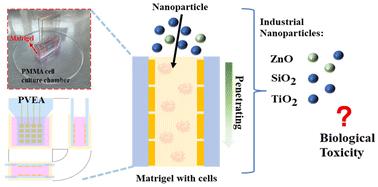
Metal nanoparticles are commonly found in our daily lives and pose great risks to people's health. Therefore, it is crucial to establish a research model for the toxic effects of metal nanoparticles. In recent decades, three-dimensional (3D) cell models have attracted increasing interest in the fields of cell barriers, nanotoxicology, and drug screening, as they have significant advantages over two-dimensional (2D) cell models in accurately simulating in vivo behavior of human cells. The accurate spatiotemporal reaction characteristics achieved through the diffusion effect of metal nanoparticles in Matrigel scaffolds are of great importance in nanotoxicology. However, traditional impedance sensors face challenges in performing spatiotemporal dynamic impedance monitoring and evaluating the toxic impact of metal nanoparticles on 3D cells. Here, we propose an impedance sensor that integrates a plug-in vertical electrode array (PVEA) chip with a multi-channel detection system. This sensor can dynamically record 3D cell impedance in the vertical direction, which is consistent with the temporal and spatial progression of metal nanoparticle penetration, and also closely related to the spatiotemporal activity of cells influenced by metal nanoparticles. This method can detect subtle changes in impedance signals at different positions caused by the diffusion of metal nanoparticles, and has high application value in Nanotoxicology evaluation. This universal, high-throughput 3D cell impedance sensor has great potential in toxicity detection and drug screening.





 京公网安备 11010802042870号
京ICP备2023020795号-1
京公网安备 11010802042870号
京ICP备2023020795号-1

 分享
分享
 求助内容:
求助内容: 应助结果提醒方式:
 扫码关注我们
