Takashi Hirose, Naoki Matsui, Kenta Watanabe, Takashi Saito, Kazuhiro Mori, Kota Suzuki, Masaaki Hirayama and Ryoji Kanno
{"title":"SrLiH3-CaLiH3-NaLiH2体系中氢化物离子电导率的迁移能和结合能之间的权衡","authors":"Takashi Hirose, Naoki Matsui, Kenta Watanabe, Takashi Saito, Kazuhiro Mori, Kota Suzuki, Masaaki Hirayama and Ryoji Kanno","doi":"10.1039/D4DT03384A","DOIUrl":null,"url":null,"abstract":"<p >Hydride-ion (H<small><sup>−</sup></small>) conductors have garnered much attention owing to their high ionic conductivity and potential applications such as batteries and fuel/electrolysis cells. Perovskite-type H<small><sup>−</sup></small> conductors are known to exhibit relatively high ionic conductivity at room temperature. The present work demonstrated systematic material exploration within the SrLiH<small><sub>3</sub></small>–CaLiH<small><sub>3</sub></small>–NaLiH<small><sub>2</sub></small> pseudo-ternary system. The Na-substituted system, Sr<small><sub>1−<em>x</em></sub></small>Na<small><sub><em>x</em></sub></small>LiH<small><sub>3−<em>x</em></sub></small>, exhibited a remarkable H<small><sup>−</sup></small> conductivity of 5.1 × 10<small><sup>–6</sup></small> S cm<small><sup>−1</sup></small> at 25 °C for Sr<small><sub>0.8</sub></small>Na<small><sub>0.2</sub></small>LiH<small><sub>2.8</sub></small>, marking the highest value reported among perovskite-type hydrides to date. Furthermore, we found a clear trend of enhanced H<small><sup>−</sup></small> conductivity with Ca substitution in the Sr<small><sub>1−<em>x</em></sub></small>Ca<small><sub><em>x</em></sub></small>LiH<small><sub>3</sub></small> pseudo-binary system. However, in the Sr<small><sub>1−<em>x</em></sub></small>Ca<small><sub><em>x</em></sub></small>Na<small><sub><em>y</em></sub></small>LiH<small><sub>3−<em>y</em></sub></small> pseudo-ternary system, a negative synergistic effect of Ca and Na co-doping was observed. First-principles calculations revealed that this negative effect arises from a trade-off between migration and association energies in defect pairs of Na<small><sup>+</sup></small> dopants and H<small><sup>−</sup></small> vacancies. These findings provide valuable insights into designing superior anion conductors.</p>","PeriodicalId":71,"journal":{"name":"Dalton Transactions","volume":" 10","pages":" 4180-4186"},"PeriodicalIF":3.3000,"publicationDate":"2025-02-05","publicationTypes":"Journal Article","fieldsOfStudy":null,"isOpenAccess":false,"openAccessPdf":"","citationCount":"0","resultStr":"{\"title\":\"A trade-off between migration and association energies for hydride-ion conductivity in the SrLiH3–CaLiH3–NaLiH2 system†\",\"authors\":\"Takashi Hirose, Naoki Matsui, Kenta Watanabe, Takashi Saito, Kazuhiro Mori, Kota Suzuki, Masaaki Hirayama and Ryoji Kanno\",\"doi\":\"10.1039/D4DT03384A\",\"DOIUrl\":null,\"url\":null,\"abstract\":\"<p >Hydride-ion (H<small><sup>−</sup></small>) conductors have garnered much attention owing to their high ionic conductivity and potential applications such as batteries and fuel/electrolysis cells. Perovskite-type H<small><sup>−</sup></small> conductors are known to exhibit relatively high ionic conductivity at room temperature. The present work demonstrated systematic material exploration within the SrLiH<small><sub>3</sub></small>–CaLiH<small><sub>3</sub></small>–NaLiH<small><sub>2</sub></small> pseudo-ternary system. The Na-substituted system, Sr<small><sub>1−<em>x</em></sub></small>Na<small><sub><em>x</em></sub></small>LiH<small><sub>3−<em>x</em></sub></small>, exhibited a remarkable H<small><sup>−</sup></small> conductivity of 5.1 × 10<small><sup>–6</sup></small> S cm<small><sup>−1</sup></small> at 25 °C for Sr<small><sub>0.8</sub></small>Na<small><sub>0.2</sub></small>LiH<small><sub>2.8</sub></small>, marking the highest value reported among perovskite-type hydrides to date. Furthermore, we found a clear trend of enhanced H<small><sup>−</sup></small> conductivity with Ca substitution in the Sr<small><sub>1−<em>x</em></sub></small>Ca<small><sub><em>x</em></sub></small>LiH<small><sub>3</sub></small> pseudo-binary system. However, in the Sr<small><sub>1−<em>x</em></sub></small>Ca<small><sub><em>x</em></sub></small>Na<small><sub><em>y</em></sub></small>LiH<small><sub>3−<em>y</em></sub></small> pseudo-ternary system, a negative synergistic effect of Ca and Na co-doping was observed. First-principles calculations revealed that this negative effect arises from a trade-off between migration and association energies in defect pairs of Na<small><sup>+</sup></small> dopants and H<small><sup>−</sup></small> vacancies. These findings provide valuable insights into designing superior anion conductors.</p>\",\"PeriodicalId\":71,\"journal\":{\"name\":\"Dalton Transactions\",\"volume\":\" 10\",\"pages\":\" 4180-4186\"},\"PeriodicalIF\":3.3000,\"publicationDate\":\"2025-02-05\",\"publicationTypes\":\"Journal Article\",\"fieldsOfStudy\":null,\"isOpenAccess\":false,\"openAccessPdf\":\"\",\"citationCount\":\"0\",\"resultStr\":null,\"platform\":\"Semanticscholar\",\"paperid\":null,\"PeriodicalName\":\"Dalton Transactions\",\"FirstCategoryId\":\"92\",\"ListUrlMain\":\"https://pubs.rsc.org/en/content/articlelanding/2025/dt/d4dt03384a\",\"RegionNum\":3,\"RegionCategory\":\"化学\",\"ArticlePicture\":[],\"TitleCN\":null,\"AbstractTextCN\":null,\"PMCID\":null,\"EPubDate\":\"\",\"PubModel\":\"\",\"JCR\":\"Q2\",\"JCRName\":\"CHEMISTRY, INORGANIC & NUCLEAR\",\"Score\":null,\"Total\":0}","platform":"Semanticscholar","paperid":null,"PeriodicalName":"Dalton Transactions","FirstCategoryId":"92","ListUrlMain":"https://pubs.rsc.org/en/content/articlelanding/2025/dt/d4dt03384a","RegionNum":3,"RegionCategory":"化学","ArticlePicture":[],"TitleCN":null,"AbstractTextCN":null,"PMCID":null,"EPubDate":"","PubModel":"","JCR":"Q2","JCRName":"CHEMISTRY, INORGANIC & NUCLEAR","Score":null,"Total":0}
引用次数: 0
摘要
氢离子(H -)导体由于其高离子电导率和潜在的应用如电池和燃料/电解电池而引起了人们的广泛关注。钙钛矿型H -导体在室温下具有较高的离子电导率。在SrLiH3-CaLiH3-NaLiH2伪三元体系中进行了系统的材料探索。Sr1 - xNaxLiH3 - x在25°C下,Sr0.8Na0.2LiH2.8的H -电导率为5.1 × 10⁻⁶ S cm - 1,是迄今为止钙钛矿型氢化物中报道的最高H -电导率。此外,我们发现在Sr1 - xCaxLiH3伪二元体系中,Ca取代明显增强了H -电导率。然而,在Sr1−xCaxNayLiH3−y伪三元体系中,Ca和Na共掺杂出现了负协同效应。第一性原理计算表明,这种负面影响是由于Na+掺杂剂和H -空位缺陷对的迁移能和结合能之间的权衡。这些发现为设计优质阴离子导体提供了有价值的见解。
A trade-off between migration and association energies for hydride-ion conductivity in the SrLiH3–CaLiH3–NaLiH2 system†
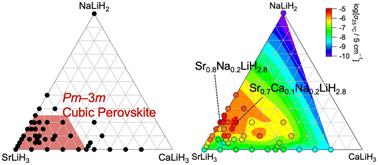
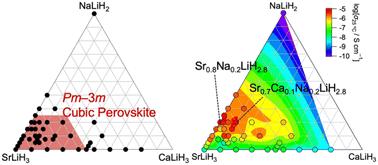
Hydride-ion (H−) conductors have garnered much attention owing to their high ionic conductivity and potential applications such as batteries and fuel/electrolysis cells. Perovskite-type H− conductors are known to exhibit relatively high ionic conductivity at room temperature. The present work demonstrated systematic material exploration within the SrLiH3–CaLiH3–NaLiH2 pseudo-ternary system. The Na-substituted system, Sr1−xNaxLiH3−x, exhibited a remarkable H− conductivity of 5.1 × 10⁻⁶ S cm−1 at 25 °C for Sr0.8Na0.2LiH2.8, marking the highest value reported among perovskite-type hydrides to date. Furthermore, we found a clear trend of enhanced H− conductivity with Ca substitution in the Sr1−xCaxLiH3 pseudo-binary system. However, in the Sr1−xCaxNayLiH3−y pseudo-ternary system, a negative synergistic effect of Ca and Na co-doping was observed. First-principles calculations revealed that this negative effect arises from a trade-off between migration and association energies in defect pairs of Na+ dopants and H− vacancies. These findings provide valuable insights into designing superior anion conductors.
期刊介绍:
Dalton Transactions is a journal for all areas of inorganic chemistry, which encompasses the organometallic, bioinorganic and materials chemistry of the elements, with applications including synthesis, catalysis, energy conversion/storage, electrical devices and medicine. Dalton Transactions welcomes high-quality, original submissions in all of these areas and more, where the advancement of knowledge in inorganic chemistry is significant.




 京公网安备 11010802042870号
京ICP备2023020795号-1
京公网安备 11010802042870号
京ICP备2023020795号-1

 分享
分享
 求助内容:
求助内容: 应助结果提醒方式:
 扫码关注我们
