Riccardo Arcaleni , Anna Mantelli , Luca Girelli , Lavinia Tonelli , Alessandro Morri , Annalisa Pola , Lorella Ceschini
{"title":"半固态触铸法加工原铝和再生AlSi7Mg合金的显微组织表征","authors":"Riccardo Arcaleni , Anna Mantelli , Luca Girelli , Lavinia Tonelli , Alessandro Morri , Annalisa Pola , Lorella Ceschini","doi":"10.1016/j.matchar.2024.114657","DOIUrl":null,"url":null,"abstract":"<div><div>In recent years, the increasing need to use recycled aluminum alloys has driven the exploration of advanced processes. Among these, thixocasting is attractive due to its potential to produce high-performance components. Alloy composition and manufacturing routes influence semisolid Al-Si-Mg alloys' microstructure and mechanical properties. In order to exploit the potentiality of aluminum alloys that comes from metal scraps recycling, it is helpful to evaluate the influence of iron on the microstructure of recycled alloys by measuring the Rheocast Quality Index (RQI). The study focused on the production and testing of thixo-cast samples in two recycled AlSi7Mg aluminum alloys, with high (≈ 0.40 wt.% Fe) and low (≈ 0.15 wt.% Fe) iron content both featuring a high recycling rate (exceeding 70 % of the total alloy), and in a primary (i.e., from ore) AlSi7Mg alloy (≈ 0.10 wt.% Fe) serving as a benchmark. The microstructural characterization, carried out by optical and scanning electron microscope equipped with both electron backscatter diffraction and energy dispersive X-ray spectroscopy, focused on grain size, α-Al globules size and shape, and intermetallic amount. The high Fe content recycled alloy exhibited a higher area fraction of iron intermetallic compounds, coarser grains, and larger and not well spheroidized α-Al globules than the primary one with an RQI of about 0.30. Instead, the low-iron recycled and the primary alloy showed similar microstructures with a comparable RQI of about 0.40–0.45.</div></div>","PeriodicalId":18727,"journal":{"name":"Materials Characterization","volume":"220 ","pages":"Article 114657"},"PeriodicalIF":5.5000,"publicationDate":"2025-02-01","publicationTypes":"Journal Article","fieldsOfStudy":null,"isOpenAccess":false,"openAccessPdf":"","citationCount":"0","resultStr":"{\"title\":\"Microstructural characterization of primary and recycled aluminum AlSi7Mg alloy processed by the semi-solid thixocasting method\",\"authors\":\"Riccardo Arcaleni , Anna Mantelli , Luca Girelli , Lavinia Tonelli , Alessandro Morri , Annalisa Pola , Lorella Ceschini\",\"doi\":\"10.1016/j.matchar.2024.114657\",\"DOIUrl\":null,\"url\":null,\"abstract\":\"<div><div>In recent years, the increasing need to use recycled aluminum alloys has driven the exploration of advanced processes. Among these, thixocasting is attractive due to its potential to produce high-performance components. Alloy composition and manufacturing routes influence semisolid Al-Si-Mg alloys' microstructure and mechanical properties. In order to exploit the potentiality of aluminum alloys that comes from metal scraps recycling, it is helpful to evaluate the influence of iron on the microstructure of recycled alloys by measuring the Rheocast Quality Index (RQI). The study focused on the production and testing of thixo-cast samples in two recycled AlSi7Mg aluminum alloys, with high (≈ 0.40 wt.% Fe) and low (≈ 0.15 wt.% Fe) iron content both featuring a high recycling rate (exceeding 70 % of the total alloy), and in a primary (i.e., from ore) AlSi7Mg alloy (≈ 0.10 wt.% Fe) serving as a benchmark. The microstructural characterization, carried out by optical and scanning electron microscope equipped with both electron backscatter diffraction and energy dispersive X-ray spectroscopy, focused on grain size, α-Al globules size and shape, and intermetallic amount. The high Fe content recycled alloy exhibited a higher area fraction of iron intermetallic compounds, coarser grains, and larger and not well spheroidized α-Al globules than the primary one with an RQI of about 0.30. Instead, the low-iron recycled and the primary alloy showed similar microstructures with a comparable RQI of about 0.40–0.45.</div></div>\",\"PeriodicalId\":18727,\"journal\":{\"name\":\"Materials Characterization\",\"volume\":\"220 \",\"pages\":\"Article 114657\"},\"PeriodicalIF\":5.5000,\"publicationDate\":\"2025-02-01\",\"publicationTypes\":\"Journal Article\",\"fieldsOfStudy\":null,\"isOpenAccess\":false,\"openAccessPdf\":\"\",\"citationCount\":\"0\",\"resultStr\":null,\"platform\":\"Semanticscholar\",\"paperid\":null,\"PeriodicalName\":\"Materials Characterization\",\"FirstCategoryId\":\"88\",\"ListUrlMain\":\"https://www.sciencedirect.com/science/article/pii/S1044580324010386\",\"RegionNum\":2,\"RegionCategory\":\"材料科学\",\"ArticlePicture\":[],\"TitleCN\":null,\"AbstractTextCN\":null,\"PMCID\":null,\"EPubDate\":\"2024/12/19 0:00:00\",\"PubModel\":\"Epub\",\"JCR\":\"Q1\",\"JCRName\":\"MATERIALS SCIENCE, CHARACTERIZATION & TESTING\",\"Score\":null,\"Total\":0}","platform":"Semanticscholar","paperid":null,"PeriodicalName":"Materials Characterization","FirstCategoryId":"88","ListUrlMain":"https://www.sciencedirect.com/science/article/pii/S1044580324010386","RegionNum":2,"RegionCategory":"材料科学","ArticlePicture":[],"TitleCN":null,"AbstractTextCN":null,"PMCID":null,"EPubDate":"2024/12/19 0:00:00","PubModel":"Epub","JCR":"Q1","JCRName":"MATERIALS SCIENCE, CHARACTERIZATION & TESTING","Score":null,"Total":0}
Microstructural characterization of primary and recycled aluminum AlSi7Mg alloy processed by the semi-solid thixocasting method
In recent years, the increasing need to use recycled aluminum alloys has driven the exploration of advanced processes. Among these, thixocasting is attractive due to its potential to produce high-performance components. Alloy composition and manufacturing routes influence semisolid Al-Si-Mg alloys' microstructure and mechanical properties. In order to exploit the potentiality of aluminum alloys that comes from metal scraps recycling, it is helpful to evaluate the influence of iron on the microstructure of recycled alloys by measuring the Rheocast Quality Index (RQI). The study focused on the production and testing of thixo-cast samples in two recycled AlSi7Mg aluminum alloys, with high (≈ 0.40 wt.% Fe) and low (≈ 0.15 wt.% Fe) iron content both featuring a high recycling rate (exceeding 70 % of the total alloy), and in a primary (i.e., from ore) AlSi7Mg alloy (≈ 0.10 wt.% Fe) serving as a benchmark. The microstructural characterization, carried out by optical and scanning electron microscope equipped with both electron backscatter diffraction and energy dispersive X-ray spectroscopy, focused on grain size, α-Al globules size and shape, and intermetallic amount. The high Fe content recycled alloy exhibited a higher area fraction of iron intermetallic compounds, coarser grains, and larger and not well spheroidized α-Al globules than the primary one with an RQI of about 0.30. Instead, the low-iron recycled and the primary alloy showed similar microstructures with a comparable RQI of about 0.40–0.45.
期刊介绍:
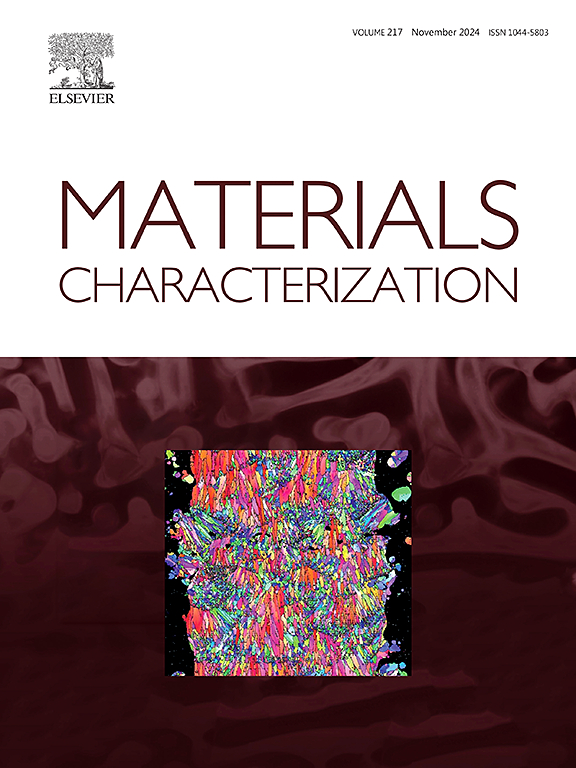
Materials Characterization features original articles and state-of-the-art reviews on theoretical and practical aspects of the structure and behaviour of materials.
The Journal focuses on all characterization techniques, including all forms of microscopy (light, electron, acoustic, etc.,) and analysis (especially microanalysis and surface analytical techniques). Developments in both this wide range of techniques and their application to the quantification of the microstructure of materials are essential facets of the Journal.
The Journal provides the Materials Scientist/Engineer with up-to-date information on many types of materials with an underlying theme of explaining the behavior of materials using novel approaches. Materials covered by the journal include:
Metals & Alloys
Ceramics
Nanomaterials
Biomedical materials
Optical materials
Composites
Natural Materials.





 京公网安备 11010802042870号
京ICP备2023020795号-1
京公网安备 11010802042870号
京ICP备2023020795号-1

 分享
分享
 求助内容:
求助内容: 应助结果提醒方式:
 扫码关注我们
