Muhammad Farhan Bashir , Mara Madaleno , Arshian Sharif , Madiha Bashir
{"title":"自然资源需求、能源转型与全球矿产市场:金砖国家矿产政策评估","authors":"Muhammad Farhan Bashir , Mara Madaleno , Arshian Sharif , Madiha Bashir","doi":"10.1016/j.resourpol.2024.105452","DOIUrl":null,"url":null,"abstract":"<div><div>As global sustainable policies continue to evolve, understanding the nuanced association between energy transition and natural resource policies has led to policy debate between industrial stakeholders and policymakers. Within this view, we employ mineral resource costs, energy transition, green technological innovation, and resource extraction demand within the empirical model for BRICS economies. We use extensive econometric analysis to document that mineral resource costs negatively affect demand for natural resources, whereas energy transition, environmental innovation, manufacturing value addition, and trade increase natural resource demand. Our empirical investigation offers valuable insights to propose novel policy solutions stemming from natural resource demand and improving environmental sustainability.</div></div>","PeriodicalId":20970,"journal":{"name":"Resources Policy","volume":"100 ","pages":"Article 105452"},"PeriodicalIF":10.2000,"publicationDate":"2025-01-01","publicationTypes":"Journal Article","fieldsOfStudy":null,"isOpenAccess":false,"openAccessPdf":"","citationCount":"0","resultStr":"{\"title\":\"Natural resources demand, energy transition, and global mineral market: An assessment of BRICS mineral policy\",\"authors\":\"Muhammad Farhan Bashir , Mara Madaleno , Arshian Sharif , Madiha Bashir\",\"doi\":\"10.1016/j.resourpol.2024.105452\",\"DOIUrl\":null,\"url\":null,\"abstract\":\"<div><div>As global sustainable policies continue to evolve, understanding the nuanced association between energy transition and natural resource policies has led to policy debate between industrial stakeholders and policymakers. Within this view, we employ mineral resource costs, energy transition, green technological innovation, and resource extraction demand within the empirical model for BRICS economies. We use extensive econometric analysis to document that mineral resource costs negatively affect demand for natural resources, whereas energy transition, environmental innovation, manufacturing value addition, and trade increase natural resource demand. Our empirical investigation offers valuable insights to propose novel policy solutions stemming from natural resource demand and improving environmental sustainability.</div></div>\",\"PeriodicalId\":20970,\"journal\":{\"name\":\"Resources Policy\",\"volume\":\"100 \",\"pages\":\"Article 105452\"},\"PeriodicalIF\":10.2000,\"publicationDate\":\"2025-01-01\",\"publicationTypes\":\"Journal Article\",\"fieldsOfStudy\":null,\"isOpenAccess\":false,\"openAccessPdf\":\"\",\"citationCount\":\"0\",\"resultStr\":null,\"platform\":\"Semanticscholar\",\"paperid\":null,\"PeriodicalName\":\"Resources Policy\",\"FirstCategoryId\":\"96\",\"ListUrlMain\":\"https://www.sciencedirect.com/science/article/pii/S0301420724008195\",\"RegionNum\":2,\"RegionCategory\":\"经济学\",\"ArticlePicture\":[],\"TitleCN\":null,\"AbstractTextCN\":null,\"PMCID\":null,\"EPubDate\":\"2024/12/20 0:00:00\",\"PubModel\":\"Epub\",\"JCR\":\"0\",\"JCRName\":\"ENVIRONMENTAL STUDIES\",\"Score\":null,\"Total\":0}","platform":"Semanticscholar","paperid":null,"PeriodicalName":"Resources Policy","FirstCategoryId":"96","ListUrlMain":"https://www.sciencedirect.com/science/article/pii/S0301420724008195","RegionNum":2,"RegionCategory":"经济学","ArticlePicture":[],"TitleCN":null,"AbstractTextCN":null,"PMCID":null,"EPubDate":"2024/12/20 0:00:00","PubModel":"Epub","JCR":"0","JCRName":"ENVIRONMENTAL STUDIES","Score":null,"Total":0}
Natural resources demand, energy transition, and global mineral market: An assessment of BRICS mineral policy
As global sustainable policies continue to evolve, understanding the nuanced association between energy transition and natural resource policies has led to policy debate between industrial stakeholders and policymakers. Within this view, we employ mineral resource costs, energy transition, green technological innovation, and resource extraction demand within the empirical model for BRICS economies. We use extensive econometric analysis to document that mineral resource costs negatively affect demand for natural resources, whereas energy transition, environmental innovation, manufacturing value addition, and trade increase natural resource demand. Our empirical investigation offers valuable insights to propose novel policy solutions stemming from natural resource demand and improving environmental sustainability.
期刊介绍:
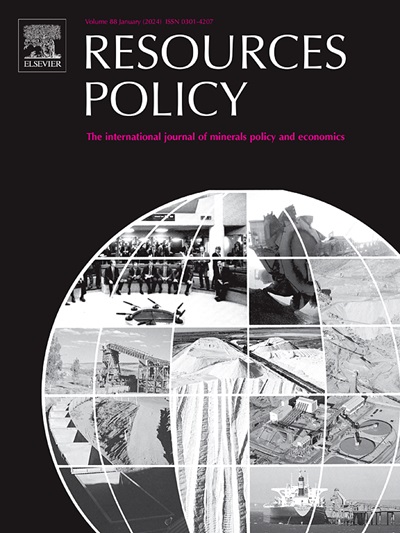
Resources Policy is an international journal focused on the economics and policy aspects of mineral and fossil fuel extraction, production, and utilization. It targets individuals in academia, government, and industry. The journal seeks original research submissions analyzing public policy, economics, social science, geography, and finance in the fields of mining, non-fuel minerals, energy minerals, fossil fuels, and metals. Mineral economics topics covered include mineral market analysis, price analysis, project evaluation, mining and sustainable development, mineral resource rents, resource curse, mineral wealth and corruption, mineral taxation and regulation, strategic minerals and their supply, and the impact of mineral development on local communities and indigenous populations. The journal specifically excludes papers with agriculture, forestry, or fisheries as their primary focus.




 京公网安备 11010802042870号
京ICP备2023020795号-1
京公网安备 11010802042870号
京ICP备2023020795号-1

 分享
分享
 求助内容:
求助内容: 应助结果提醒方式:
 扫码关注我们
