{"title":"滇西水斜铜钴矿田Alin金矿含金硫化铁的原位元素和硫同位素变化:对不可见金富集过程的认识","authors":"Guo Li, Chuan Dong Xue, ZhiJun Feng, Wei Wang, AiYing Wei","doi":"10.1016/j.oregeorev.2025.106477","DOIUrl":null,"url":null,"abstract":"<div><div>The Shuixie Cu–Co ore field, located in the southwestern part of the Lanping Meso-Cenozoic Basin, SE Tibetan Plateau, is a well-known structure-controlling polymetallic ore concentration area. Recently, several independent and associated Au-rich orebodies have been discovered, most of which are hosted in iron–sulfides (arsenopyrite and pyrite) in the form of invisible Au. The mechanism of Au enrichment remains unclear. Based on typical orebodies in the Alin Au deposit, this study presents fine microtextural features and a dataset of in situ elemental and sulfur isotopic variations in iron–sulfides. Iron–sulfides are characterized by alternately precipitated pyrite and arsenopyrite with core- and rim-crystalline textures. Which can be divided into four generations of pyrite (PyI<sub>1</sub>–PyI<sub>4</sub>) and arsenopyrite (ApyI<sub>1</sub>–ApyI<sub>4</sub>), corresponding to precipitation pulses 1–4, respectively. The earliest crystallized iron–sulfides had low concentrations of Au, which considerably increased starting with pulse 2. The Au contents in pulses 2 and 3 were distinctly lower than those in pulse 4. Au was primarily incorporated into the iron sulfide lattice structure in the form of (Au<sup>+</sup>). The iron–sulfides have a narrow range and homogeneous δ<sup>34</sup>S values, suggesting a magmatic origin. We propose the following key suggestions: the lower the deviation from the stoichiometric level, the higher the Au enrichment in iron–sulfides; high concentrations of invisible Au exist coeval with the precipitating iron–sulfides; and Au mineralization originates from episodic influxes of magmatic-hydrothermal fluids. These insights provide a novel perspective on Cu–Co and associated Au mineralization in the Shuixie Cu–Co ore field and similar regions.</div></div>","PeriodicalId":19644,"journal":{"name":"Ore Geology Reviews","volume":"178 ","pages":"Article 106477"},"PeriodicalIF":3.6000,"publicationDate":"2025-03-01","publicationTypes":"Journal Article","fieldsOfStudy":null,"isOpenAccess":false,"openAccessPdf":"","citationCount":"0","resultStr":"{\"title\":\"In situ elemental and sulfur isotopic variations of Au-bearing iron–sulfides from the Alin Au deposit in the Shuixie Cu–Co Orefield, western Yunnan Province, SE Tibet: Insights into enrichment processes of invisible Au\",\"authors\":\"Guo Li, Chuan Dong Xue, ZhiJun Feng, Wei Wang, AiYing Wei\",\"doi\":\"10.1016/j.oregeorev.2025.106477\",\"DOIUrl\":null,\"url\":null,\"abstract\":\"<div><div>The Shuixie Cu–Co ore field, located in the southwestern part of the Lanping Meso-Cenozoic Basin, SE Tibetan Plateau, is a well-known structure-controlling polymetallic ore concentration area. Recently, several independent and associated Au-rich orebodies have been discovered, most of which are hosted in iron–sulfides (arsenopyrite and pyrite) in the form of invisible Au. The mechanism of Au enrichment remains unclear. Based on typical orebodies in the Alin Au deposit, this study presents fine microtextural features and a dataset of in situ elemental and sulfur isotopic variations in iron–sulfides. Iron–sulfides are characterized by alternately precipitated pyrite and arsenopyrite with core- and rim-crystalline textures. Which can be divided into four generations of pyrite (PyI<sub>1</sub>–PyI<sub>4</sub>) and arsenopyrite (ApyI<sub>1</sub>–ApyI<sub>4</sub>), corresponding to precipitation pulses 1–4, respectively. The earliest crystallized iron–sulfides had low concentrations of Au, which considerably increased starting with pulse 2. The Au contents in pulses 2 and 3 were distinctly lower than those in pulse 4. Au was primarily incorporated into the iron sulfide lattice structure in the form of (Au<sup>+</sup>). The iron–sulfides have a narrow range and homogeneous δ<sup>34</sup>S values, suggesting a magmatic origin. We propose the following key suggestions: the lower the deviation from the stoichiometric level, the higher the Au enrichment in iron–sulfides; high concentrations of invisible Au exist coeval with the precipitating iron–sulfides; and Au mineralization originates from episodic influxes of magmatic-hydrothermal fluids. These insights provide a novel perspective on Cu–Co and associated Au mineralization in the Shuixie Cu–Co ore field and similar regions.</div></div>\",\"PeriodicalId\":19644,\"journal\":{\"name\":\"Ore Geology Reviews\",\"volume\":\"178 \",\"pages\":\"Article 106477\"},\"PeriodicalIF\":3.6000,\"publicationDate\":\"2025-03-01\",\"publicationTypes\":\"Journal Article\",\"fieldsOfStudy\":null,\"isOpenAccess\":false,\"openAccessPdf\":\"\",\"citationCount\":\"0\",\"resultStr\":null,\"platform\":\"Semanticscholar\",\"paperid\":null,\"PeriodicalName\":\"Ore Geology Reviews\",\"FirstCategoryId\":\"89\",\"ListUrlMain\":\"https://www.sciencedirect.com/science/article/pii/S016913682500037X\",\"RegionNum\":2,\"RegionCategory\":\"地球科学\",\"ArticlePicture\":[],\"TitleCN\":null,\"AbstractTextCN\":null,\"PMCID\":null,\"EPubDate\":\"2025/1/26 0:00:00\",\"PubModel\":\"Epub\",\"JCR\":\"Q1\",\"JCRName\":\"GEOLOGY\",\"Score\":null,\"Total\":0}","platform":"Semanticscholar","paperid":null,"PeriodicalName":"Ore Geology Reviews","FirstCategoryId":"89","ListUrlMain":"https://www.sciencedirect.com/science/article/pii/S016913682500037X","RegionNum":2,"RegionCategory":"地球科学","ArticlePicture":[],"TitleCN":null,"AbstractTextCN":null,"PMCID":null,"EPubDate":"2025/1/26 0:00:00","PubModel":"Epub","JCR":"Q1","JCRName":"GEOLOGY","Score":null,"Total":0}
In situ elemental and sulfur isotopic variations of Au-bearing iron–sulfides from the Alin Au deposit in the Shuixie Cu–Co Orefield, western Yunnan Province, SE Tibet: Insights into enrichment processes of invisible Au
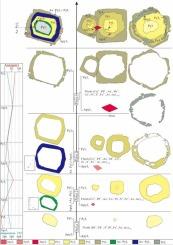
The Shuixie Cu–Co ore field, located in the southwestern part of the Lanping Meso-Cenozoic Basin, SE Tibetan Plateau, is a well-known structure-controlling polymetallic ore concentration area. Recently, several independent and associated Au-rich orebodies have been discovered, most of which are hosted in iron–sulfides (arsenopyrite and pyrite) in the form of invisible Au. The mechanism of Au enrichment remains unclear. Based on typical orebodies in the Alin Au deposit, this study presents fine microtextural features and a dataset of in situ elemental and sulfur isotopic variations in iron–sulfides. Iron–sulfides are characterized by alternately precipitated pyrite and arsenopyrite with core- and rim-crystalline textures. Which can be divided into four generations of pyrite (PyI1–PyI4) and arsenopyrite (ApyI1–ApyI4), corresponding to precipitation pulses 1–4, respectively. The earliest crystallized iron–sulfides had low concentrations of Au, which considerably increased starting with pulse 2. The Au contents in pulses 2 and 3 were distinctly lower than those in pulse 4. Au was primarily incorporated into the iron sulfide lattice structure in the form of (Au+). The iron–sulfides have a narrow range and homogeneous δ34S values, suggesting a magmatic origin. We propose the following key suggestions: the lower the deviation from the stoichiometric level, the higher the Au enrichment in iron–sulfides; high concentrations of invisible Au exist coeval with the precipitating iron–sulfides; and Au mineralization originates from episodic influxes of magmatic-hydrothermal fluids. These insights provide a novel perspective on Cu–Co and associated Au mineralization in the Shuixie Cu–Co ore field and similar regions.
期刊介绍:
Ore Geology Reviews aims to familiarize all earth scientists with recent advances in a number of interconnected disciplines related to the study of, and search for, ore deposits. The reviews range from brief to longer contributions, but the journal preferentially publishes manuscripts that fill the niche between the commonly shorter journal articles and the comprehensive book coverages, and thus has a special appeal to many authors and readers.




 京公网安备 11010802042870号
京ICP备2023020795号-1
京公网安备 11010802042870号
京ICP备2023020795号-1

 分享
分享
 求助内容:
求助内容: 应助结果提醒方式:
 扫码关注我们
