{"title":"年轻火山海底的断裂带与构造应变","authors":"Jie Chen , Javier Escartin , Mathilde Cannat","doi":"10.1016/j.epsl.2024.119174","DOIUrl":null,"url":null,"abstract":"<div><div>Fault scarps at Mid-Ocean Ridges (MOR) are recognizable on the seafloor, and often measured to estimate the tectonic component of plate divergence. This estimate, based on linear fault scarp parameters, is referred to here as apparent tectonic strain (ATS). However, ATS may differ from the actual tectonic strain at a lithosphere scale. This is clear at detachment faults at magma-poor slow-ultraslow spreading ridges that do not correspond to linear scarps yet accommodate very high strain. Here we study fault scarps in young volcanic MOR seafloor, using high-resolution (1–2 m) bathymetry data of 8 sites with spreading rates of 14–110 km/Ma. Our results show a weak correlation between ATS and factors such as spreading rate, melt flux, or thermal regime, challenging the use of ATS as a proxy for the MOR tectonic component of plate divergence. Instead, ATS is time-dependent and heterogeneous spatially, controlled by the frequency and size of dike intrusions with associated faults and volcanic eruptions that resurface the seafloor and cover faults. Our findings also have implications for estimates of tectonic extension in subaerial volcanic rifting systems that undergo similar processes.</div></div>","PeriodicalId":11481,"journal":{"name":"Earth and Planetary Science Letters","volume":"651 ","pages":"Article 119174"},"PeriodicalIF":4.8000,"publicationDate":"2025-02-01","publicationTypes":"Journal Article","fieldsOfStudy":null,"isOpenAccess":false,"openAccessPdf":"","citationCount":"0","resultStr":"{\"title\":\"Fault scarps and tectonic strain in young volcanic seafloor\",\"authors\":\"Jie Chen , Javier Escartin , Mathilde Cannat\",\"doi\":\"10.1016/j.epsl.2024.119174\",\"DOIUrl\":null,\"url\":null,\"abstract\":\"<div><div>Fault scarps at Mid-Ocean Ridges (MOR) are recognizable on the seafloor, and often measured to estimate the tectonic component of plate divergence. This estimate, based on linear fault scarp parameters, is referred to here as apparent tectonic strain (ATS). However, ATS may differ from the actual tectonic strain at a lithosphere scale. This is clear at detachment faults at magma-poor slow-ultraslow spreading ridges that do not correspond to linear scarps yet accommodate very high strain. Here we study fault scarps in young volcanic MOR seafloor, using high-resolution (1–2 m) bathymetry data of 8 sites with spreading rates of 14–110 km/Ma. Our results show a weak correlation between ATS and factors such as spreading rate, melt flux, or thermal regime, challenging the use of ATS as a proxy for the MOR tectonic component of plate divergence. Instead, ATS is time-dependent and heterogeneous spatially, controlled by the frequency and size of dike intrusions with associated faults and volcanic eruptions that resurface the seafloor and cover faults. Our findings also have implications for estimates of tectonic extension in subaerial volcanic rifting systems that undergo similar processes.</div></div>\",\"PeriodicalId\":11481,\"journal\":{\"name\":\"Earth and Planetary Science Letters\",\"volume\":\"651 \",\"pages\":\"Article 119174\"},\"PeriodicalIF\":4.8000,\"publicationDate\":\"2025-02-01\",\"publicationTypes\":\"Journal Article\",\"fieldsOfStudy\":null,\"isOpenAccess\":false,\"openAccessPdf\":\"\",\"citationCount\":\"0\",\"resultStr\":null,\"platform\":\"Semanticscholar\",\"paperid\":null,\"PeriodicalName\":\"Earth and Planetary Science Letters\",\"FirstCategoryId\":\"89\",\"ListUrlMain\":\"https://www.sciencedirect.com/science/article/pii/S0012821X2400606X\",\"RegionNum\":1,\"RegionCategory\":\"地球科学\",\"ArticlePicture\":[],\"TitleCN\":null,\"AbstractTextCN\":null,\"PMCID\":null,\"EPubDate\":\"2024/12/12 0:00:00\",\"PubModel\":\"Epub\",\"JCR\":\"Q1\",\"JCRName\":\"GEOCHEMISTRY & GEOPHYSICS\",\"Score\":null,\"Total\":0}","platform":"Semanticscholar","paperid":null,"PeriodicalName":"Earth and Planetary Science Letters","FirstCategoryId":"89","ListUrlMain":"https://www.sciencedirect.com/science/article/pii/S0012821X2400606X","RegionNum":1,"RegionCategory":"地球科学","ArticlePicture":[],"TitleCN":null,"AbstractTextCN":null,"PMCID":null,"EPubDate":"2024/12/12 0:00:00","PubModel":"Epub","JCR":"Q1","JCRName":"GEOCHEMISTRY & GEOPHYSICS","Score":null,"Total":0}
Fault scarps and tectonic strain in young volcanic seafloor
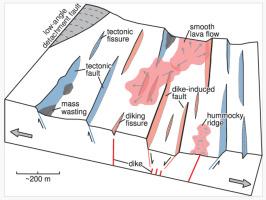
Fault scarps at Mid-Ocean Ridges (MOR) are recognizable on the seafloor, and often measured to estimate the tectonic component of plate divergence. This estimate, based on linear fault scarp parameters, is referred to here as apparent tectonic strain (ATS). However, ATS may differ from the actual tectonic strain at a lithosphere scale. This is clear at detachment faults at magma-poor slow-ultraslow spreading ridges that do not correspond to linear scarps yet accommodate very high strain. Here we study fault scarps in young volcanic MOR seafloor, using high-resolution (1–2 m) bathymetry data of 8 sites with spreading rates of 14–110 km/Ma. Our results show a weak correlation between ATS and factors such as spreading rate, melt flux, or thermal regime, challenging the use of ATS as a proxy for the MOR tectonic component of plate divergence. Instead, ATS is time-dependent and heterogeneous spatially, controlled by the frequency and size of dike intrusions with associated faults and volcanic eruptions that resurface the seafloor and cover faults. Our findings also have implications for estimates of tectonic extension in subaerial volcanic rifting systems that undergo similar processes.
期刊介绍:
Earth and Planetary Science Letters (EPSL) is a leading journal for researchers across the entire Earth and planetary sciences community. It publishes concise, exciting, high-impact articles ("Letters") of broad interest. Its focus is on physical and chemical processes, the evolution and general properties of the Earth and planets - from their deep interiors to their atmospheres. EPSL also includes a Frontiers section, featuring invited high-profile synthesis articles by leading experts on timely topics to bring cutting-edge research to the wider community.




 京公网安备 11010802042870号
京ICP备2023020795号-1
京公网安备 11010802042870号
京ICP备2023020795号-1

 分享
分享
 求助内容:
求助内容: 应助结果提醒方式:
 扫码关注我们
