Abdulrahman H. Laftah , Nawfal Alhelfi , Sadeq K. Al Salait , Ammar B. Altemimi , Mohammad Reza Tabandeh , Efstathia Tsakali , Jan F.M. Van Impe , Ahmed A. Abd El-Maksoud , Tarek Gamal Abedelmaksoud
{"title":"绿茶和辣木联合使用减轻阿霉素引起的小鼠乳腺癌模型肝毒性:针对细胞凋亡、炎症和氧化应激","authors":"Abdulrahman H. Laftah , Nawfal Alhelfi , Sadeq K. Al Salait , Ammar B. Altemimi , Mohammad Reza Tabandeh , Efstathia Tsakali , Jan F.M. Van Impe , Ahmed A. Abd El-Maksoud , Tarek Gamal Abedelmaksoud","doi":"10.1016/j.jff.2024.106626","DOIUrl":null,"url":null,"abstract":"<div><div>This study evaluated the effect of green tea and <em>Moringa oleifera</em> extracts (at 1 % and 2 % concentration) on DOX-treated breast cancer mice. 36 Balb/C female mice with breast cancer were split into healthy mice, 4 T1 cell cancer-induced, and Doxorubicin-induced malignancies. Assessments included weight, tumor size, liver enzymes, antioxidant enzymes, oxidative stress markers, pro-inflammatory cytokines, gene expressions for apoptosis and inflammation (BAX, BCL2, NLRP3, NFKB), and liver tissues were histopathologically examined. DOX increased liver enzymes and may have damaged the liver. The hepatoprotective effects of these extracts, notably at 2 %, were apparent in their enzyme reduction. Liver CAT, GPX, and SOD activity increased and TOS and OSI levels decreased due to the extracts. Additionally, the herbal treatment lowered pro-inflammatory cytokine levels and regulated apoptosis-related gene expression, lowering <strong>BAX</strong> and increasing BCL2, promoting cell survival, and reducing inflammation. Herbal extracts can reduce NLRP3/NFKB expression in DOX-treated mice's livers, depending on dosage. Histopathological evaluation showed that highly-dose therapy reduced hepatocyte degradation, inflammatory cell infiltration, localized necrosis, and blood vessel congestion. Finally, green tea and <em>Moringa oleifera</em> extracts protect against DOX-induced hepatotoxicity.</div></div>","PeriodicalId":360,"journal":{"name":"Journal of Functional Foods","volume":"124 ","pages":"Article 106626"},"PeriodicalIF":3.9000,"publicationDate":"2025-01-01","publicationTypes":"Journal Article","fieldsOfStudy":null,"isOpenAccess":false,"openAccessPdf":"","citationCount":"0","resultStr":"{\"title\":\"Mitigation of doxorubicin-induced liver toxicity in mice breast cancer model by green tea and Moringa oleifera combination: Targeting apoptosis, inflammation, and oxidative stress\",\"authors\":\"Abdulrahman H. Laftah , Nawfal Alhelfi , Sadeq K. Al Salait , Ammar B. Altemimi , Mohammad Reza Tabandeh , Efstathia Tsakali , Jan F.M. Van Impe , Ahmed A. Abd El-Maksoud , Tarek Gamal Abedelmaksoud\",\"doi\":\"10.1016/j.jff.2024.106626\",\"DOIUrl\":null,\"url\":null,\"abstract\":\"<div><div>This study evaluated the effect of green tea and <em>Moringa oleifera</em> extracts (at 1 % and 2 % concentration) on DOX-treated breast cancer mice. 36 Balb/C female mice with breast cancer were split into healthy mice, 4 T1 cell cancer-induced, and Doxorubicin-induced malignancies. Assessments included weight, tumor size, liver enzymes, antioxidant enzymes, oxidative stress markers, pro-inflammatory cytokines, gene expressions for apoptosis and inflammation (BAX, BCL2, NLRP3, NFKB), and liver tissues were histopathologically examined. DOX increased liver enzymes and may have damaged the liver. The hepatoprotective effects of these extracts, notably at 2 %, were apparent in their enzyme reduction. Liver CAT, GPX, and SOD activity increased and TOS and OSI levels decreased due to the extracts. Additionally, the herbal treatment lowered pro-inflammatory cytokine levels and regulated apoptosis-related gene expression, lowering <strong>BAX</strong> and increasing BCL2, promoting cell survival, and reducing inflammation. Herbal extracts can reduce NLRP3/NFKB expression in DOX-treated mice's livers, depending on dosage. Histopathological evaluation showed that highly-dose therapy reduced hepatocyte degradation, inflammatory cell infiltration, localized necrosis, and blood vessel congestion. Finally, green tea and <em>Moringa oleifera</em> extracts protect against DOX-induced hepatotoxicity.</div></div>\",\"PeriodicalId\":360,\"journal\":{\"name\":\"Journal of Functional Foods\",\"volume\":\"124 \",\"pages\":\"Article 106626\"},\"PeriodicalIF\":3.9000,\"publicationDate\":\"2025-01-01\",\"publicationTypes\":\"Journal Article\",\"fieldsOfStudy\":null,\"isOpenAccess\":false,\"openAccessPdf\":\"\",\"citationCount\":\"0\",\"resultStr\":null,\"platform\":\"Semanticscholar\",\"paperid\":null,\"PeriodicalName\":\"Journal of Functional Foods\",\"FirstCategoryId\":\"97\",\"ListUrlMain\":\"https://www.sciencedirect.com/science/article/pii/S1756464624006297\",\"RegionNum\":2,\"RegionCategory\":\"农林科学\",\"ArticlePicture\":[],\"TitleCN\":null,\"AbstractTextCN\":null,\"PMCID\":null,\"EPubDate\":\"2024/12/17 0:00:00\",\"PubModel\":\"Epub\",\"JCR\":\"Q2\",\"JCRName\":\"FOOD SCIENCE & TECHNOLOGY\",\"Score\":null,\"Total\":0}","platform":"Semanticscholar","paperid":null,"PeriodicalName":"Journal of Functional Foods","FirstCategoryId":"97","ListUrlMain":"https://www.sciencedirect.com/science/article/pii/S1756464624006297","RegionNum":2,"RegionCategory":"农林科学","ArticlePicture":[],"TitleCN":null,"AbstractTextCN":null,"PMCID":null,"EPubDate":"2024/12/17 0:00:00","PubModel":"Epub","JCR":"Q2","JCRName":"FOOD SCIENCE & TECHNOLOGY","Score":null,"Total":0}
Mitigation of doxorubicin-induced liver toxicity in mice breast cancer model by green tea and Moringa oleifera combination: Targeting apoptosis, inflammation, and oxidative stress
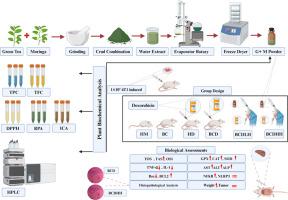
This study evaluated the effect of green tea and Moringa oleifera extracts (at 1 % and 2 % concentration) on DOX-treated breast cancer mice. 36 Balb/C female mice with breast cancer were split into healthy mice, 4 T1 cell cancer-induced, and Doxorubicin-induced malignancies. Assessments included weight, tumor size, liver enzymes, antioxidant enzymes, oxidative stress markers, pro-inflammatory cytokines, gene expressions for apoptosis and inflammation (BAX, BCL2, NLRP3, NFKB), and liver tissues were histopathologically examined. DOX increased liver enzymes and may have damaged the liver. The hepatoprotective effects of these extracts, notably at 2 %, were apparent in their enzyme reduction. Liver CAT, GPX, and SOD activity increased and TOS and OSI levels decreased due to the extracts. Additionally, the herbal treatment lowered pro-inflammatory cytokine levels and regulated apoptosis-related gene expression, lowering BAX and increasing BCL2, promoting cell survival, and reducing inflammation. Herbal extracts can reduce NLRP3/NFKB expression in DOX-treated mice's livers, depending on dosage. Histopathological evaluation showed that highly-dose therapy reduced hepatocyte degradation, inflammatory cell infiltration, localized necrosis, and blood vessel congestion. Finally, green tea and Moringa oleifera extracts protect against DOX-induced hepatotoxicity.
期刊介绍:
Journal of Functional Foods continues with the same aims and scope, editorial team, submission system and rigorous peer review. We give authors the possibility to publish their top-quality papers in a well-established leading journal in the food and nutrition fields. The Journal will keep its rigorous criteria to screen high impact research addressing relevant scientific topics and performed by sound methodologies.
The Journal of Functional Foods aims to bring together the results of fundamental and applied research into healthy foods and biologically active food ingredients.
The Journal is centered in the specific area at the boundaries among food technology, nutrition and health welcoming papers having a good interdisciplinary approach. The Journal will cover the fields of plant bioactives; dietary fibre, probiotics; functional lipids; bioactive peptides; vitamins, minerals and botanicals and other dietary supplements. Nutritional and technological aspects related to the development of functional foods and beverages are of core interest to the journal. Experimental works dealing with food digestion, bioavailability of food bioactives and on the mechanisms by which foods and their components are able to modulate physiological parameters connected with disease prevention are of particular interest as well as those dealing with personalized nutrition and nutritional needs in pathological subjects.




 京公网安备 11010802042870号
京ICP备2023020795号-1
京公网安备 11010802042870号
京ICP备2023020795号-1

 分享
分享
 求助内容:
求助内容: 应助结果提醒方式:
 扫码关注我们
