{"title":"利用人工智能加强食品安全和保存中抗菌生物活性化合物的筛选","authors":"Mengyue Zhou , Juliana Coelho Rodrigues Lima , Hefei Zhao , Jingnan Zhang , Changmou Xu , Célio Dias Santos-Júnior , Haizhou Wu","doi":"10.1016/j.tifs.2025.104887","DOIUrl":null,"url":null,"abstract":"<div><h3>Background</h3><div>Microbial contamination in the global food industry, driven by the increasing foodborne illness and food spoilage, brought the antimicrobial bioactive compounds into focus. The conventional screening methods are time-consuming, labour-intensive, and costly. Artificial intelligence (AI) and machine learning (ML) algorithms can efficiently screen top-performance candidates, appearing as transformative tools in the discovery of antimicrobials.</div></div><div><h3>Scope and approach</h3><div>We assess traditional methods for screening antimicrobial agents, categorizing them according to the diffusion pathways of bioactive compounds. It also explores the integration of AI and ML technologies in the food field, highlighting advancements in algorithms, improvements in databases, and the expansion of computing resources. Additionally, this review delves into examples of AI-predicted antimicrobial compounds, also discussing their validation and testing processes as promising applications in food systems.</div></div><div><h3>Key findings and conclusions</h3><div>Conventional methods have limitations including the need for extensive testing, while AI-driven screening technologies provide rapid and efficient identification of a large number of potentially bioactive candidate compounds. Despite facing challenges in quality, quantity, annotation, and web-accessibility of databases, AI, and ML-based technologies hold potential for screening antimicrobial peptides for food applications. A future direction of the field includes the expansion of antimicrobial bioactive compounds databases to include a wider variety of sources, incorporating high-quality - annotations. Culminating in personalized recommendations for optimizing antimicrobial usage would be achieved by integrating multi-omics data, optimizing the structure of commercial antimicrobials, and developing decision support systems.</div></div>","PeriodicalId":441,"journal":{"name":"Trends in Food Science & Technology","volume":"157 ","pages":"Article 104887"},"PeriodicalIF":15.4000,"publicationDate":"2025-03-01","publicationTypes":"Journal Article","fieldsOfStudy":null,"isOpenAccess":false,"openAccessPdf":"","citationCount":"0","resultStr":"{\"title\":\"Harnessing AI for enhanced screening of antimicrobial bioactive compounds in food safety and preservation\",\"authors\":\"Mengyue Zhou , Juliana Coelho Rodrigues Lima , Hefei Zhao , Jingnan Zhang , Changmou Xu , Célio Dias Santos-Júnior , Haizhou Wu\",\"doi\":\"10.1016/j.tifs.2025.104887\",\"DOIUrl\":null,\"url\":null,\"abstract\":\"<div><h3>Background</h3><div>Microbial contamination in the global food industry, driven by the increasing foodborne illness and food spoilage, brought the antimicrobial bioactive compounds into focus. The conventional screening methods are time-consuming, labour-intensive, and costly. Artificial intelligence (AI) and machine learning (ML) algorithms can efficiently screen top-performance candidates, appearing as transformative tools in the discovery of antimicrobials.</div></div><div><h3>Scope and approach</h3><div>We assess traditional methods for screening antimicrobial agents, categorizing them according to the diffusion pathways of bioactive compounds. It also explores the integration of AI and ML technologies in the food field, highlighting advancements in algorithms, improvements in databases, and the expansion of computing resources. Additionally, this review delves into examples of AI-predicted antimicrobial compounds, also discussing their validation and testing processes as promising applications in food systems.</div></div><div><h3>Key findings and conclusions</h3><div>Conventional methods have limitations including the need for extensive testing, while AI-driven screening technologies provide rapid and efficient identification of a large number of potentially bioactive candidate compounds. Despite facing challenges in quality, quantity, annotation, and web-accessibility of databases, AI, and ML-based technologies hold potential for screening antimicrobial peptides for food applications. A future direction of the field includes the expansion of antimicrobial bioactive compounds databases to include a wider variety of sources, incorporating high-quality - annotations. Culminating in personalized recommendations for optimizing antimicrobial usage would be achieved by integrating multi-omics data, optimizing the structure of commercial antimicrobials, and developing decision support systems.</div></div>\",\"PeriodicalId\":441,\"journal\":{\"name\":\"Trends in Food Science & Technology\",\"volume\":\"157 \",\"pages\":\"Article 104887\"},\"PeriodicalIF\":15.4000,\"publicationDate\":\"2025-03-01\",\"publicationTypes\":\"Journal Article\",\"fieldsOfStudy\":null,\"isOpenAccess\":false,\"openAccessPdf\":\"\",\"citationCount\":\"0\",\"resultStr\":null,\"platform\":\"Semanticscholar\",\"paperid\":null,\"PeriodicalName\":\"Trends in Food Science & Technology\",\"FirstCategoryId\":\"97\",\"ListUrlMain\":\"https://www.sciencedirect.com/science/article/pii/S0924224425000238\",\"RegionNum\":1,\"RegionCategory\":\"农林科学\",\"ArticlePicture\":[],\"TitleCN\":null,\"AbstractTextCN\":null,\"PMCID\":null,\"EPubDate\":\"2025/1/23 0:00:00\",\"PubModel\":\"Epub\",\"JCR\":\"Q1\",\"JCRName\":\"FOOD SCIENCE & TECHNOLOGY\",\"Score\":null,\"Total\":0}","platform":"Semanticscholar","paperid":null,"PeriodicalName":"Trends in Food Science & Technology","FirstCategoryId":"97","ListUrlMain":"https://www.sciencedirect.com/science/article/pii/S0924224425000238","RegionNum":1,"RegionCategory":"农林科学","ArticlePicture":[],"TitleCN":null,"AbstractTextCN":null,"PMCID":null,"EPubDate":"2025/1/23 0:00:00","PubModel":"Epub","JCR":"Q1","JCRName":"FOOD SCIENCE & TECHNOLOGY","Score":null,"Total":0}
Harnessing AI for enhanced screening of antimicrobial bioactive compounds in food safety and preservation
Background
Microbial contamination in the global food industry, driven by the increasing foodborne illness and food spoilage, brought the antimicrobial bioactive compounds into focus. The conventional screening methods are time-consuming, labour-intensive, and costly. Artificial intelligence (AI) and machine learning (ML) algorithms can efficiently screen top-performance candidates, appearing as transformative tools in the discovery of antimicrobials.
Scope and approach
We assess traditional methods for screening antimicrobial agents, categorizing them according to the diffusion pathways of bioactive compounds. It also explores the integration of AI and ML technologies in the food field, highlighting advancements in algorithms, improvements in databases, and the expansion of computing resources. Additionally, this review delves into examples of AI-predicted antimicrobial compounds, also discussing their validation and testing processes as promising applications in food systems.
Key findings and conclusions
Conventional methods have limitations including the need for extensive testing, while AI-driven screening technologies provide rapid and efficient identification of a large number of potentially bioactive candidate compounds. Despite facing challenges in quality, quantity, annotation, and web-accessibility of databases, AI, and ML-based technologies hold potential for screening antimicrobial peptides for food applications. A future direction of the field includes the expansion of antimicrobial bioactive compounds databases to include a wider variety of sources, incorporating high-quality - annotations. Culminating in personalized recommendations for optimizing antimicrobial usage would be achieved by integrating multi-omics data, optimizing the structure of commercial antimicrobials, and developing decision support systems.
期刊介绍:
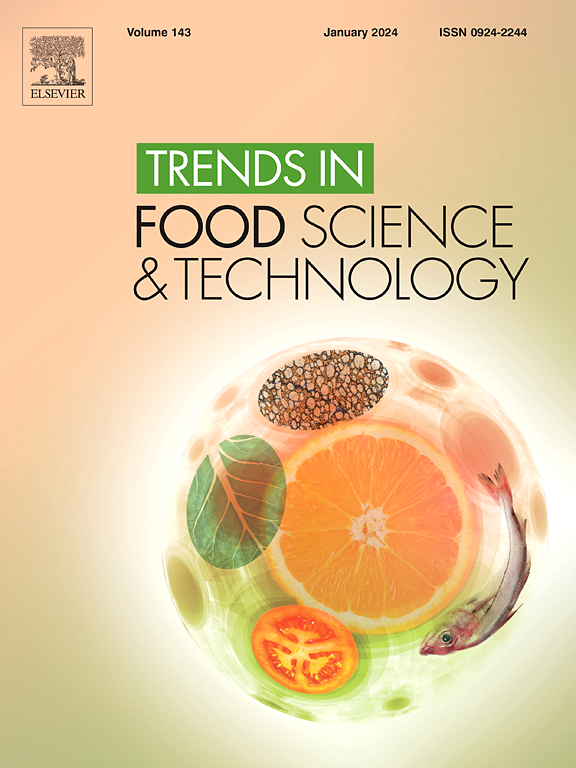
Trends in Food Science & Technology is a prestigious international journal that specializes in peer-reviewed articles covering the latest advancements in technology, food science, and human nutrition. It serves as a bridge between specialized primary journals and general trade magazines, providing readable and scientifically rigorous reviews and commentaries on current research developments and their potential applications in the food industry.
Unlike traditional journals, Trends in Food Science & Technology does not publish original research papers. Instead, it focuses on critical and comprehensive reviews to offer valuable insights for professionals in the field. By bringing together cutting-edge research and industry applications, this journal plays a vital role in disseminating knowledge and facilitating advancements in the food science and technology sector.




 京公网安备 11010802042870号
京ICP备2023020795号-1
京公网安备 11010802042870号
京ICP备2023020795号-1

 分享
分享
 求助内容:
求助内容: 应助结果提醒方式:
 扫码关注我们
